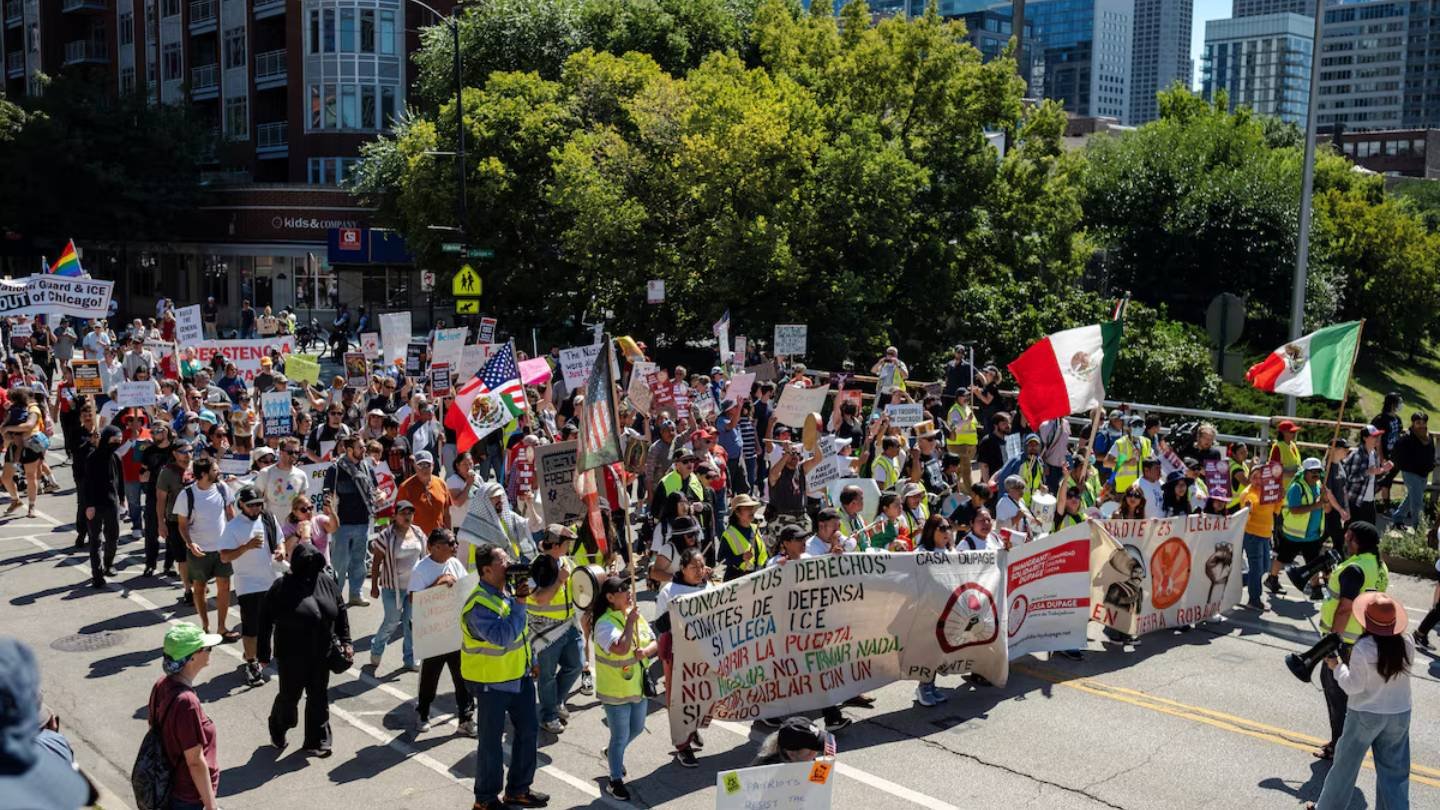
Immigration enforcement is spilling into classrooms in Chicago, leaving families fearful and schools disrupted. A wave of Immigration and Customs Enforcement (ICE) raids, coupled with threats of National Guard deployment, has caused widespread absenteeism and deep anxiety among students and teachers.
Attendance Plunges in Immigrant Communities
Several schools across the city have reported attendance drops of up to 50% in recent weeks, with some classrooms nearly empty. Many families, particularly in Hispanic and immigrant communities, are keeping children at home to avoid the risk of detention or separation.
State data shows chronic absenteeism among Hispanic students in Illinois was already 33% in 2024, compared with 26% across all students. Educators warn that with raids escalating, the numbers are likely to worsen. Similar enforcement efforts earlier this year in California’s Central Valley triggered a 22% jump in school absences, suggesting Chicago faces a parallel crisis.
National Guard Deployment Raises Tensions
The Trump administration’s proposal to send National Guard troops to Chicago has added to the fear. Federal officials describe it as a measure against crime and undocumented immigration, though city leaders point out that violent crime is trending downward.
Chicago Public Schools (CPS) and the Chicago Teachers Union have tried to reassure families. They are distributing “know your rights” flyers, hosting community sessions, and stressing that schools remain safe spaces. CPS Interim CEO Macquline King said the district has strict policies limiting federal intrusion, but many parents remain unconvinced.
Academic and Emotional Fallout
Educators say the impact goes far beyond attendance. Chronic absenteeism is strongly linked to lower graduation rates and fewer opportunities after high school. Teachers also report a surge in student anxiety and trauma, especially in mixed-status families where some members are US citizens and others are undocumented.
The stress is not limited to students. Teachers themselves are struggling, with some reporting burnout and higher absenteeism, adding another layer of instability to already strained schools.
Erosion of School Protections
Until early 2025, federal guidelines shielded schools as “sensitive locations” from immigration enforcement. Those protections were lifted by the Trump administration, leaving classrooms exposed. CPS has since updated its policies to require judicial warrants before agents can enter, and staff have been trained on how to respond. Still, false alarms and social media rumors continue to spread fear in immigrant communities.
Local and State Pushback
Teachers and unions are on the front lines, hosting forums, sharing legal resources, and even experimenting with remote learning for students too scared to attend in person.
At the policy level, Illinois lawmakers passed the Safe Schools For All Act, set to take effect in January 2026. The law guarantees access to education for all children regardless of immigration status and prohibits schools from collecting immigration information.
Meanwhile, Mayor Brandon Johnson has signed an executive order barring the Chicago Police Department from cooperating with federal immigration enforcement, reaffirming the city’s sanctuary policies.
A Community on Edge
The fear has rippled beyond schools, with cultural events and public gatherings scaled back under the shadow of enforcement. Community leaders warn that unless families feel safe sending their children to school, both education and neighborhood stability will suffer.
For now, the challenge facing Chicago is whether it can restore schools as safe havens — places defined by learning, not fear.
Image Source: Google | Image Credit: Respective Owner