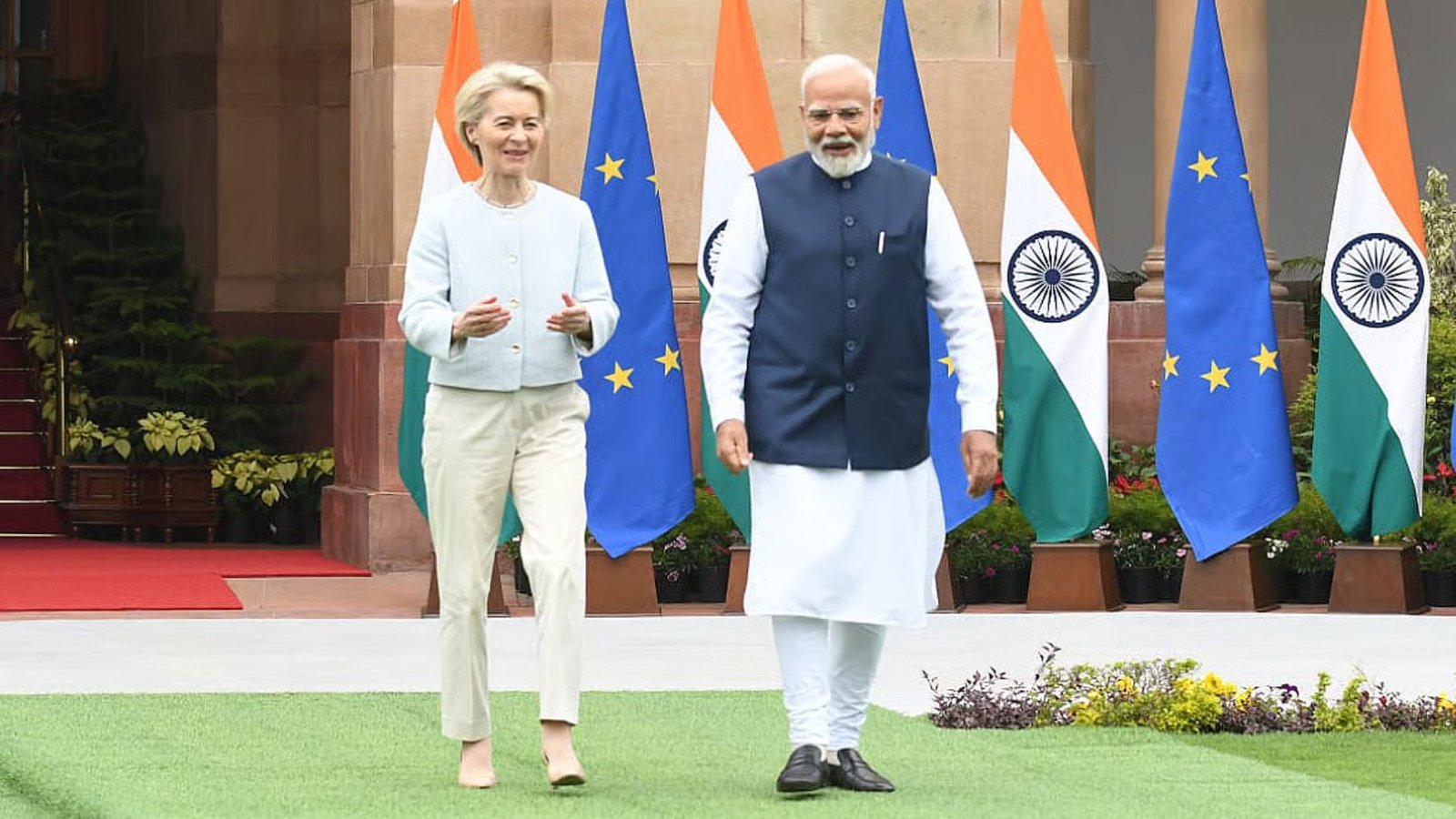
The European Union is set to move forward with a significant security and defence partnership with India, according to Estonian Prime Minister Kaja Kallas. This development signals a strengthening of ties between the two major global players, particularly in the context of evolving geopolitical challenges.
Kallas, speaking on the sidelines of a recent meeting, emphasized the EU’s commitment to collaborating with India on issues of mutual security concern. While specific details of the partnership remain under discussion, it is expected to encompass areas such as maritime security, counter-terrorism, cybersecurity, and potentially joint research and development of defence technologies.
The move comes as the EU seeks to diversify its security partnerships and reduce reliance on any single ally. India, with its growing economic and military strength, is seen as a crucial partner in maintaining stability and security in the Indo-Pacific region. This partnership is also viewed as a counterbalance to China’s increasing assertiveness in the region.
Several factors are driving this closer collaboration. The ongoing conflict in Ukraine has highlighted the importance of a united front against authoritarianism and a commitment to the rules-based international order. Both the EU and India share these values and have expressed concerns about the implications of the war for global security. Furthermore, increasing concerns about terrorism and cyber threats necessitate a coordinated response.
Geopolitical Implications
Analysts suggest that the EU-India security partnership could have far-reaching geopolitical implications. It could lead to increased joint military exercises, intelligence sharing, and cooperation on defence procurement. The partnership could also encourage other countries in the Indo-Pacific region to strengthen their own security ties with the EU and India.
However, challenges remain. The EU is comprised of 27 member states, each with its own foreign policy priorities. Reaching a consensus on a comprehensive security partnership with India will require careful negotiation and compromise. India also has a traditionally non-aligned foreign policy, and it may be hesitant to enter into a formal alliance with the EU.
Despite these challenges, the momentum for closer cooperation appears strong. The EU and India have already been engaged in a strategic dialogue on security and defence issues for several years. This dialogue has laid the groundwork for the current initiative. The partnership is expected to be formally announced in the coming months, with a detailed action plan outlining specific areas of cooperation.
The deepening relationship between the EU and India reflects a broader trend towards greater multipolarity in the international system. As the global balance of power shifts, countries are increasingly looking to diversify their partnerships and build new alliances. This EU-India initiative is a significant step in that direction, and it is likely to have a lasting impact on the geopolitical landscape.
The partnership is not solely focused on military aspects. It also aims to promote cooperation on issues such as climate change, sustainable development, and digital governance, recognizing the interconnectedness of security and these broader challenges. This holistic approach is intended to create a more resilient and sustainable partnership between the EU and India.
Image Source: Google | Image Credit: Respective Owner