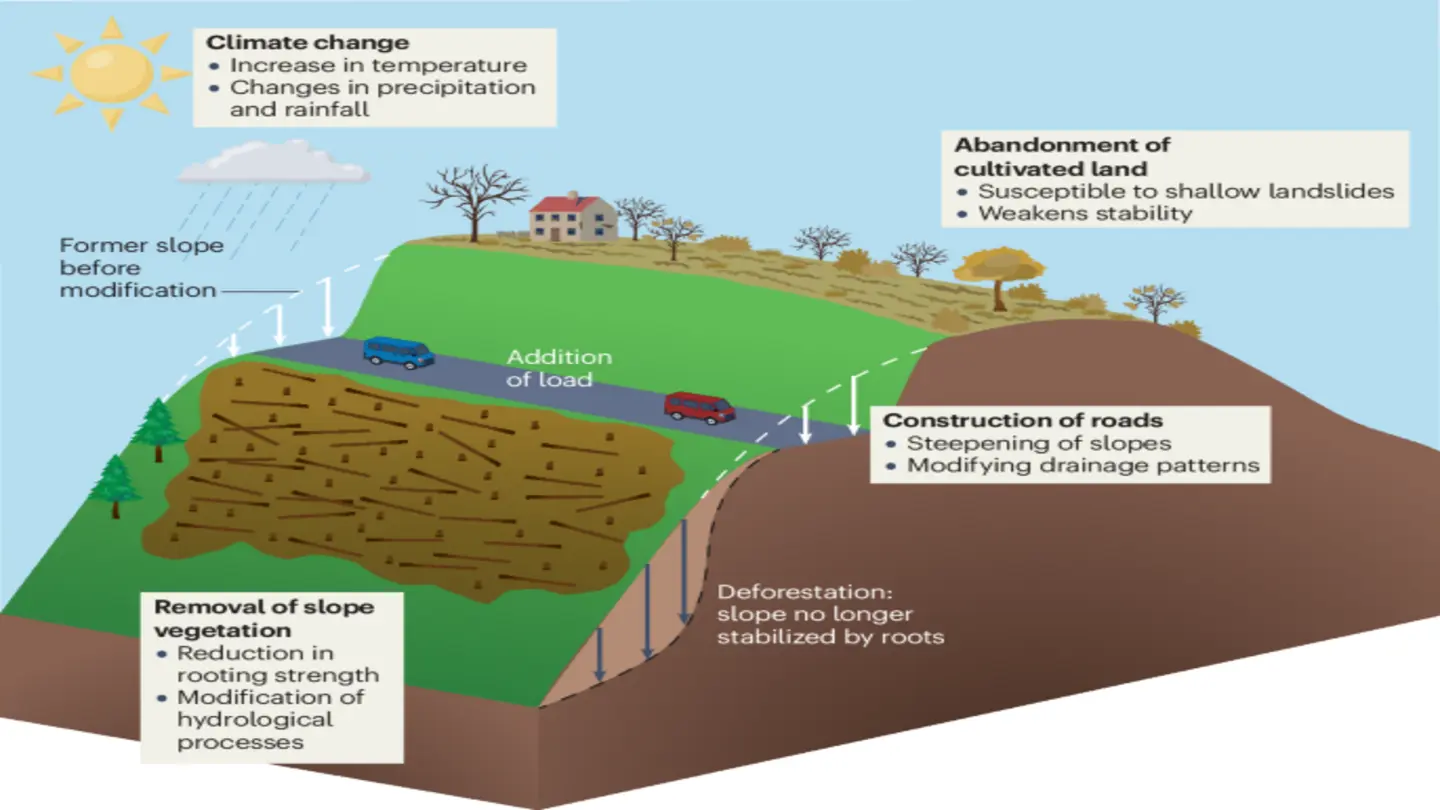
A new study published in ESS Open Archive explores the synthesis of measured environmental and human signals across various scales to better understand complex interactions between human activities and the environment. The research emphasizes the importance of integrating data from diverse sources, including remote sensing, on-the-ground observations, and socio-economic indicators, to gain a comprehensive perspective on these interactions.
The study highlights the challenges of working with multi-scale data, such as differing resolutions, data formats, and uncertainties. It proposes a framework for harmonizing and integrating these data sources, focusing on techniques for spatial and temporal alignment, uncertainty quantification, and data fusion. The researchers argue that overcoming these challenges is crucial for developing accurate and reliable models of environmental change and its impact on human populations.
Key Methodologies and Data Integration
One of the core aspects of the research involves a review of existing methodologies for measuring environmental and human signals. This includes examining the strengths and limitations of different remote sensing platforms, such as satellites and drones, as well as various ground-based monitoring techniques. Furthermore, the study delves into the use of social media data, mobile phone data, and other forms of citizen science data to capture human activities and perceptions related to the environment.
The integration of socio-economic data is also emphasized, recognizing that human behavior is often driven by economic incentives, policy decisions, and cultural norms. The researchers demonstrate how incorporating data on demographics, income levels, land use policies, and other socio-economic factors can significantly improve the accuracy and relevance of environmental models. The framework presented offers practical guidelines for researchers and policymakers seeking to develop more holistic and integrated approaches to environmental monitoring and management.
Case Studies and Applications
The study presents several case studies to illustrate the application of the proposed framework in real-world settings. These case studies cover a range of environmental issues, including deforestation, urbanization, climate change impacts, and water resource management. The researchers show how the integrated analysis of environmental and human signals can provide valuable insights into the drivers of these issues and the potential effectiveness of different policy interventions.
For instance, in the context of deforestation, the study demonstrates how combining satellite imagery with data on land tenure, agricultural practices, and market demands can help identify the underlying causes of forest loss and inform targeted conservation efforts. Similarly, in the case of urbanization, the researchers show how integrating data on population growth, infrastructure development, and energy consumption can help assess the environmental impacts of urban expansion and promote more sustainable urban planning. Ultimately, the research advocates for a more collaborative and interdisciplinary approach to environmental science, emphasizing the need to bridge the gap between natural and social sciences to address complex environmental challenges effectively. The findings have significant implications for policymakers, researchers, and practitioners working to promote environmental sustainability and human well-being.
Image Source: Google | Image Credit: Respective Owner