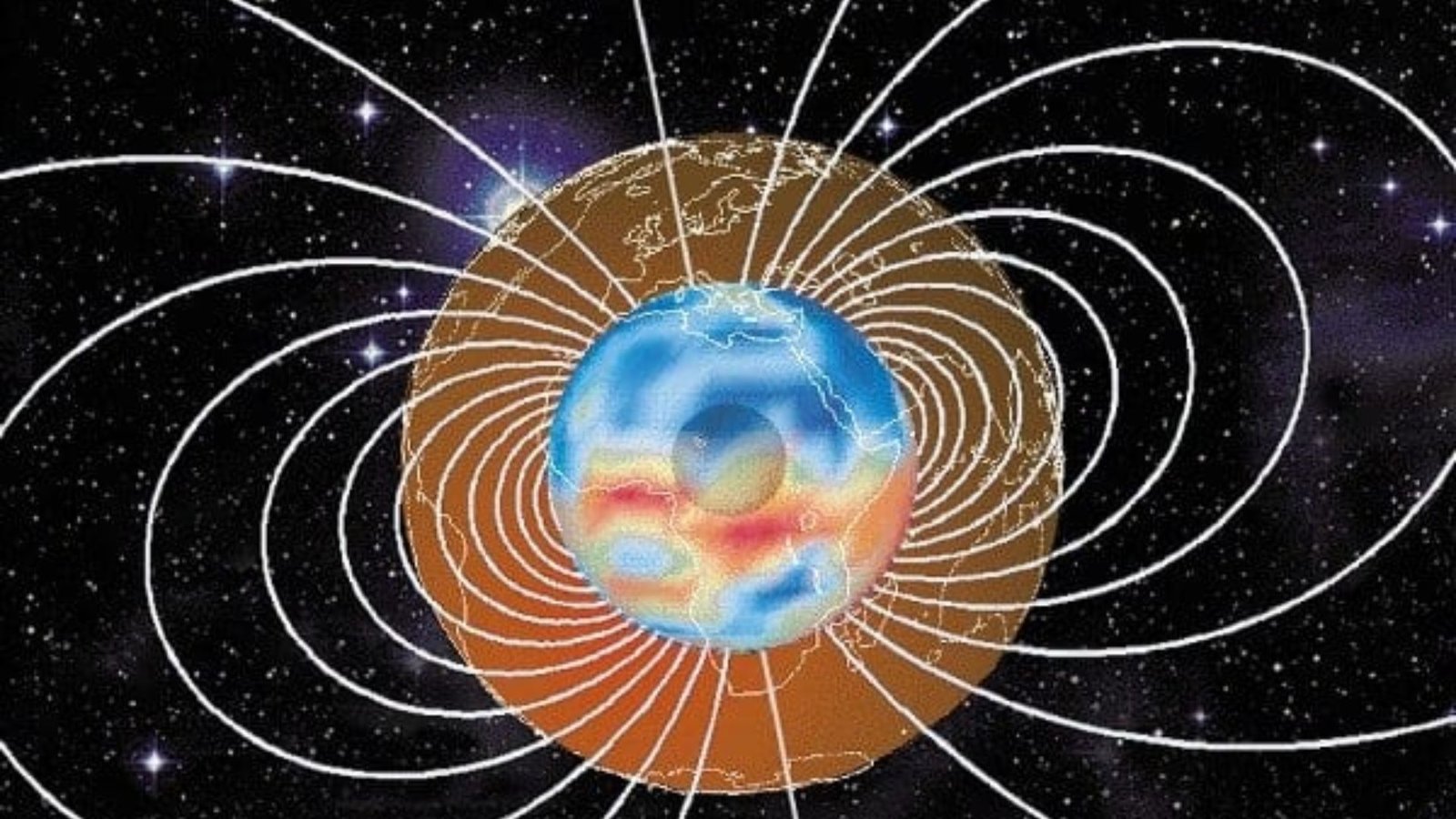
A groundbreaking study published in ESS Open Archive sheds new light on the enigmatic phenomenon of geomagnetic reversals and excursions, attributing them to non-equilibrium turbulence within the Earth’s core. For decades, scientists have been puzzled by the irregular changes in the Earth’s magnetic field, where the magnetic north and south poles can weaken, drift, and even flip entirely. This research offers a compelling explanation, linking these dramatic shifts to the complex dynamics of the molten iron swirling deep beneath our feet.
The Earth’s magnetic field, generated by the geodynamo process within the core, acts as a protective shield against harmful solar radiation. Understanding the mechanisms behind geomagnetic reversals is crucial for comprehending the planet’s long-term climate stability and its ability to sustain life. This new study uses advanced computational models to simulate the turbulent flow of liquid iron in the Earth’s outer core, revealing how non-equilibrium conditions can trigger the instabilities that lead to magnetic field reversals.
Turbulence and Magnetic Field Instability
The researchers demonstrate that when the turbulence in the Earth’s core deviates from equilibrium, it creates regions of intense magnetic field distortion. These distortions can grow and eventually overwhelm the dominant magnetic field structure, causing it to weaken and reorganize. The models also show that these turbulent events are not uniformly distributed throughout the core but tend to concentrate in specific areas, leading to localized disruptions in the magnetic field.
The study further suggests that the frequency and intensity of geomagnetic reversals are directly related to the degree of non-equilibrium in the core’s turbulence. Periods of heightened turbulence are likely to correspond with more frequent and dramatic magnetic field changes, while periods of relative stability may lead to longer intervals between reversals. This finding could help scientists better predict future magnetic field behavior and its potential impact on the Earth’s surface.
Implications for Earth’s Future
While the exact timing of the next geomagnetic reversal remains uncertain, this research provides valuable insights into the underlying processes driving these events. By understanding the role of non-equilibrium turbulence in the Earth’s core, scientists can develop more sophisticated models to forecast future magnetic field changes. This knowledge is essential for mitigating potential risks associated with weakened magnetic shielding, such as increased exposure to solar radiation and disruptions to navigation systems.
The study also highlights the importance of continued research into the Earth’s deep interior. Further investigations using seismic data, satellite observations, and advanced computational modeling are needed to refine our understanding of the geodynamo process and its influence on the planet’s magnetic field. This research not only advances our knowledge of Earth’s past but also helps us prepare for the challenges of the future.
Image Source: Google | Image Credit: Respective Owner