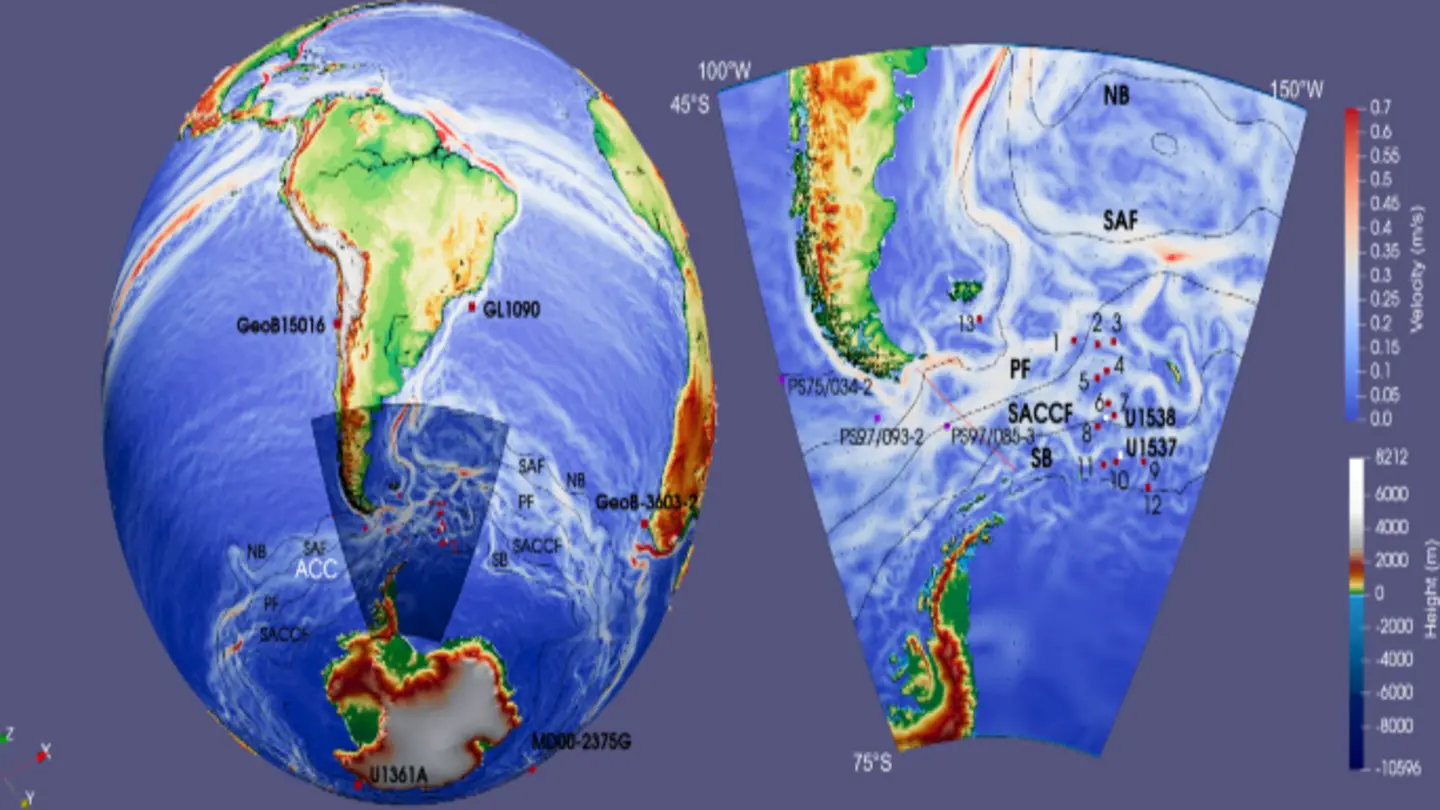
A new study published in ESS Open Archive sheds light on the deposition of diatoms during the Mid-Pleistocene Transition (MPT) in the Southern Cape Basin, offering insights into the dramatic climate shifts that occurred roughly one million years ago. The research focuses on the factors controlling the accumulation of these microscopic algae, providing valuable data for understanding past oceanographic conditions and predicting future climate scenarios.
The Mid-Pleistocene Transition
The MPT was a period of significant climate upheaval, characterized by a shift from 41,000-year glacial cycles to 100,000-year cycles. Understanding the mechanisms driving this transition is crucial for comprehending long-term climate variability and its impact on the Earth system. The Southern Cape Basin, located off the coast of South Africa, is a particularly important region for studying past climate changes due to its sensitivity to shifts in ocean currents and atmospheric circulation.
Diatoms, single-celled algae with intricate silica shells, are abundant in marine environments and play a vital role in the ocean’s carbon cycle. Their fossilized remains accumulate in sediments, providing a valuable archive of past ocean conditions. By analyzing the abundance, composition, and isotopic signatures of diatoms in sediment cores, scientists can reconstruct past sea surface temperatures, nutrient availability, and ocean circulation patterns.
Research Findings
The study examines sediment cores from the Southern Cape Basin, focusing on the MPT interval. The researchers identified key factors influencing diatom deposition, including changes in nutrient supply, ocean stratification, and the intensity of upwelling. Upwelling, the process by which deep, nutrient-rich waters rise to the surface, is a crucial driver of diatom productivity in the region. The study found evidence that changes in upwelling intensity played a significant role in regulating diatom deposition during the MPT.
The research also highlights the role of ocean stratification, the layering of water masses with different densities, in controlling diatom abundance. Increased stratification can limit the supply of nutrients to surface waters, reducing diatom productivity. The study suggests that changes in ocean stratification may have contributed to the variability in diatom deposition observed during the MPT.
Furthermore, the study explores the influence of sea surface temperature on diatom communities. Different diatom species have different temperature preferences, and shifts in sea surface temperature can alter the composition of diatom assemblages. The researchers found evidence that changes in sea surface temperature influenced the distribution of diatom species in the Southern Cape Basin during the MPT.
The findings of this study contribute to a better understanding of the complex interplay between oceanographic processes and climate change during the MPT. By unraveling the factors controlling diatom deposition, the research provides valuable insights into the mechanisms driving long-term climate variability and its impact on marine ecosystems. This research has implications for predicting the effects of future climate change on ocean productivity and carbon cycling.
Image Source: Google | Image Credit: Respective Owner