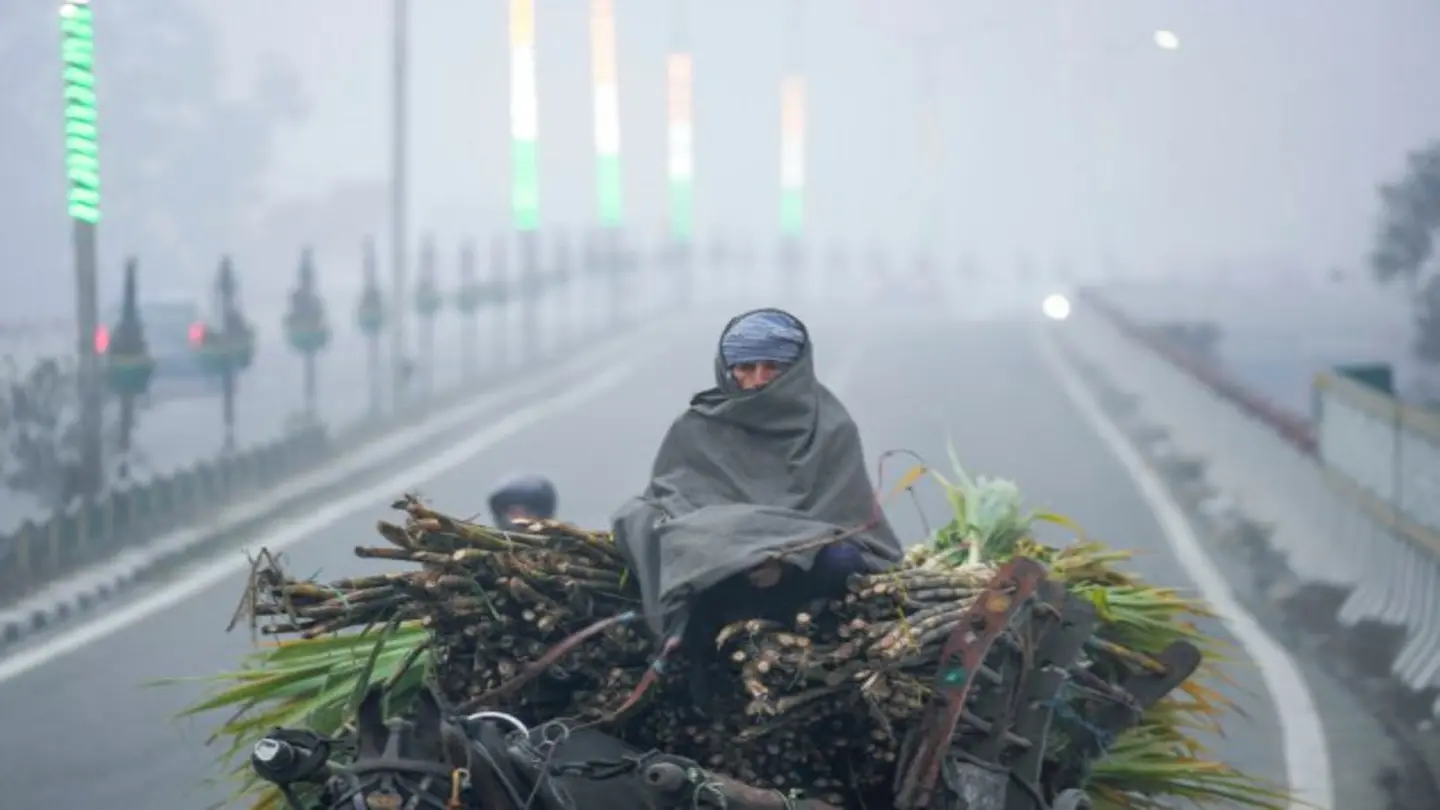
The India Meteorological Department (IMD) has issued warnings for dense to very dense fog conditions across most of North India over the next several days, impacting visibility and potentially disrupting transportation. Simultaneously, light to moderate rainfall and snowfall are anticipated over Jammu and Kashmir as a fresh Western Disturbance approaches the region.
According to IMD officials, the fog is likely to begin intensifying on Thursday evening and persist through Friday and Saturday, covering states including Punjab, Haryana, Chandigarh, Delhi, Uttar Pradesh, and parts of Rajasthan. Visibility could drop to as low as 50 meters in some areas, making driving extremely hazardous and potentially leading to flight delays and cancellations.
“Dense to very dense fog is very likely to prevail over Punjab, Haryana, Chandigarh, Delhi, and Uttar Pradesh during the next 2-3 days,” the IMD stated in its latest bulletin. “A red alert has been issued for these regions, advising people to take precautions and avoid unnecessary travel.” The red alert signifies a high level of weather-related risk.
The approaching Western Disturbance, a weather system originating in the Mediterranean region, is expected to bring widespread precipitation to the Western Himalayan Region, including Jammu & Kashmir, Ladakh, and Himachal Pradesh. The IMD predicts light to moderate rain and snow over these areas starting Thursday night and continuing through Saturday.
Jammu and Kashmir is bracing for a spell of inclement weather, with forecasts indicating snowfall at moderate to higher elevations and rain in the plains. Authorities have issued advisories to residents, urging them to remain indoors during heavy snowfall and to clear snow from rooftops to avoid structural damage. Road conditions are also likely to be affected, and travelers are advised to check weather updates before embarking on journeys.
Impact on Daily Life
The widespread fog conditions are projected to significantly impact daily life across North India. Commuters are advised to exercise extreme caution while driving, using fog lights and maintaining a slow speed. Airlines have been alerted to the possibility of diversions and cancellations, and passengers are encouraged to check with their respective carriers for the latest information.
Schools in some areas may also consider suspending classes, particularly for younger students, to avoid risks associated with travel in foggy conditions. The cold wave conditions, exacerbated by the fog, could also lead to increased demand for electricity as people rely more on heating appliances. Health officials are advising people to stay warm, hydrate adequately, and avoid prolonged exposure to the cold.
The IMD further stated that the fog conditions will likely begin to dissipate on Sunday as the Western Disturbance moves eastwards and changes wind patterns. However, cold wave conditions are expected to persist across North India for the next several days. Citizens are urged to stay updated on the latest weather forecasts and follow advisories issued by local authorities.
This combination of dense fog and winter precipitation presents significant challenges for transportation, infrastructure, and public health in North India. Continuous monitoring and proactive measures are crucial to minimizing the potential impact of these adverse weather conditions.
Image Source: Google | Image Credit: Respective Owner