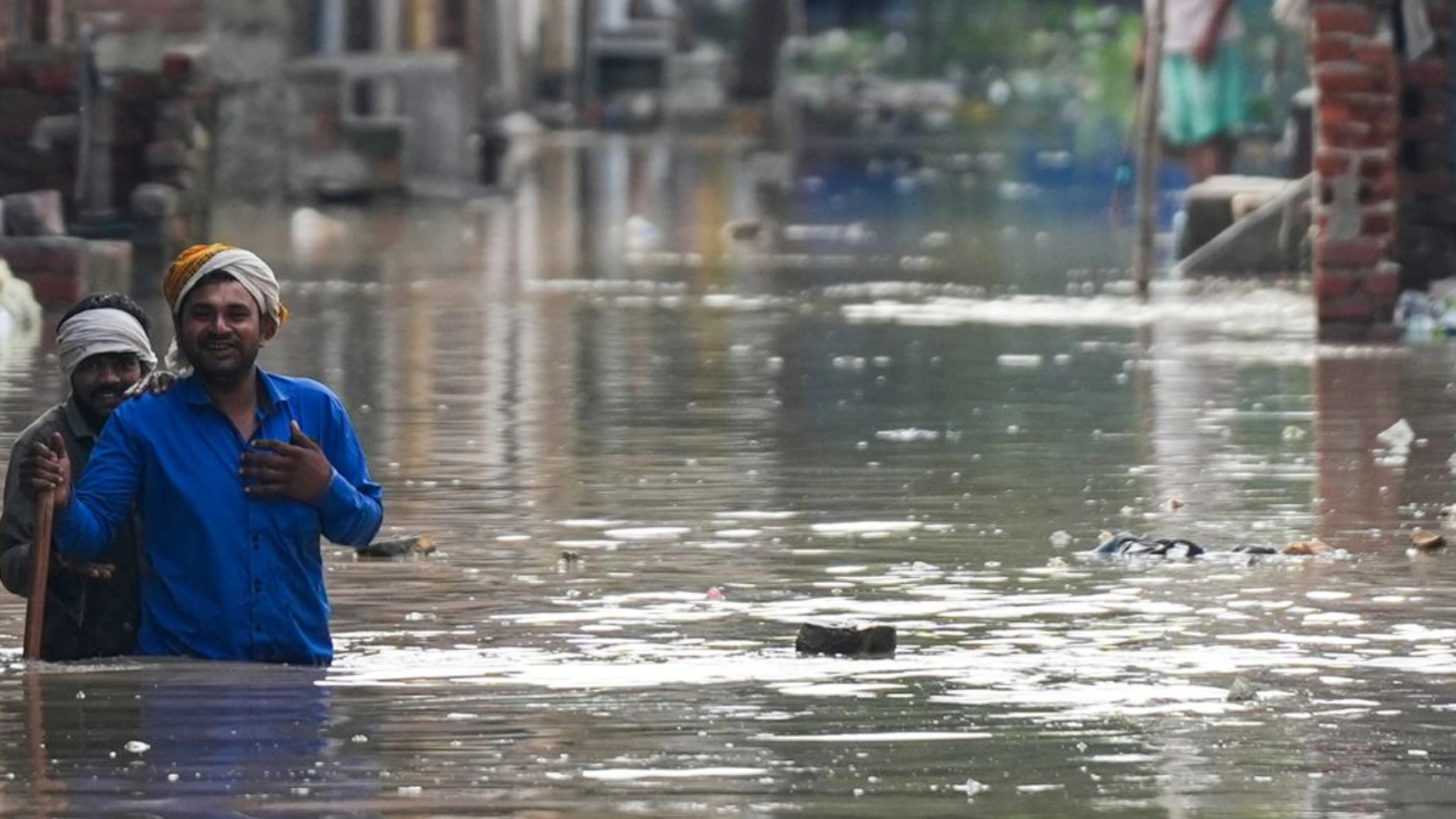
Heavy rainfall across Delhi and NCR has caused widespread flooding, with the Yamuna River swelling to 207.43 meters, marking the third-highest level since 1963. Several areas, including Ring Road, Civil Lines, Bela Road, Sonia Vihar, and Yamuna Bazar, have been inundated, forcing over 12,000 people to evacuate their homes and businesses.
As floodwaters surged, the NDRF deployed multiple rescue teams and set up relief camps at 38 locations, including Yamuna Khadar and Mayur Vihar. Thousands of displaced residents have been relocated to municipal schools and shelters. A breach in the Najafgarh drain in Mungeshpur caused waist-deep flooding, submerging houses and affecting nearly 2,000 people.
In addition to the Yamuna’s rise, severe waterlogging on roads, including Mathura Road and Krishna Menon Marg, has caused significant traffic disruptions. Authorities have issued fresh advisories and set up traffic diversions in affected areas.
The flooding has also disrupted cremations at Nigambodh Ghat, Delhi’s busiest cremation ground, which had to suspend operations due to rising water levels.
The crisis is exacerbated by heavy water discharge from Haryana’s Hathnikund barrage, which released 1.78 lakh cusecs of water, far above the usual 50,000 cusecs, pushing Yamuna’s water levels even higher. However, officials are hopeful that rainfall in Uttarakhand will reduce, which may ease inflows into the river.
In Noida, around 2,500 people were displaced, with temporary shelters set up for residents and animals. The Delhi government is closely monitoring the situation, ensuring all precautions are in place to avoid a repeat of the 2023 floods when the Yamuna hit an all-time high of 208.66 meters.
The India Meteorological Department has forecast moderate rain and thunderstorms for Delhi on September 6. Authorities are working to ensure that flood management systems are prepared for any additional rainfall.
Image Source: Google | Image Credit: Respective Owner