A new analysis of data from the Fermi Gamma-ray Space Telescope has offered tantalizing hints about the nature of dark matter, the mysterious substance that makes up a significant portion of the universe’s mass. The findings, published in a recent scientific journal, suggest a potential detection of dark matter annihilation signals, bolstering the ongoing quest to understand this elusive component of the cosmos.
Dark matter’s existence is inferred from its gravitational effects on visible matter, such as stars and galaxies. However, it does not interact with light, making it invisible to conventional telescopes. Scientists have long sought to directly detect dark matter particles through various experiments, including those searching for the products of dark matter annihilation or decay.
The Fermi Telescope and Gamma-ray Excess
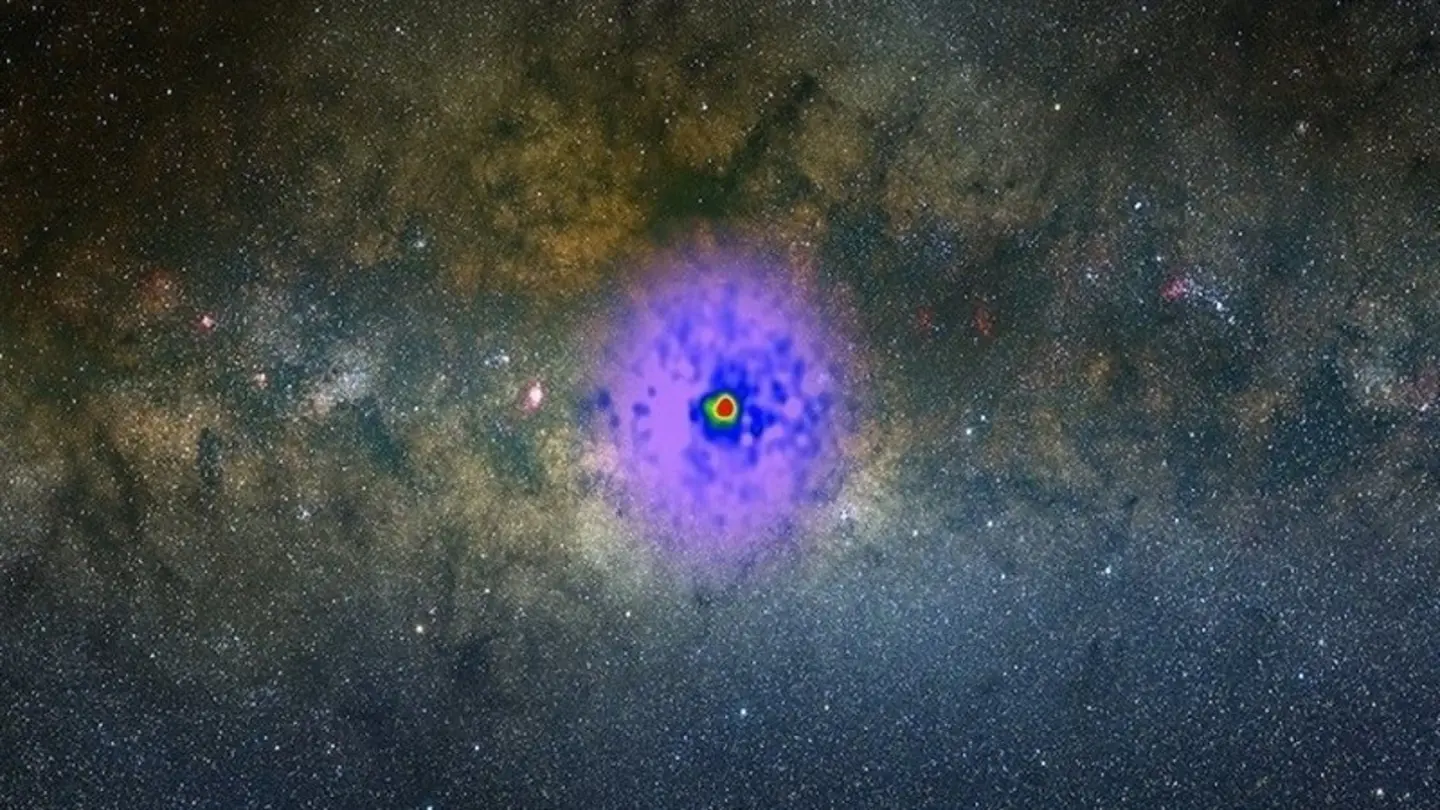
The Fermi Gamma-ray Space Telescope, launched in 2008, has been instrumental in mapping the sky in gamma rays, the highest-energy form of light. Previous studies of Fermi data have revealed an excess of gamma rays emanating from the center of the Milky Way galaxy. This excess has been a subject of intense debate, with some researchers suggesting it could be a signature of dark matter annihilation, while others attribute it to astrophysical sources such as pulsars.
The new analysis employs advanced statistical techniques to re-examine the Fermi data, focusing on specific energy ranges and spatial distributions of the gamma-ray excess. The researchers claim to have found a stronger correlation between the observed gamma-ray signal and the predicted signature of dark matter annihilation than previous studies.
Implications and Caveats
If confirmed, this discovery would represent a major breakthrough in our understanding of dark matter. It would not only provide direct evidence for its existence but also offer insights into its properties, such as its mass and interaction strength. However, the researchers caution that the findings are not yet conclusive and require further verification.
One of the main challenges is to rule out other potential sources of the gamma-ray excess. The galactic center is a complex region with numerous astrophysical objects that can emit gamma rays. Distinguishing between the dark matter signal and these background sources is a difficult task.
The team is now working on refining their analysis and exploring other regions of the sky where dark matter signals might be detectable. Future observations with more sensitive telescopes, such as the Cherenkov Telescope Array, will also play a crucial role in confirming or refuting these findings. The pursuit of dark matter continues, driven by the desire to unravel one of the universe’s deepest mysteries, and this new research provides an exciting step forward in that quest. The potential to rewrite our understanding of the cosmos is a powerful motivator for scientists around the globe, as they diligently probe the unknown realms of dark matter and dark energy.
Image Source: Google | Image Credit: Respective Owner