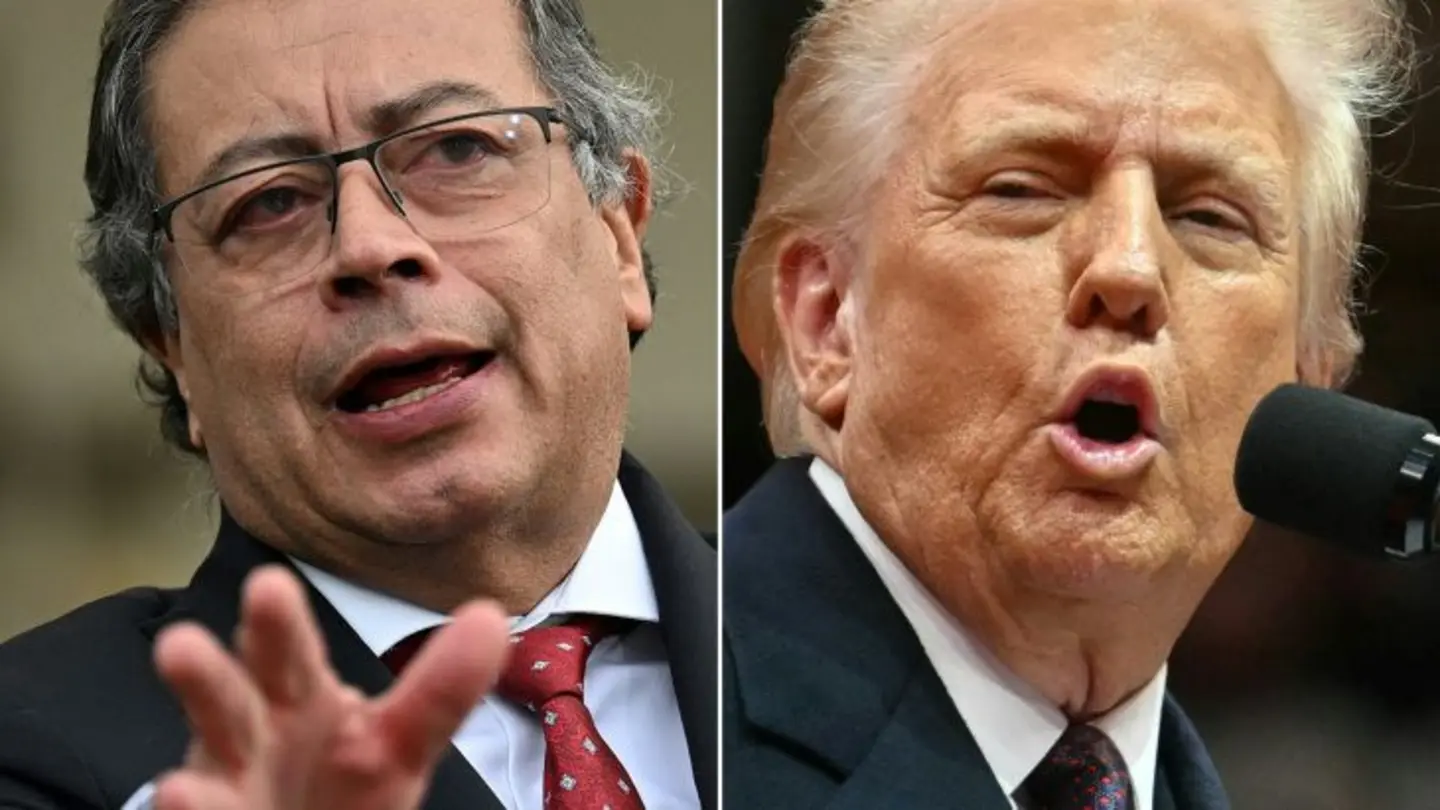
Bogotá – Colombian President Gustavo Petro has stated his willingness to “take up arms” in defense of his nation should former U.S. President Donald Trump attempt to implement policies detrimental to Colombia’s sovereignty or stability. This strong declaration came in response to intensifying rhetoric from Trump during recent campaign rallies, where he revisited his past criticisms of Colombia and hinted at potentially aggressive strategies towards the South American country.
Specifically, Petro referenced Trump’s past accusations regarding Colombia’s role in the production and export of illicit drugs, and the former president’s threats to deploy U.S. military forces to eradicate coca crops through aerial spraying – a tactic widely condemned for its environmental and health consequences. Petro argued that such actions would constitute a violation of Colombian sovereignty and a return to the failed “war on drugs” policies of the past.
“If he dares to implement those threats, we will respond with all the tools at our disposal, including taking up arms,” Petro asserted, speaking at a public event. While the statement is largely interpreted as a rhetorical warning, it underscores the deep-seated anxieties within the Colombian government regarding a potential shift in U.S. policy under a second Trump administration. The Colombian constitution allows for the defense of national sovereignty, and Petro’s remarks place that possibility firmly on the table.
The roots of the tension between Petro and Trump are well documented. Trump frequently criticized Colombia during his presidency for what he perceived as an insufficient commitment to combating drug trafficking. He also threatened to withhold aid and impose trade sanctions. Petro, a former guerrilla fighter himself, has consistently advocated for a more nuanced approach to drug policy, emphasizing the need for social and economic development programs to address the underlying causes of coca cultivation.
Historical Context and Current Concerns
The prospect of renewed aerial spraying is particularly sensitive in Colombia, given its history. Previous spraying campaigns, largely funded by the U.S., were associated with significant health problems and environmental damage. Colombian officials have repeatedly expressed their opposition to this tactic, arguing that it is ineffective and harmful. Furthermore, Petro’s government is currently engaged in peace talks with various armed groups, and a more aggressive U.S. posture could jeopardize these fragile negotiations.
Analysts suggest that Petro’s strong response is also aimed at bolstering his domestic support base, particularly among those who are wary of U.S. interventionism. The Colombian president faces numerous challenges, including a struggling economy, ongoing violence in rural areas, and deep-seated political polarization. Presenting himself as a defender of national sovereignty allows him to appeal to nationalist sentiments and consolidate his political position.
The U.S. State Department has yet to issue a formal response to Petro’s remarks. However, several U.S. lawmakers have expressed concern over Trump’s recent rhetoric and its potential impact on the relationship between the two countries. The situation remains fluid and is likely to intensify as the U.S. presidential election draws closer. Colombia is closely monitoring the developments and preparing for a range of possible scenarios, recognizing the significant implications a change in U.S. policy could have on its future.
Many observers are questioning the practicality and legality of any unilateral military intervention by the United States in Colombia, given the potential for escalation and the existing framework of bilateral cooperation on security matters. Petro, meanwhile, has signaled his resolve to defend Colombian interests, even if it requires taking unprecedented steps.
Image Source: Google | Image Credit: Respective Owner