In a groundbreaking achievement, India’s Chandrayaan-2 mission has become the first to observe the effects of solar coronal mass ejections (CMEs) on the lunar surface. This pioneering observation provides invaluable insights into the interaction between solar winds and celestial bodies lacking a significant magnetic field. The findings, published in a recent scientific journal, mark a significant step forward in understanding space weather and its impact on planetary environments.
The observations were made using the Chandra’s Atmospheric Composition Explorer-2 (CHACE-2) instrument onboard the Chandrayaan-2 orbiter. CHACE-2, a neutral mass spectrometer, is designed to analyze the lunar exosphere, the extremely tenuous atmosphere surrounding the Moon. During periods of heightened solar activity, specifically CMEs, CHACE-2 detected significant changes in the composition and density of the lunar exosphere.
Understanding Coronal Mass Ejections
CMEs are massive expulsions of plasma and magnetic field from the Sun’s corona. These ejections can travel at speeds of millions of kilometers per hour and, when directed towards Earth, can disrupt satellite communications, power grids, and even cause auroras. However, their impact on other celestial bodies, like the Moon, is less well understood.
The Moon, lacking a global magnetic field and a substantial atmosphere, is directly exposed to the solar wind and CMEs. The interaction between the solar wind and the lunar surface leads to several processes, including sputtering, which is the ejection of atoms from the surface due to the impact of energetic particles. These sputtered atoms contribute to the lunar exosphere.
Chandrayaan-2’s observations revealed that during CME events, the density of several species in the lunar exosphere, including argon, increased significantly. This increase is attributed to the enhanced sputtering caused by the increased flux of energetic particles associated with CMEs. Furthermore, the observations provided valuable information about the energy and composition of the CME plasma as it interacted with the lunar surface.
Implications for Future Lunar Missions
These findings have significant implications for future lunar missions, particularly those aimed at establishing a long-term human presence on the Moon. Understanding the effects of space weather on the lunar environment is crucial for designing protective measures for astronauts and equipment. For example, knowledge of the radiation environment and the potential for surface charging is essential for ensuring the safety and reliability of lunar habitats and rovers.
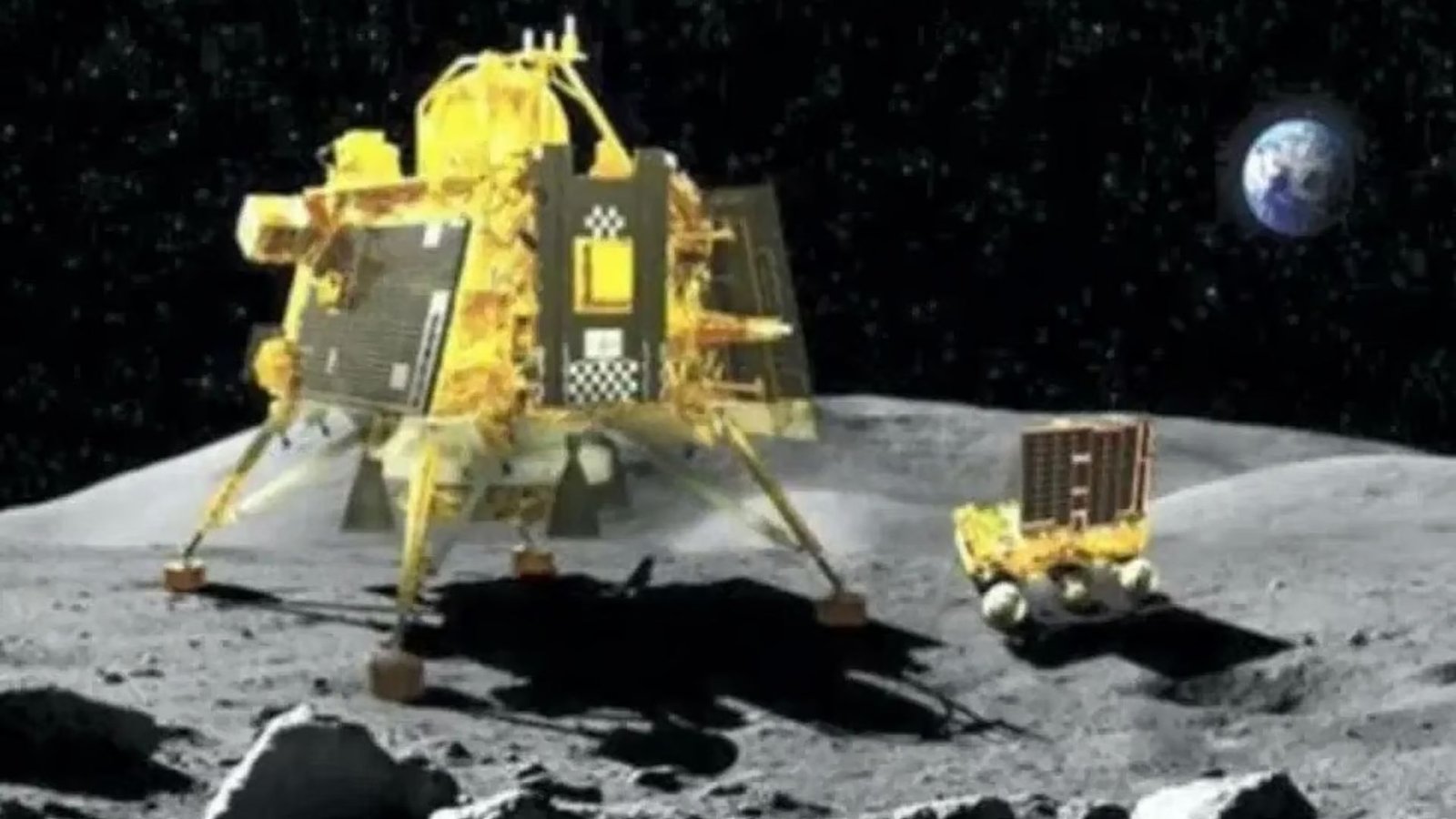
The Chandrayaan-2 mission, despite the loss of its lander, continues to provide valuable scientific data from lunar orbit. Its observations of CME impacts on the Moon demonstrate the importance of studying space weather in the context of planetary exploration and the potential hazards it poses to future human endeavors in space. The mission’s data contributes significantly to our understanding of the Sun-Earth-Moon system and its dynamic interactions.
The success of Chandrayaan-2’s CHACE-2 instrument in detecting CME effects highlights the importance of in-situ measurements for characterizing planetary environments and furthering our knowledge of space weather phenomena. Further analysis of the Chandrayaan-2 data, along with data from other lunar missions, will undoubtedly provide even more comprehensive insights into the complex interplay between the Sun and the Moon.
Image Source: Google | Image Credit: Respective Owner