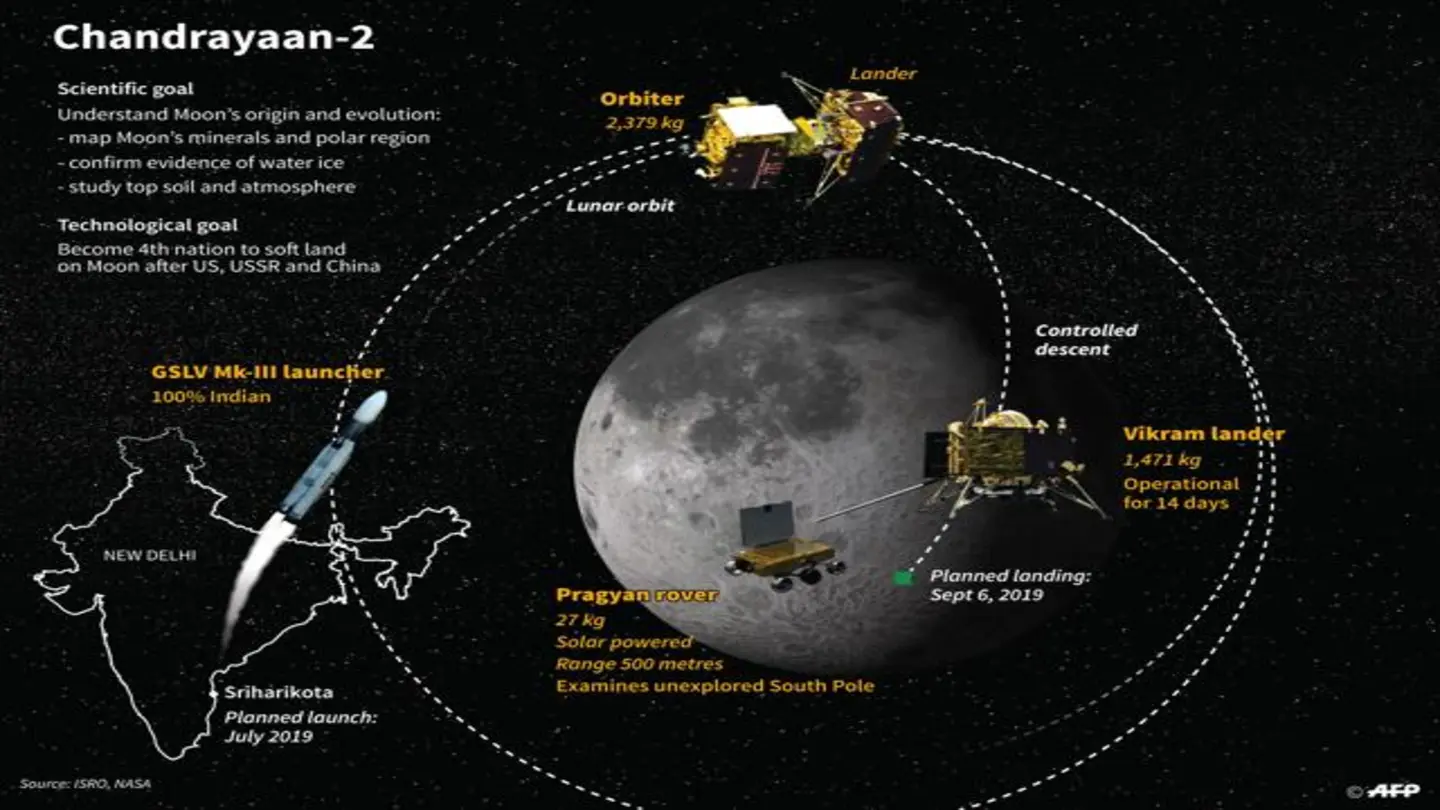
Data from India’s Chandrayaan-2 mission is providing unprecedented insights into the lunar polar regions, enhancing our understanding of the Moon’s composition and potential resources. The mission, though its lander failed to achieve a soft landing, continues to contribute valuable scientific data through its orbiter. Scientists are analyzing data from instruments onboard the orbiter to map the distribution of water ice and other volatile compounds in the permanently shadowed regions (PSRs) of the lunar south pole.
Lunar Polar Regions and Water Ice
The lunar polar regions, particularly the south pole, are of great interest due to the presence of PSRs. These areas, shielded from direct sunlight, maintain extremely low temperatures, potentially trapping water ice over billions of years. The existence of water ice on the Moon has significant implications for future lunar exploration and resource utilization. Water ice could be used as a source of drinking water, oxygen, and rocket propellant, reducing the cost and complexity of long-duration missions.
Chandrayaan-2’s instruments, including its Terrain Mapping Camera 2 (TMC-2) and Imaging Infrared Spectrometer (IIRS), are providing high-resolution images and spectral data of the lunar surface. This data is being used to identify and characterize the distribution of water ice in the PSRs. By analyzing the spectral signatures of the lunar surface, scientists can determine the abundance and composition of water ice and other volatile compounds.
Key Findings and Implications
Recent studies based on Chandrayaan-2 data have revealed new details about the morphology and composition of the lunar south pole. The data suggests that water ice is not uniformly distributed in the PSRs but is concentrated in specific areas, often associated with small craters and depressions. The presence of water ice in these regions could be the result of micrometeorite impacts and solar wind interactions, which can deliver and trap water molecules on the lunar surface.
The findings from Chandrayaan-2 are also helping to refine our understanding of the Moon’s formation and evolution. The presence of water ice on the Moon provides clues about the origin of water in the inner solar system and the processes that shaped the lunar environment. Furthermore, the data is valuable for planning future lunar missions, including those aimed at extracting and utilizing lunar resources.
Future Lunar Exploration
The data from Chandrayaan-2 complements data from other lunar missions, such as NASA’s Lunar Reconnaissance Orbiter (LRO), and is helping to build a comprehensive picture of the lunar polar regions. This knowledge is essential for future lunar exploration efforts, including NASA’s Artemis program, which aims to return humans to the Moon and establish a sustainable lunar presence. The insights gained from Chandrayaan-2 will inform the selection of landing sites, resource extraction strategies, and the development of technologies for utilizing lunar resources.
India’s continued contribution to lunar science through the Chandrayaan-2 mission underscores the importance of international collaboration in space exploration. The mission’s data is being shared with scientists around the world, fostering a deeper understanding of the Moon and its potential for future human endeavors.
Image Source: Google | Image Credit: Respective Owner