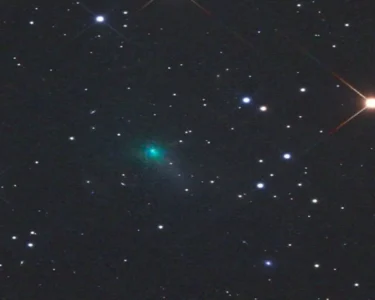
Geneva, Switzerland – In a groundbreaking discovery, researchers at CERN have confirmed that the universe’s earliest moments behaved remarkably like a near-perfect fluid, challenging existing cosmological models. The findings, stemming from extensive analysis of data collected by the Large Hadron Collider (LHC), suggest that the universe in its infancy possessed properties vastly different from the expanding, structured cosmos we observe today.
The research, published in a leading scientific journal, focuses on the behavior of quarks and gluons – fundamental particles that make up protons and neutrons – during the first fraction of a second after the Big Bang. Traditionally, these particles were thought to have existed in a ‘hot, dense soup’ of individual constituents. However, the new data indicates that they behaved collectively, forming a single, coherent fluid with unusual viscosity and elasticity.
Understanding the Early Universe
“This is a truly remarkable result,” stated Dr. Anya Sharma, lead researcher on the project. “It’s like observing a giant, cosmic smoothie. The fluid-like behavior of these particles suggests that the universe underwent a phase transition, similar to water turning into ice, but on a scale far grander and more fundamental.”
The implications of this discovery are profound. Current theories of inflation, which explain the rapid expansion of the early universe, rely on specific assumptions about the behavior of matter at extremely high energies. The CERN findings provide crucial evidence supporting the validity of these inflationary models and offer a new perspective on the universe’s genesis.
The viscosity of this primordial fluid is particularly noteworthy. It’s estimated to have been incredibly low, allowing for rapid amplification of quantum fluctuations – tiny, random variations in the universe’s density. These amplified fluctuations are believed to have seeded the formation of galaxies and large-scale structures we see today.
Researchers used sophisticated detectors at the LHC to measure the momentum and energy of quarks and gluons produced in high-energy collisions. By analyzing the patterns of these collisions, they were able to infer the properties of the primordial fluid. The results align remarkably well with theoretical predictions based on the concept of a fluid early universe.
The CERN team plans to continue their research, aiming to refine their measurements and explore the properties of the primordial fluid in greater detail. Future experiments at the LHC will focus on searching for subtle deviations from the fluid-like behavior, which could provide further insights into the universe’s earliest moments. This research represents a significant step forward in our understanding of the cosmos and its evolution, potentially rewriting textbooks and sparking new avenues of inquiry in cosmology and particle physics.
The discovery underscores the importance of fundamental research and the power of large-scale scientific collaborations. It’s a testament to human curiosity and our relentless pursuit of knowledge about the universe we inhabit.
Image Source: Google | Image Credit: Respective Owner