Key Semifinals
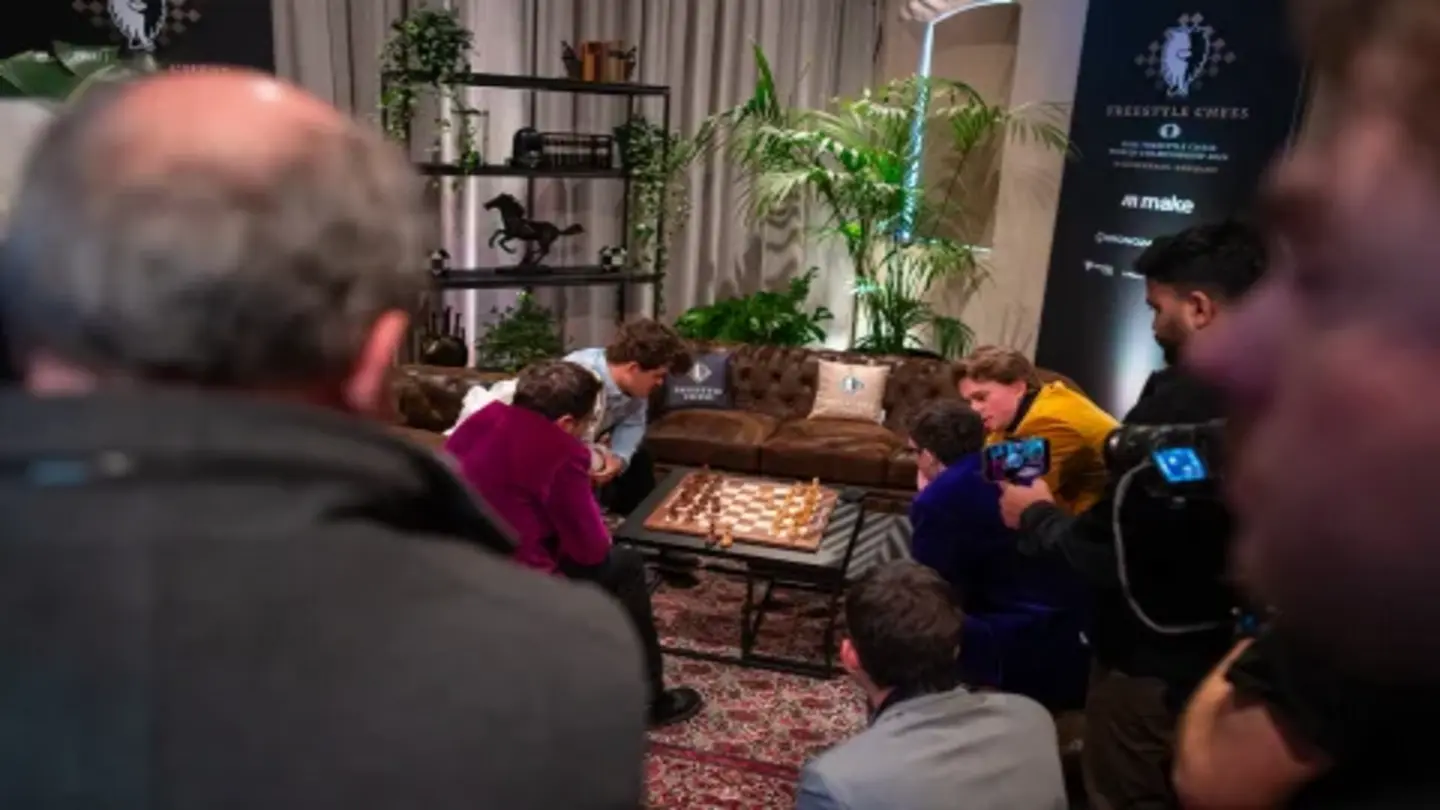
Magnus Carlsen dominated his recent online qualifying group, clinching first place with a decisive performance that placed him among the eight semifinalists.
The semifinal lineup now includes American grandmaster Fabiano Caruana, rising German prodigy Leon Keymer, and Uzbek star Nodirbek Abdusattorov, each of whom advanced through separate knockout brackets.
Carlsen’s victory underscores his continued supremacy in rapid and classical formats, reinforcing his status as the world’s leading player despite a competitive field that features multiple younger challengers.
Organizers highlighted the significance of the mixed-generation semifinal, noting that the clash between seasoned veterans and emerging talents promises high-stakes entertainment for global audiences.
Broadcast schedules indicate that the semifinals will be streamed live across multiple platforms, with commentators emphasizing historic narratives such as Carlsen’s pursuit of a fifth world championship title and Caruana’s quest for redemption after previous near-misses.
Fans are expected to engage heavily on social media, analyzing opening strategies and endgame techniques while also celebrating the cultural impact of chess as a sport that bridges continents and generations.
The competition, conducted on a fast-play platform, required participants to complete each round within a strict time limit, testing both speed and accuracy under pressure.
Qualification pathways varied across regions, with continental federations each sending their top-ranked players, resulting in a truly global representation that enriched the semifinal field.
Analysts predict that Caruana’s experience in high-profile finals could give him an edge, while Keymer’s youthful vigor may introduce unexpected variations in opening theory.
Abdusattorov, known for his aggressive tactical style, is expected to challenge the more positional players, potentially reshaping the dynamics of upcoming matches.
Prize money for the semifinals has been announced, with the champion receiving a substantial cash award and additional rating points that could affect future seeding in elite events.
Chess federations worldwide have issued statements praising the tournament’s organization, highlighting its role in promoting the game’s growth and encouraging youth participation.
Social media analytics reveal a surge in search queries related to player profiles and match histories, indicating heightened public interest ahead of the decisive games.
Overall, the upcoming semifinals promise a compelling narrative of legacy versus innovation, as Carlsen seeks to extend his dominance while newer stars aim to rewrite the competitive landscape.
The tournament’s format featured a double-elimination structure, meaning that participants needed to achieve multiple victories to progress, adding an extra layer of strategic depth and resilience testing.
Future coverage will likely include post-match analyses, featuring expert breakdowns of critical turning points that defined each encounter.
Image Source: Google | Image Credit: Respective Owner