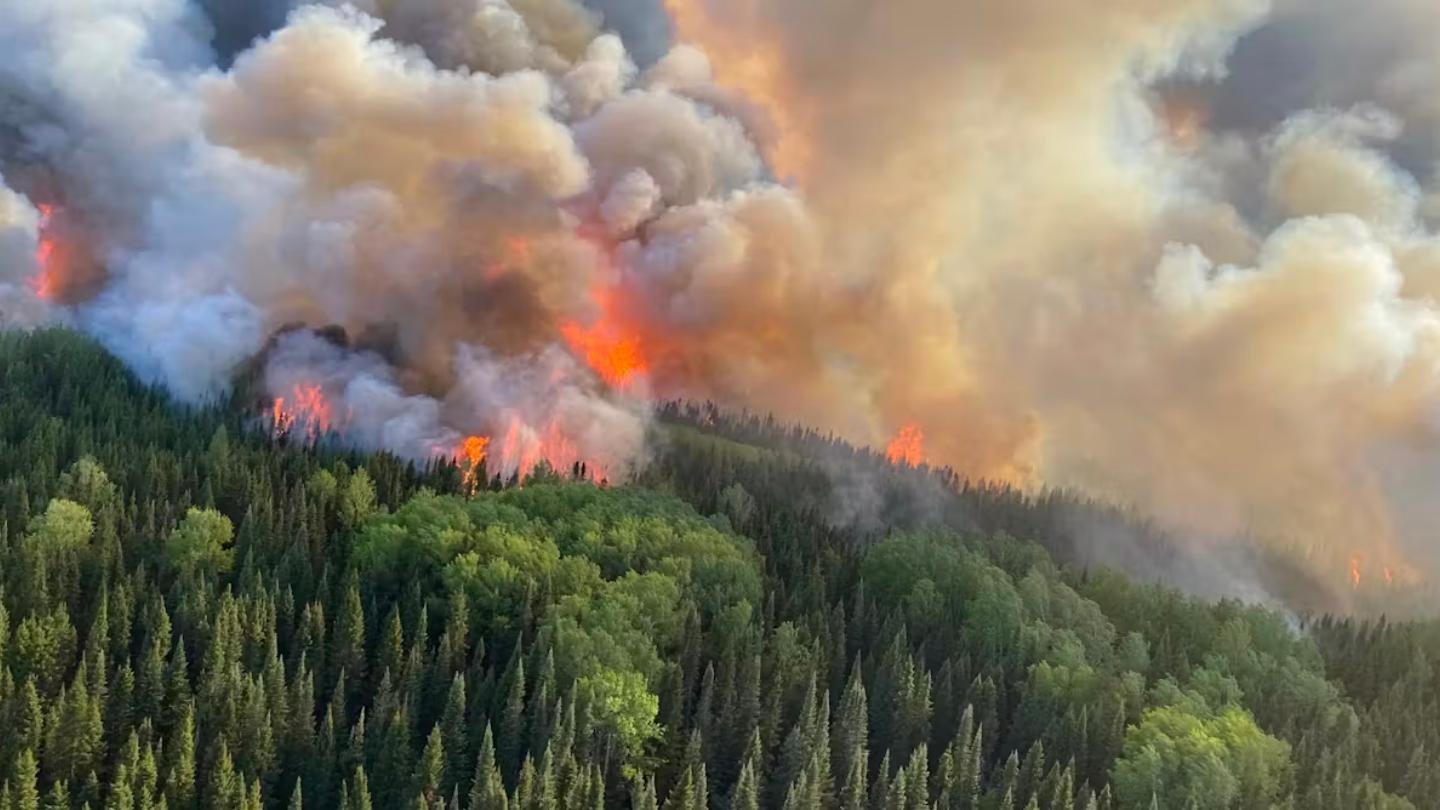
Canada’s wildfire season in 2025 is breaking records and making global headlines. With the country experiencing its second-worst wildfire season on record, the devastating effects of the fires have been felt beyond its borders. Smoke from these wildfires has painted the skies orange across major U.S. cities, and even drifted across the Atlantic to Europe, raising air quality concerns for millions.
As the country battles against these catastrophic wildfires, questions have been raised about the effectiveness of Canada’s response. Many experts have warned that extreme weather events, such as these devastating wildfires, may become the “new normal” due to climate change. With over 7.3 million hectares burned and more than 470 fires still out of control, Canada is facing one of its most intense wildfire seasons to date.
In response, Canada has mobilized firefighters from around the world. Hundreds of international firefighters from the U.S., Australia, France, and South Africa have joined efforts to contain the blazes. Additionally, the Canadian Armed Forces have been deployed for evacuation efforts, logistical support, and to protect vulnerable communities.
While the country has taken significant steps to tackle the fires, challenges persist, including the interference of drones that have grounded aerial suppression efforts. Local firefighting crews remain stretched thin, and the prolonged drought exacerbates the problem. In fact, Toronto recorded its driest July on record, contributing to the rapid spread of the fires.
As concerns grow about Canada’s ability to respond to wildfires in the face of climate change, the question remains: Is the government’s response to the wildfire crisis sufficient?
We want to hear from you — are you satisfied with Canada’s wildfire response, and how do you feel about the future of extreme weather events in the country?
Image Source: The Canadian Press/Evan Hammond
Image Credit: Respective Owner