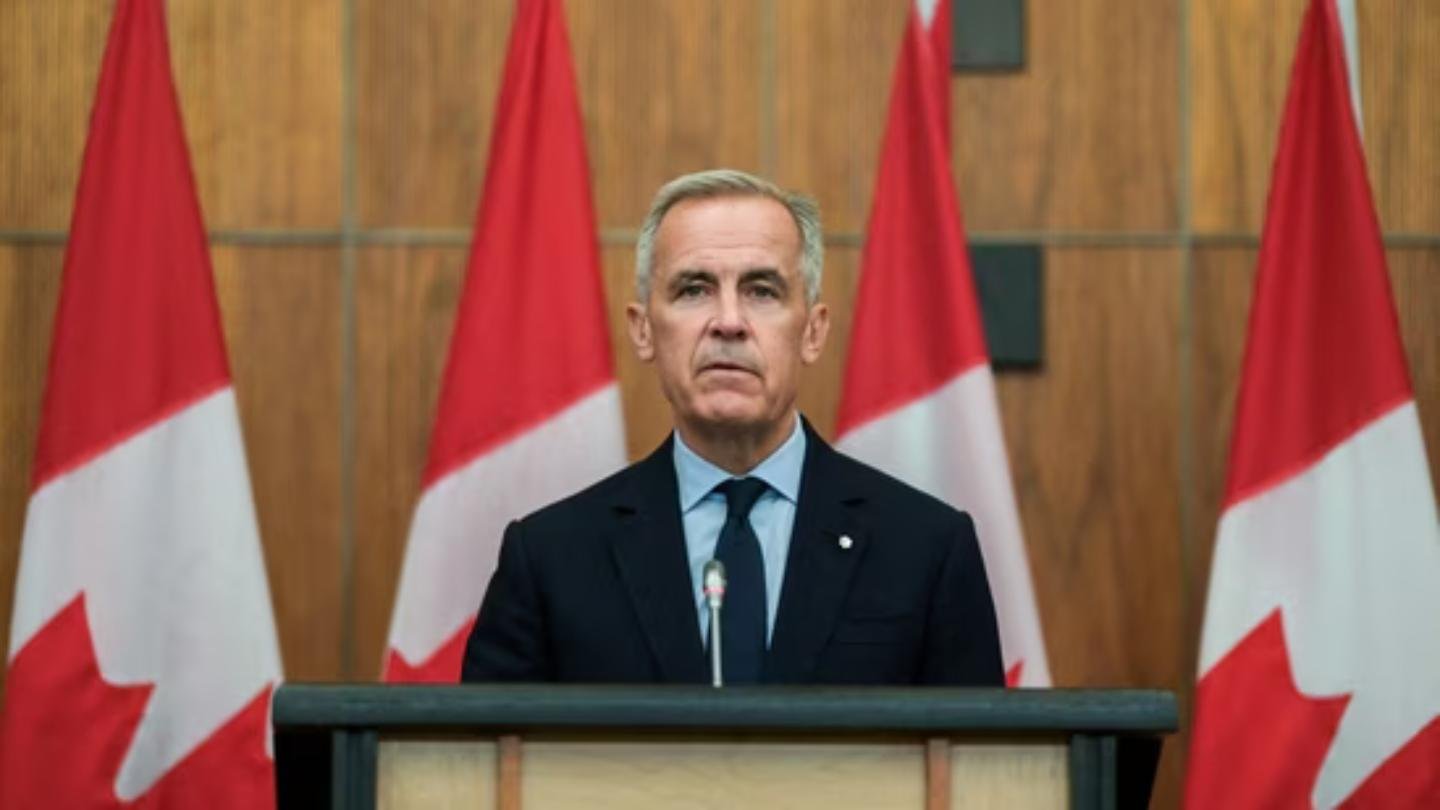
In a significant development for trade relations between the United States and Canada, Prime Minister Mark Carney announced on Friday that Canada will remove retaliatory tariffs on U.S. goods covered by the United States-Mexico-Canada Agreement (USMCA), effective September 1. This move follows a call between Carney and U.S. President Donald Trump and comes amid ongoing discussions between the two countries about a broader trade deal.
Carney told reporters that Canada’s decision to eliminate the tariffs aligns with Washington’s recent exemption of U.S. products covered under the USMCA. “Canada currently has the best trade deal with the United States. And while it’s different from what we had before, it’s still better than that of any other country,” he stated.
However, Canada will maintain tariffs on steel, aluminum, and automobile products as both nations continue to negotiate solutions for these sectors. The USMCA, which is scheduled for a review in 2026, is seen as a key trade agreement for Canada, offering significant advantages. Carney emphasized that the deal provides Canadian exporters with access to one of the lowest average tariff rates in the U.S., with over 85% of bilateral trade between the two countries remaining tariff-free.
Despite this, uncertainties remain, particularly regarding the U.S.’s future approach to the trade pact. U.S. Commerce Secretary Howard Lutnick hinted that the Trump administration might push for a renegotiation of the USMCA. Trump has also raised tariffs on certain Canadian imports, including a 25% increase on non-USMCA-covered goods, and a 40% transshipment levy on goods rerouted through other countries to avoid tariffs.
While the USMCA ensures preferential treatment for Canadian and Mexican firms, other U.S. tariffs on Canadian products—such as those on steel, aluminum, and automotive imports—remain a point of contention.
Trade experts believe that preserving the free trade pact will be crucial for both Canada and Mexico, as they rely heavily on exports to the U.S., with over 75% of Canadian exports and 80% of Mexican exports heading to the American market.
Image Source: TOI (Times of India)