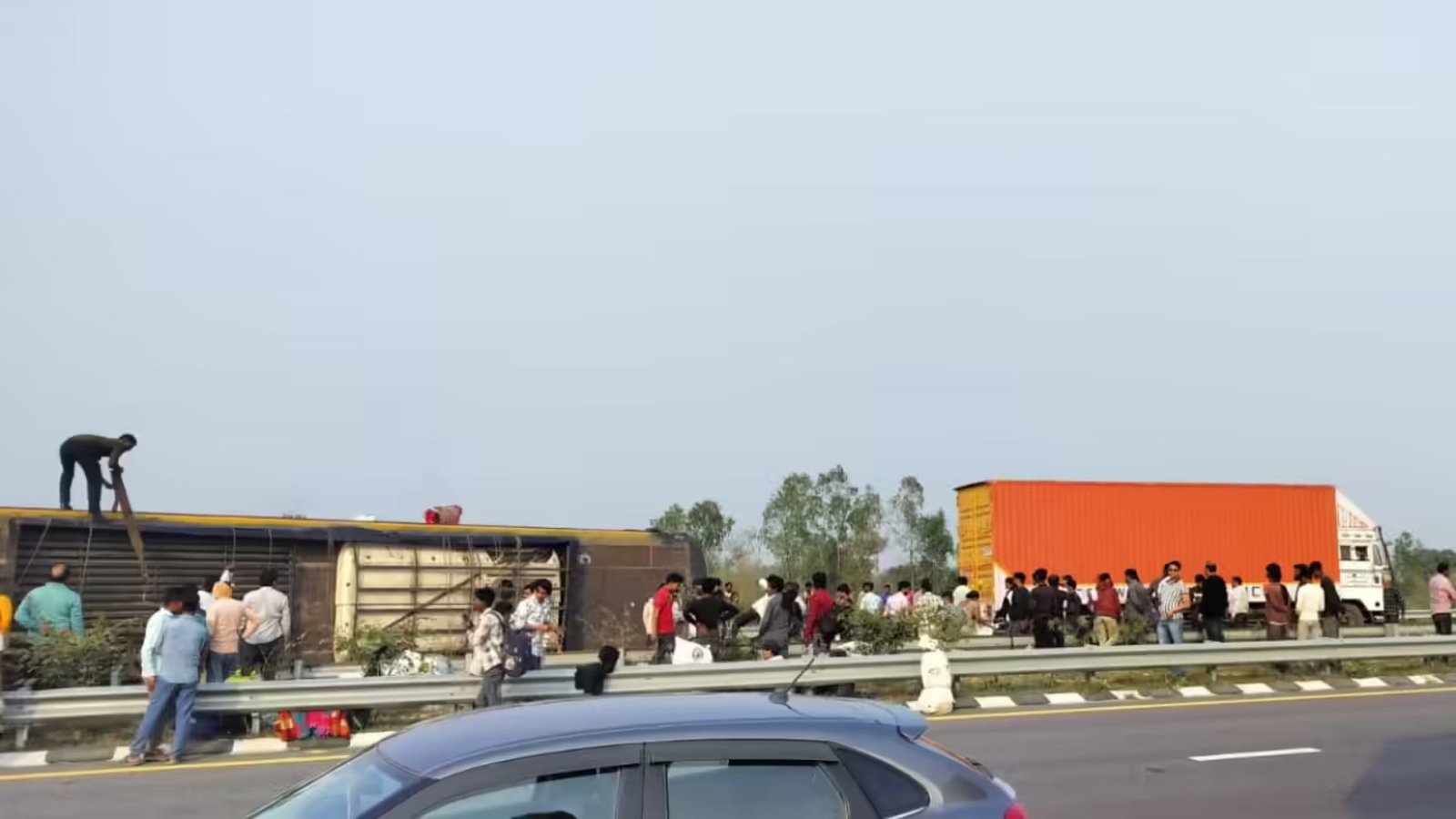
The early morning tragedy on the Purvanchal Expressway near Lucknow has claimed seven lives and left twenty‑one others injured after a sleeper‑coach overturned while attempting to overtake a slower vehicle.
According to Uttar Pradesh police reports, the accident occurred at approximately 02:30 a.m. on Tuesday when the private bus, carrying laborers returning from Delhi, lost control on a sharp bend and rolled onto its side.
Emergency services arrived within minutes, extricating passengers from the mangled cabin and transporting the critically wounded to the nearby Sanjay Gandhi Postgraduate Institute of Medical Sciences.
Hospital officials confirmed that three of the injured are in intensive care, while the remaining eighteen are receiving treatment for fractures, contusions and shock.
Preliminary investigations suggest driver fatigue, coupled with excessive speed, as the primary factors behind the loss of control.
Authorities have cordoned off the accident site and begun a detailed technical examination of the vehicle’s brakes and steering system.
The state’s transport department announced a temporary suspension of night‑time freight services on the stretch pending a safety audit, aiming to prevent a recurrence of such incidents.
Expressway officials emphasized that the roadway meets standard design specifications, but elected to increase signage and install additional advisory boards for drivers.
Chief Minister Yogi Adityanath expressed condolences to the families of the victims and directed the health department to monitor the recovery of all injured parties.
Public reaction on social media has been swift, with calls for stricter enforcement of commercial vehicle regulations and mandatory rest periods for bus operators.
Legal experts anticipate civil liability claims against the bus owner, while insurance firms are preparing to process the claims in line with state statutes.
This incident underscores broader concerns about road safety on India’s rapidly expanding highway network, where congestion and driver inexperience frequently intersect.
Analysts suggest that improving driver training, regulating hours of service, and enhancing roadside infrastructure could mitigate similar disasters.
As the investigation unfolds, authorities promise to publish a comprehensive report within the next fortnight, reinforcing commitments to public safety on national highways.
This tragedy serves as a stark reminder of the human cost associated with traffic accidents, urging communities, policymakers, and industry leaders to coalesce toward systemic reforms.
The incident also reignited debates on the adequacy of current driver fatigue monitoring protocols, with advocacy groups demanding mandatory electronic logging devices for all commercial operators to ensure compliance with rest regulations. Such measures could yield immediate reductions in night‑time collisions across freight corridors.
Image Source: Google | Image Credit: Respective Owner