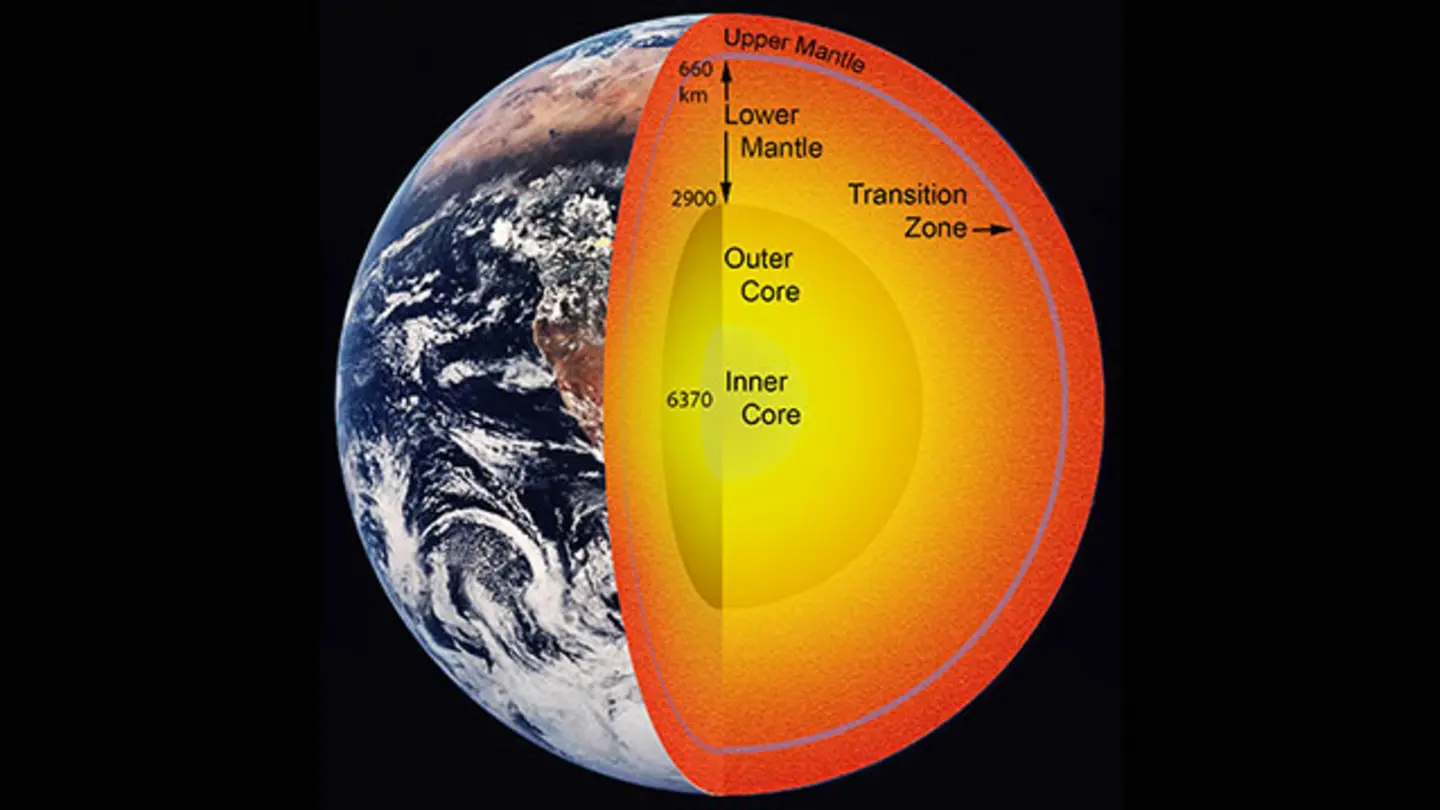
New research published in the ESS Open Archive details compelling field evidence of a frequency-dependent transition in apparent body-wave velocity. This discovery, stemming from detailed seismic analysis, offers a significant advancement in understanding Earth’s deep interior structure and the complex propagation of seismic waves.
The study focuses on analyzing body waves – seismic waves that travel through the Earth’s interior – and how their velocity appears to change depending on the frequency of the wave. Traditionally, seismic velocity is considered relatively constant at a given depth. However, this research demonstrates a clear correlation between wave frequency and observed velocity, suggesting a more nuanced and complex internal structure than previously understood.
Researchers utilized advanced data processing techniques to isolate and analyze subtle variations in body-wave arrival times. These variations, previously masked by noise and limitations in data resolution, revealed a distinct pattern: lower frequency waves exhibit a different apparent velocity compared to higher frequency waves. This frequency dependence points to the presence of fine-scale heterogeneities or compositional variations within the Earth’s mantle and core.
Implications for Earth’s Interior
The implications of this finding are far-reaching. A frequency-dependent velocity transition could indicate the presence of partially molten layers, variations in mineral composition, or the existence of small-scale structures within the Earth’s deep interior. These structures could play a crucial role in mantle convection, plate tectonics, and the generation of Earth’s magnetic field.
Furthermore, understanding this velocity transition is critical for improving the accuracy of seismic imaging techniques. Current seismic models often assume a constant velocity, which can lead to inaccuracies in locating earthquake epicenters and characterizing the Earth’s internal structure. Incorporating frequency dependence into these models will refine our understanding of the planet’s internal dynamics.
The research team emphasizes the importance of continued data collection and analysis to further constrain the nature and extent of this velocity transition. Future studies will focus on utilizing data from a wider range of seismic events and incorporating advanced computational modeling to simulate wave propagation through complex Earth structures. This includes leveraging data from dense seismic networks and improving algorithms for noise reduction and signal processing.
The study’s findings contribute to a growing body of evidence suggesting that the Earth’s interior is far more heterogeneous and dynamic than previously thought. This research opens new avenues for investigating the fundamental processes that shape our planet and provides valuable insights into the evolution of Earth’s internal structure over geological time. The open-access publication in the ESS Open Archive ensures broad dissemination of these findings to the scientific community, fostering further research and collaboration.
Ultimately, a more detailed understanding of body-wave velocity transitions will not only enhance our knowledge of Earth’s interior but also improve our ability to assess seismic hazards and mitigate the risks associated with earthquakes and volcanic eruptions.
Image Source: Google | Image Credit: Respective Owner