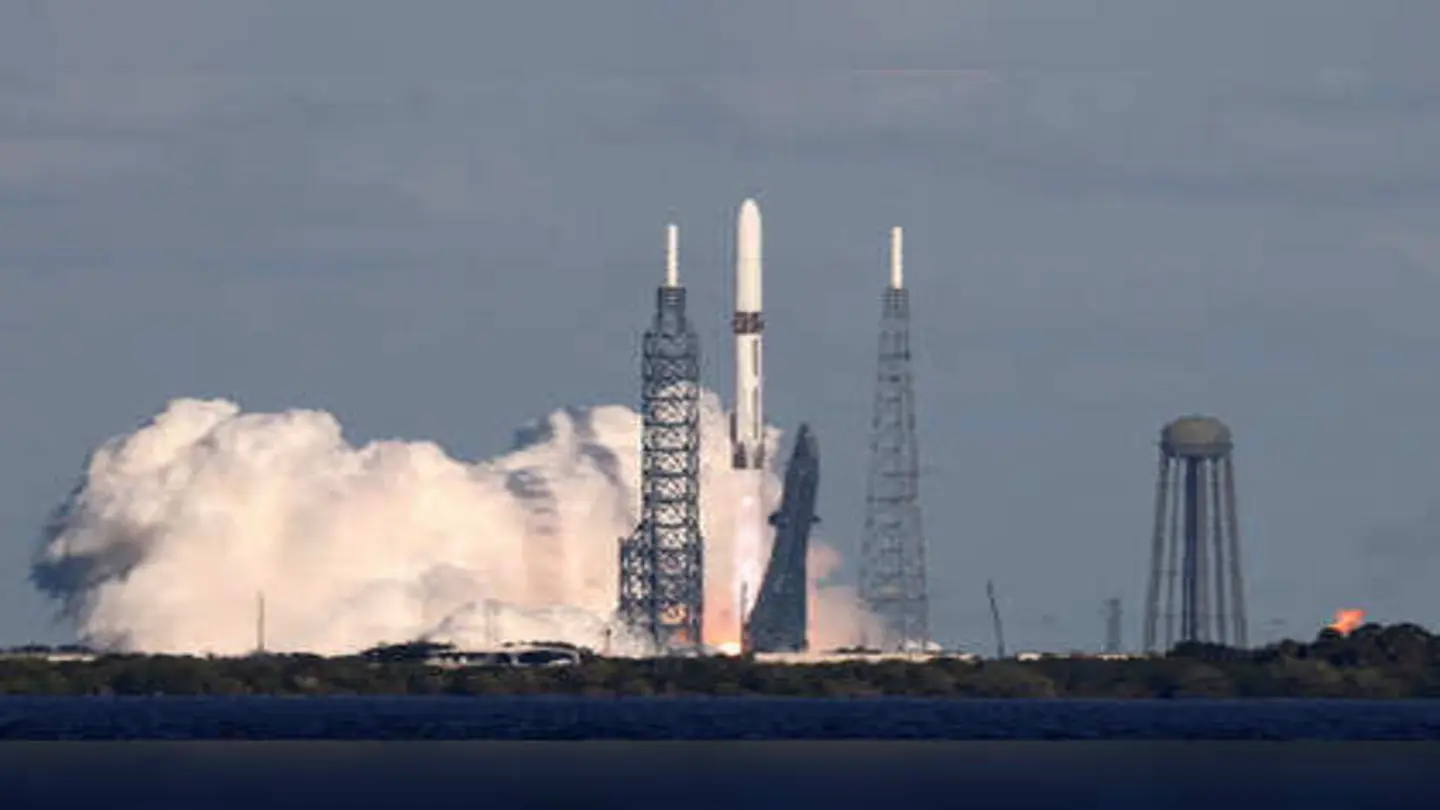
Blue Origin’s New Glenn rocket has successfully launched, deploying Mars satellites and achieving a pinpoint booster landing. This mission marks a significant step forward in commercial space exploration and Blue Origin’s ambitions to contribute to interplanetary travel. The successful deployment of the satellites will enable crucial research and data collection on Mars, paving the way for future manned missions.
Mission Highlights
The New Glenn rocket, named after astronaut John Glenn, lifted off from its launchpad at Cape Canaveral Space Force Station. The launch proceeded flawlessly, with the rocket ascending through the atmosphere and separating its stages as planned. The satellites were deployed into their designated Martian orbits, where they will begin their scientific missions.
One of the mission’s most impressive feats was the successful landing of the rocket’s reusable booster. The booster returned to Earth and touched down on a designated landing platform, demonstrating the viability of reusable rocket technology. This advancement significantly reduces the cost of space travel and makes frequent missions more economically feasible.
Satellite Objectives
The satellites deployed by the New Glenn rocket are equipped with advanced sensors and instruments designed to study the Martian atmosphere, geology, and potential for past or present life. The data collected will provide valuable insights into Mars’ climate history, surface features, and subsurface composition. Researchers will use this information to better understand the planet’s evolution and to identify potential landing sites for future missions.
The mission also aims to test new technologies for in-situ resource utilization (ISRU) on Mars. ISRU involves extracting resources like water and oxygen from the Martian environment to support future human settlements. The satellites will assess the availability and accessibility of these resources, contributing to the planning of long-term manned missions.
Future Implications
The success of the New Glenn mission has far-reaching implications for the future of space exploration. The use of reusable rockets lowers the barrier to entry for space-based research and commercial activities. Furthermore, the deployment of Mars satellites demonstrates the growing interest in understanding and eventually colonizing the Red Planet. Blue Origin’s contributions to these efforts are poised to accelerate the pace of space exploration and unlock new opportunities for scientific discovery and technological advancement. This successful launch reinforces the importance of private sector involvement in pushing the boundaries of space exploration and innovation.
The successful booster landing also signifies a major milestone for Blue Origin, showcasing their engineering prowess and commitment to sustainable spaceflight. With each successful mission, the company moves closer to realizing its vision of enabling millions of people to live and work in space.
Image Source: Google | Image Credit: Respective Owner