A new study sheds light on the profound influence of black holes and cosmic jets in shaping the evolution of galaxies. Researchers have discovered that these powerful phenomena, often associated with active galactic nuclei (AGN), play a critical role in regulating star formation and the overall structure of their host galaxies. The findings offer valuable insights into the complex interplay between supermassive black holes and their galactic environments.
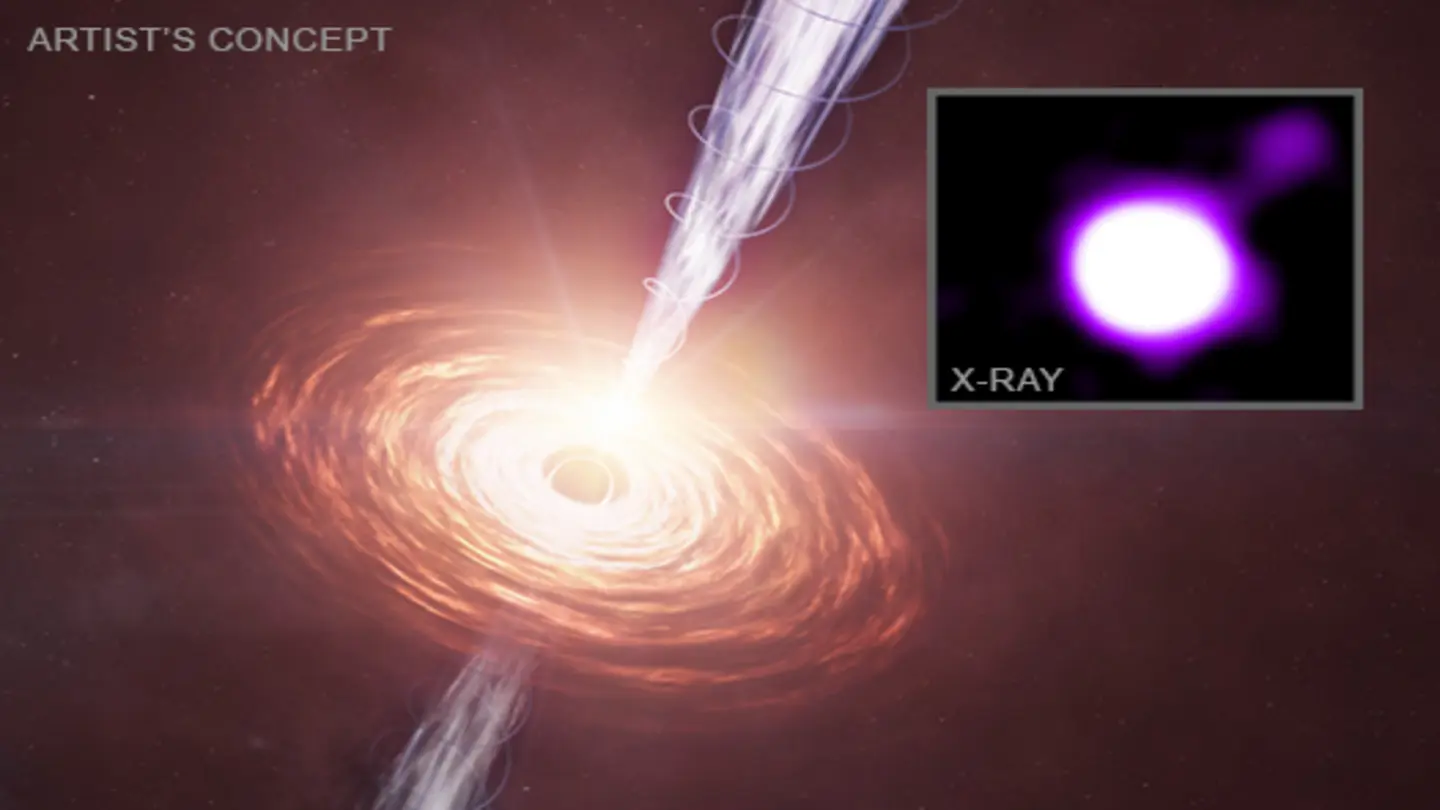
The research, published in a leading astrophysics journal, details how the energy released by supermassive black holes in the form of relativistic jets can significantly impact the surrounding gas clouds within a galaxy. These jets, composed of high-energy particles moving at near-light speed, can either stimulate or suppress star formation depending on their intensity and interaction with the interstellar medium.
AGN Feedback Mechanism
The process, known as AGN feedback, involves the transfer of energy from the black hole to the galaxy’s gas reservoir. When the jets are relatively weak, they can compress the gas clouds, triggering bursts of star formation. However, more powerful jets can heat the gas to extreme temperatures, preventing it from collapsing and forming new stars. This negative feedback mechanism can effectively quench star formation in the central regions of galaxies, leading to their morphological evolution.
Scientists used advanced simulations and observational data from telescopes to analyze the dynamics of gas and stars in galaxies with active black holes. The simulations revealed intricate details of how jets interact with the interstellar medium, creating shock waves and turbulence that can either promote or inhibit star formation. Observational data, including radio and X-ray emissions, provided further evidence of the presence and impact of cosmic jets on galactic scales.
The study also explores the connection between AGN feedback and the formation of elliptical galaxies. Elliptical galaxies, characterized by their smooth, featureless appearance and lack of ongoing star formation, are often found to host massive black holes at their centers. The researchers suggest that AGN feedback may be a key factor in the formation of these galaxies, as the powerful jets from the central black hole can effectively shut down star formation, leading to the observed quiescent state.
Furthermore, the study highlights the importance of understanding AGN feedback in the context of galaxy evolution. By regulating star formation and influencing the distribution of gas and dust, black holes play a critical role in shaping the properties of galaxies throughout cosmic history. Future research will focus on exploring the diverse range of AGN feedback mechanisms and their impact on different types of galaxies, from dwarf galaxies to massive elliptical systems. This research advances our comprehension of the universe’s intricate processes, linking the smallest and largest structures.
Image Source: Google | Image Credit: Respective Owner