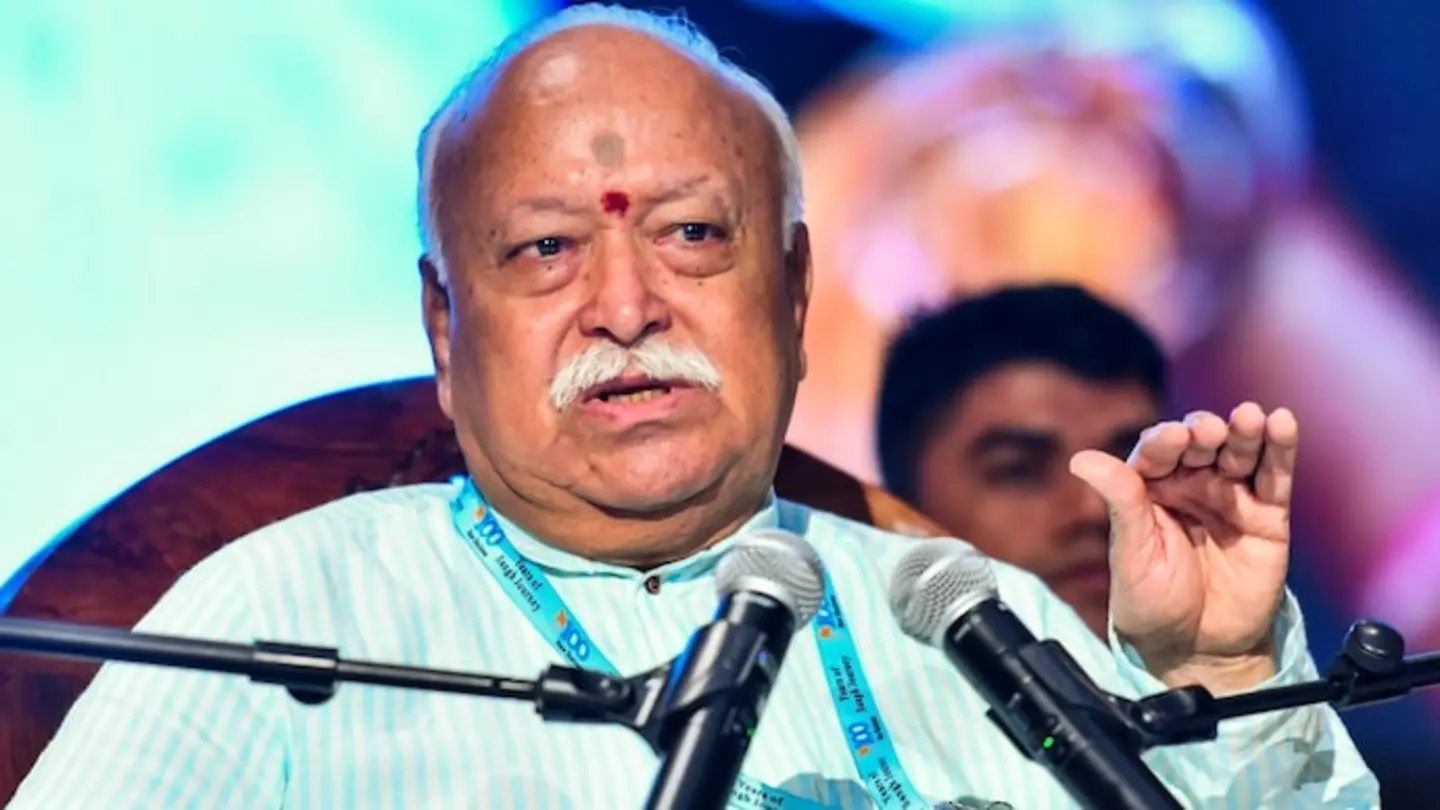
Rashtriya Swayamsevak Sangh (RSS) chief Mohan Bhagwat stated that Muslims and Christians are welcome to join the organization, but with a specific condition: they must acknowledge that Hindus are their ancestors and that India is their nation. Bhagwat made these remarks during an event, emphasizing the inclusive nature of the RSS while also highlighting its core Hindutva ideology. His statement underscores the RSS’s long-standing vision of cultural nationalism, where the nation’s identity is intrinsically linked to its Hindu heritage.
RSS’s Inclusivity Claim
Bhagwat’s assertion aims to portray the RSS as an organization open to individuals of all faiths, provided they accept the historical and cultural ties to Hinduism and India. This stance reflects the RSS’s efforts to broaden its appeal and dispel criticism that it is exclusively Hindu. The RSS, a prominent Hindu nationalist organization, has often faced scrutiny over its views on religious minorities in India. Bhagwat’s statement can be seen as an attempt to address these concerns and present a more inclusive image to the public.
The ‘one condition’ highlights the RSS’s ideological position that all Indians, regardless of their religious beliefs, share a common ancestry and national identity rooted in Hindu traditions. This perspective is central to the RSS’s concept of ‘Hindutva,’ which advocates for the cultural and national unity of India based on Hindu values. By emphasizing this condition, Bhagwat reaffirms the RSS’s commitment to its core principles while extending an invitation to those from different religious backgrounds.
Reactions and Implications
Bhagwat’s statement has already elicited varied reactions. Supporters view it as a sincere effort to foster unity and inclusivity within the RSS framework. Critics, however, argue that the condition is exclusionary and undermines the secular principles of the Indian Constitution. Political analysts note that this statement could influence the ongoing discourse on national identity and religious harmony in India. The implications of this statement are far-reaching, touching on issues of social cohesion, religious freedom, and the definition of Indian nationalism. It remains to be seen how this proposition will be received by different communities and its impact on the broader social and political landscape of India.
The statement arrives at a crucial time, as India navigates complex issues related to religious diversity and national identity. As such, Mohan Bhagwat’s remarks are significant in shaping the national conversation about the role of religious minorities in Indian society. The RSS’s stance, as articulated by Bhagwat, reflects the organization’s ongoing efforts to define and promote its vision of Indian nationalism, based on a shared cultural and historical heritage.
Image Source: Google | Image Credit: Respective Owner