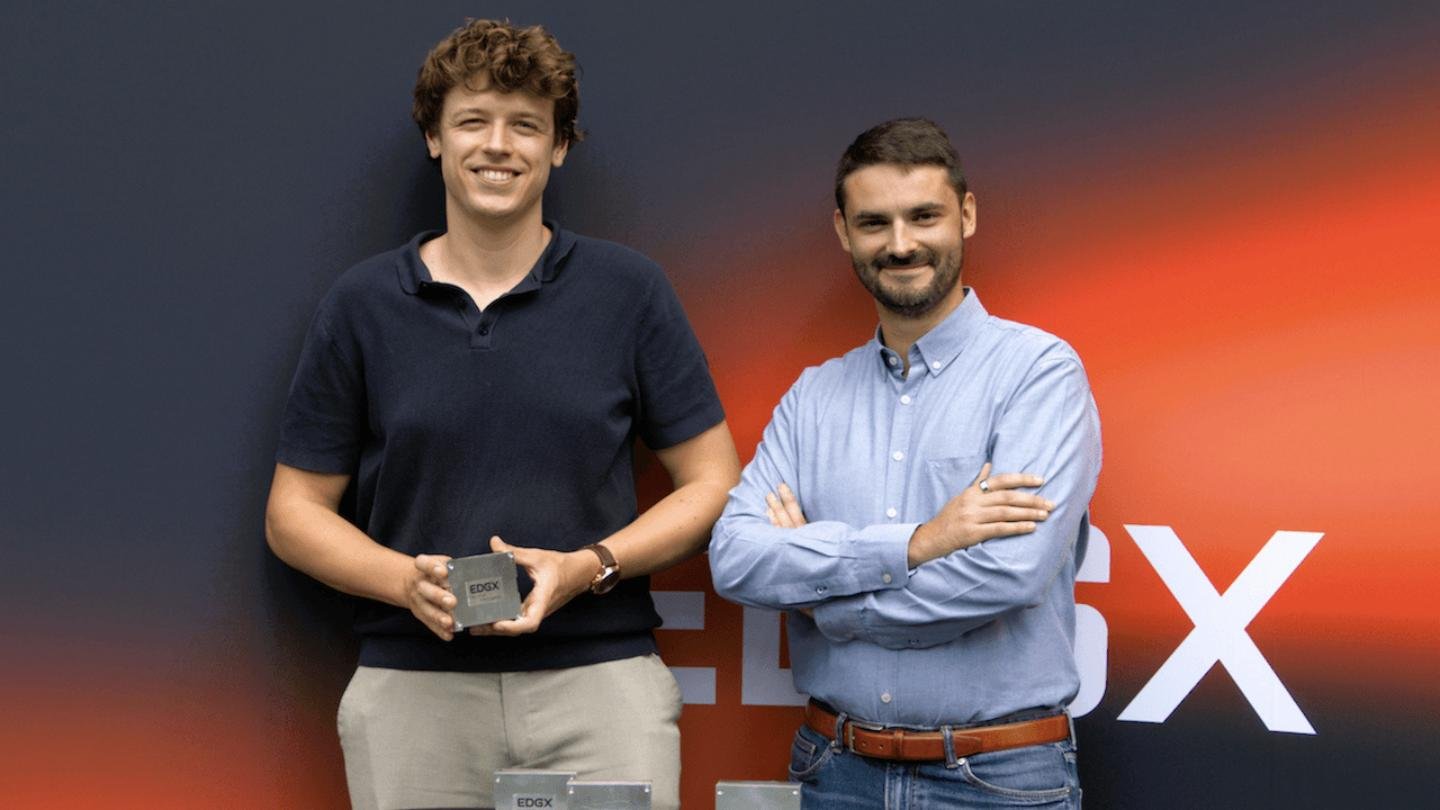
GHENT, Belgium — August 11, 2025: Belgian spacetech startup EDGX has raised €2.3 million in seed funding to accelerate the commercialisation of EDGX Sterna, its next-generation AI-powered edge computer designed for satellite constellations.
The funding round was co-led by the imec.istart future fund and the Flanders Future Tech Fund (managed by Flemish investment firm PMV), with additional backing from imec.istart, Europe’s top-ranked university-affiliated accelerator.
A Big Leap for AI in Space
Alongside the funding, EDGX announced a €1.1 million multi-unit deal with a satellite operator and confirmed an in-orbit demonstration on a SpaceX Falcon 9 mission scheduled for February 2026.
The EDGX Sterna Computer is a high-performance data processing unit (DPU) powered by NVIDIA technology, designed to process massive amounts of satellite data directly in orbit. By eliminating the need to send raw datasets back to Earth, it enables faster, more efficient, and real-time decision-making in space.
Key Features of EDGX Sterna
- SpaceFeather Software Stack for autonomous and resilient operations
- Radiation-hardened Linux OS with full traceability
- Autonomous health monitoring and fault recovery system
- In-orbit application deployment for post-launch upgrades
- AI acceleration for advanced algorithms in Earth observation, telecom, and navigation
Leadership Speaks
Nick Destrycker, Founder & CEO of EDGX, said:
“Customers aren’t waiting for flight validation, they’re signing now. With a full launch manifest, secured commercial contracts, and our first Falcon 9 mission on the horizon, this funding lets us scale to meet the growing demand for real-time intelligence from space.”
Kris Vandenberk, Managing Partner at imec.istart future fund, added:
“The space industry is at a bottleneck — huge volumes of data are generated in orbit but still processed on the ground. EDGX is solving this with AI-powered edge computing, letting satellites analyse and act on data in real-time.”
Why It Matters:
The global space industry is increasingly focused on reducing data latency and enabling real-time insights from orbit. EDGX’s technology could help satellite operators in Earth observation, climate monitoring, and defense respond to events as they happen, rather than hours or days later.
Image Source: Google Images
Image Credit: Respective Owner