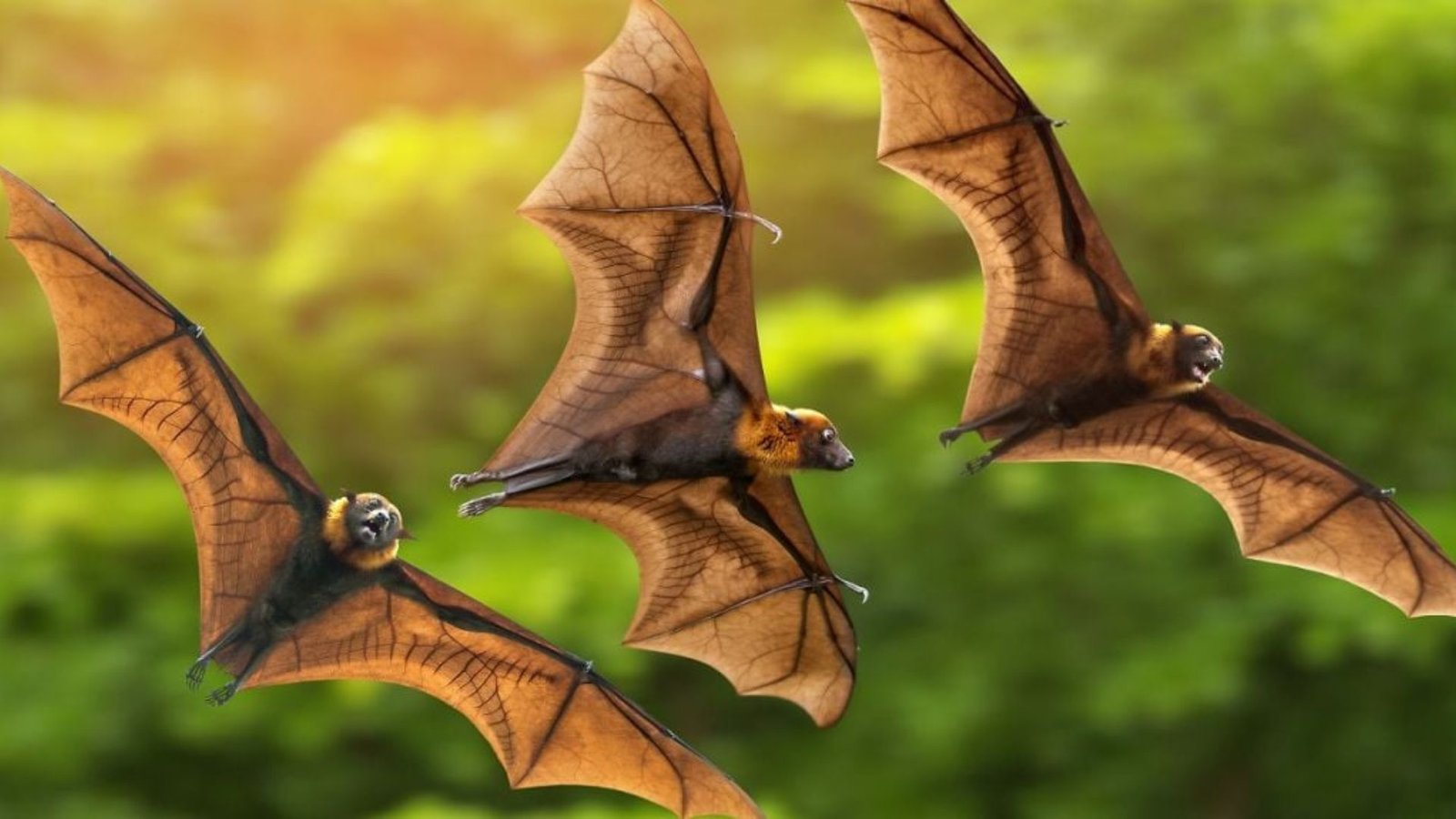
New research reveals that bats’ unique ability to fly stems from the repurposing of ancient genes that were present in their ancestors. The study, published in a leading scientific journal, sheds light on the evolutionary mechanisms that enabled bats to become the only mammals capable of true flight. Scientists have long been fascinated by the genetic basis of bat flight, seeking to understand how these creatures evolved such a specialized adaptation.
The research team, comprised of geneticists and evolutionary biologists, conducted a comprehensive analysis of bat genomes, comparing them to those of other mammals. Their findings revealed that certain genes, which play roles in limb development and muscle function in other mammals, have been co-opted and modified in bats to facilitate flight. These genes, often referred to as “old genes,” were already present in the bat lineage before the evolution of flight, suggesting that the transition to aerial locomotion involved the recruitment of existing genetic resources rather than the creation of entirely new genes.
Gene Repurposing and Limb Development
One key finding was the altered expression of genes involved in limb development. In bats, these genes are expressed in a way that promotes the elongation of the forelimbs and the formation of wings. Specifically, the researchers identified changes in the regulatory regions of these genes, which control when and where they are expressed during embryonic development. These changes resulted in the development of elongated fingers and a membrane of skin that stretches between them, forming the wing surface.
Furthermore, the study revealed that genes involved in muscle function have also been modified in bats. These modifications have resulted in the development of specialized flight muscles that are capable of generating the power and endurance required for sustained flight. The bat flight muscles have a unique structure and composition, which allows them to contract rapidly and efficiently. This allows bats to perform complex aerial maneuvers, such as hovering and maneuvering in tight spaces.
Evolutionary Significance
The discovery that bat flight evolved through the repurposing of old genes has significant implications for our understanding of evolution. It suggests that evolution often works by modifying existing structures and functions, rather than creating entirely new ones. This process, known as “exaptation,” is a common theme in evolution, and it highlights the ingenuity of natural selection in adapting organisms to new environments.
The research also provides insights into the genetic constraints that may have prevented other mammals from evolving flight. While many mammals have developed adaptations for gliding, such as the flying squirrel, none have achieved true powered flight like bats. The study suggests that the unique combination of genetic modifications observed in bats may be difficult to achieve, explaining why flight has evolved so rarely in mammals. Understanding the genetic basis of bat flight can also help us appreciate the complexity of the evolutionary process and the remarkable adaptations that have enabled animals to thrive in diverse environments.
The study’s findings offer new avenues for research into the genetic basis of other complex traits. By identifying the genes and regulatory mechanisms that have been modified during evolution, scientists can gain a better understanding of how organisms have adapted to their environments and how new species have arisen. Future research will focus on exploring the roles of other genes in bat flight, as well as investigating the genetic basis of other unique adaptations in the animal kingdom.
Image Source: Google | Image Credit: Respective Owner