Dhaka, Bangladesh – A nation observed a period of mourning following the passing of Khaleda Zia, Bangladesh’s first female prime minister and a towering figure in the country’s political landscape. Zia died Saturday at the age of 76, after a long period of illness, marking the end of an era dominated by her rivalry with Sheikh Hasina, the current prime minister.
Zia’s death prompted condolences from leaders across the globe, acknowledging her significant role in Bangladeshi politics. However, within Bangladesh, the response was deeply divided, reflecting the polarized political climate she helped shape. Supporters of her Bangladesh Nationalist Party (BNP) mourned the loss of their leader, while many aligned with the Awami League, led by Hasina, remained largely silent or offered restrained tributes.
Born on August 15, 1946, Khaleda Zia rose to prominence through her marriage to Ziaur Rahman, a military officer who later became president after a coup in 1975. Following Rahman’s assassination in 1981, she took on the leadership of the BNP, transforming it into one of the country’s major political forces. She served as prime minister from 1991 to 1996 and again from 2001 to 2006.
Political Legacy and Rivalry
Zia’s tenures as prime minister were marked by periods of economic growth but also by accusations of corruption and political violence. Her legacy is closely intertwined with the decades-long rivalry with Sheikh Hasina, a dynamic that profoundly influenced Bangladesh’s democratic development. The animosity between their families stems from the events surrounding the country’s independence war in 1971.
The rivalry culminated in a political standoff during Zia’s second term, leading to a state of emergency and her eventual arrest in 2007 on corruption charges. She was later released and continued to lead the BNP, though her health deteriorated in recent years. Despite being convicted of corruption, receiving several prison sentences, she was granted suspension of her sentence and spent most of her time at her Dhaka residence under security.
In recent years, the BNP, under Zia’s leadership, found itself increasingly marginalized, accusing the ruling Awami League of suppressing dissent and manipulating elections. Despite these challenges, Zia remained a powerful symbol for her supporters, who saw her as a champion of democracy and a defender of their rights.
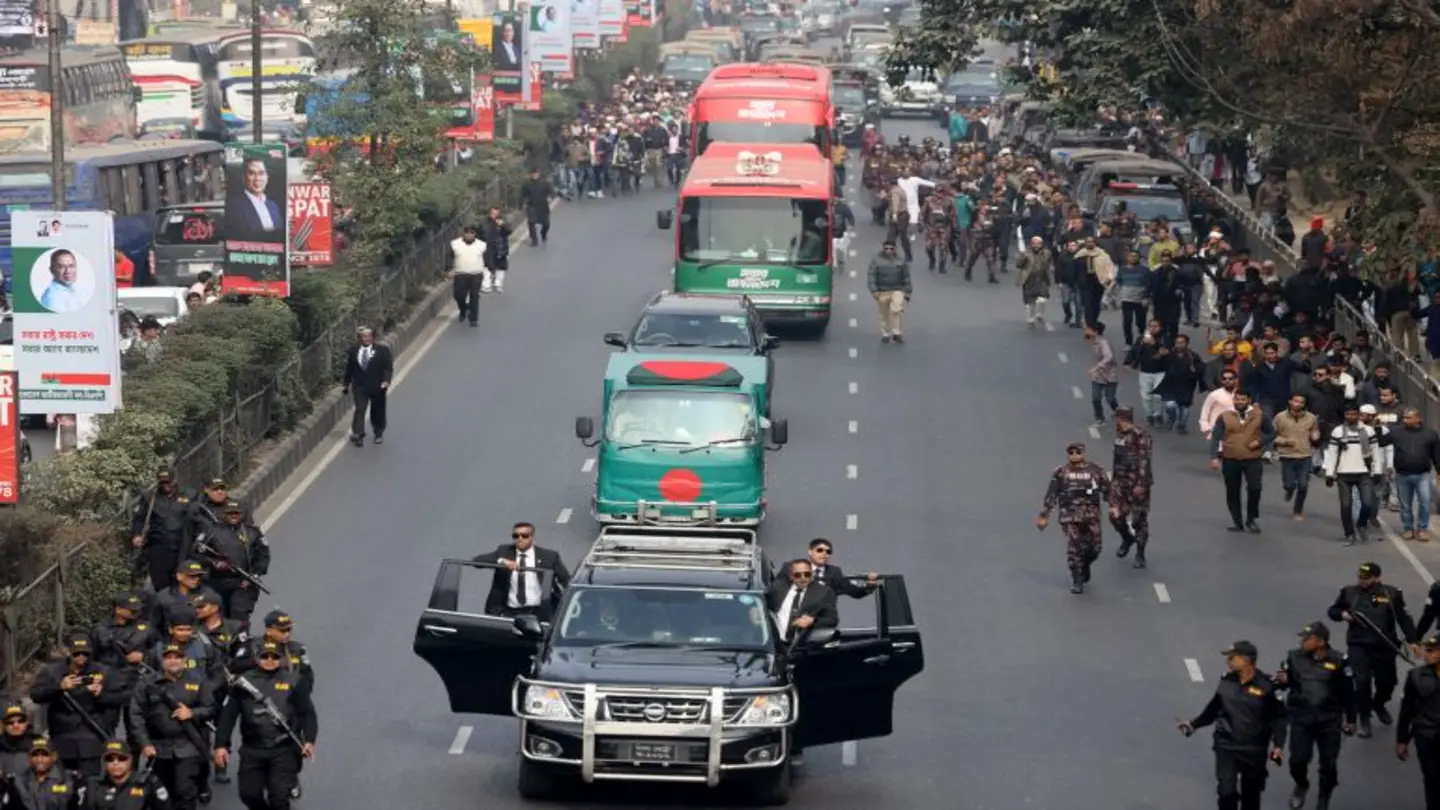
News of her passing sparked heightened security measures in Dhaka, with a large police presence deployed to prevent any potential unrest. The BNP has announced a period of mourning, with flags flown at half-mast and memorial services held across the country. It remains to be seen how her death will impact the future direction of Bangladeshi politics and the prospects for reconciliation between the two major political parties. Many political analysts anticipate a power struggle within the BNP to determine her successor, potentially leading to further fragmentation within the opposition.
The government has not declared a national day of mourning, a decision that highlights the ongoing political divisions within the nation. Her funeral is expected to be a large-scale event, drawing supporters from all over Bangladesh. The nation remembers her as a complex and controversial figure whose influence will be felt for years to come.
Image Source: Google | Image Credit: Respective Owner