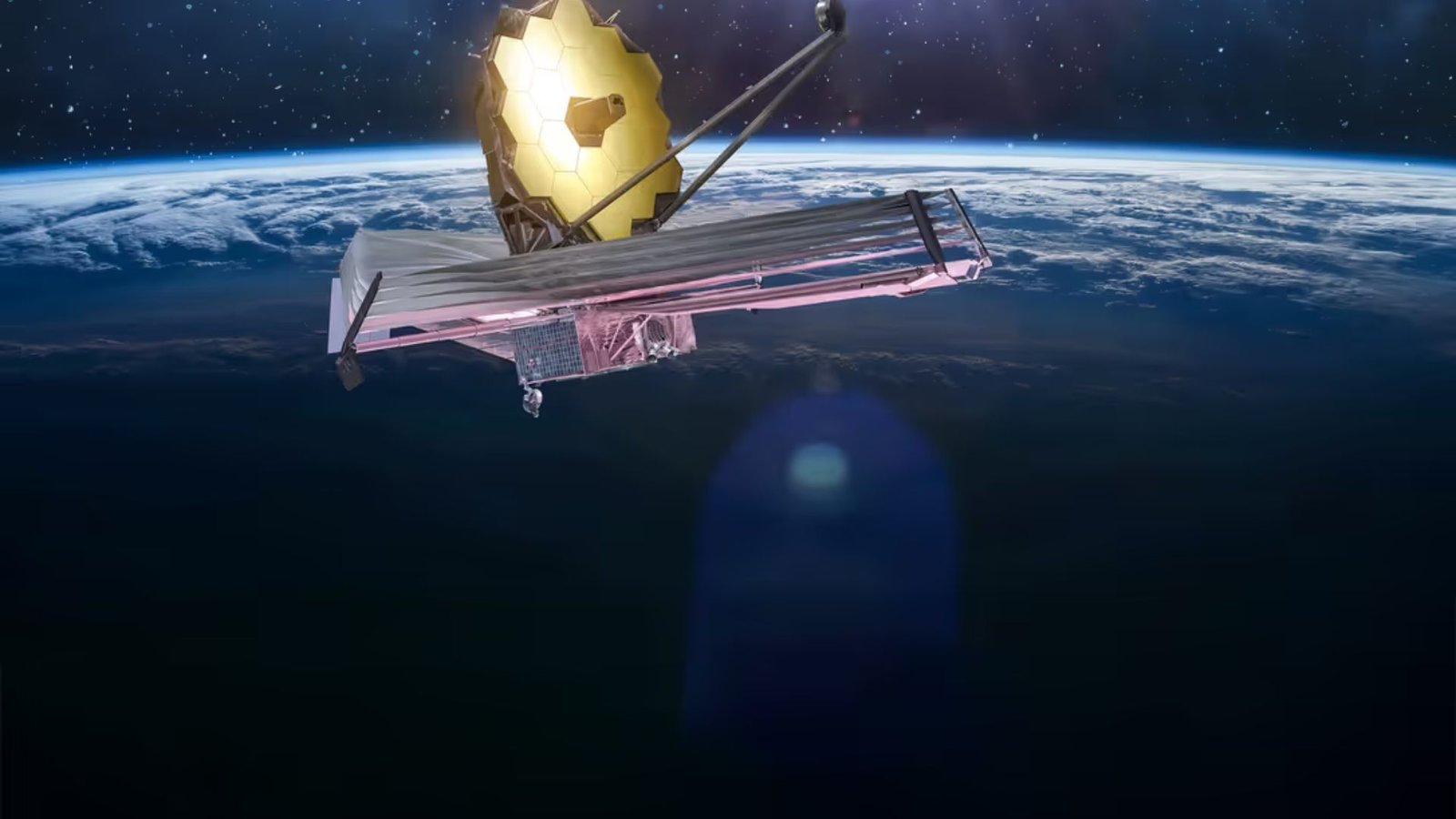
Australian scientists have played a crucial role in enhancing the James Webb Space Telescope’s (JWST) vision, operating from a million kilometers away. Their innovative techniques have significantly improved the clarity and precision of the telescope’s images, pushing the boundaries of space exploration and astronomical research.
Adaptive Optics and Wavefront Sensing
The team’s work centers around adaptive optics and wavefront sensing, which correct for distortions caused by the Earth’s atmosphere and imperfections in the telescope’s mirrors. These distortions can blur images, making it difficult to observe distant objects with clarity. By analyzing the incoming light and making real-time adjustments to the telescope’s optics, the scientists have been able to sharpen the images and reveal details that would otherwise be invisible.
The process involves using sophisticated algorithms to analyze the wavefront of the incoming light, which is essentially a map of the distortions. Based on this analysis, tiny actuators on the telescope’s mirrors are adjusted to compensate for the distortions, effectively canceling them out. This allows the telescope to produce images that are as sharp as if it were operating in a perfect vacuum.
This technology is not new, but its application to the James Webb Space Telescope presents unique challenges. The telescope is located far beyond the Earth’s atmosphere, but it is still subject to its own set of distortions, including thermal fluctuations and imperfections in the manufacturing of its mirrors. The Australian team has developed novel techniques to overcome these challenges and optimize the telescope’s performance.
Impact on Astronomical Research
The enhanced vision of the JWST has already had a significant impact on astronomical research. Scientists are now able to study distant galaxies, star clusters, and exoplanets with unprecedented detail. This has led to new discoveries about the formation of stars and planets, the evolution of galaxies, and the nature of dark matter and dark energy.
The Australian team’s work is a testament to the power of international collaboration in scientific research. By combining their expertise with that of scientists from around the world, they have been able to push the boundaries of our understanding of the universe. Their contributions will continue to shape the future of space exploration for years to come, paving the way for new discoveries and insights into the cosmos. The collaboration demonstrates how specific expertise in adaptive optics can be leveraged to improve extremely complex telescopes. The refinements developed by the Australian team allow for clearer images that enable more accurate observations of celestial bodies and phenomena.
The long-term implications of this technology include a greater understanding of the universe’s origins, the potential for finding life beyond Earth, and advancements in other fields such as medical imaging and materials science. Furthermore, this contribution has solidified Australia’s position as a major player in global astronomical research.
Image Source: Google | Image Credit: Respective Owner