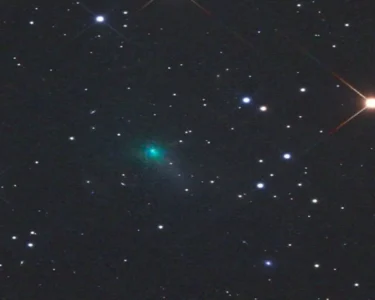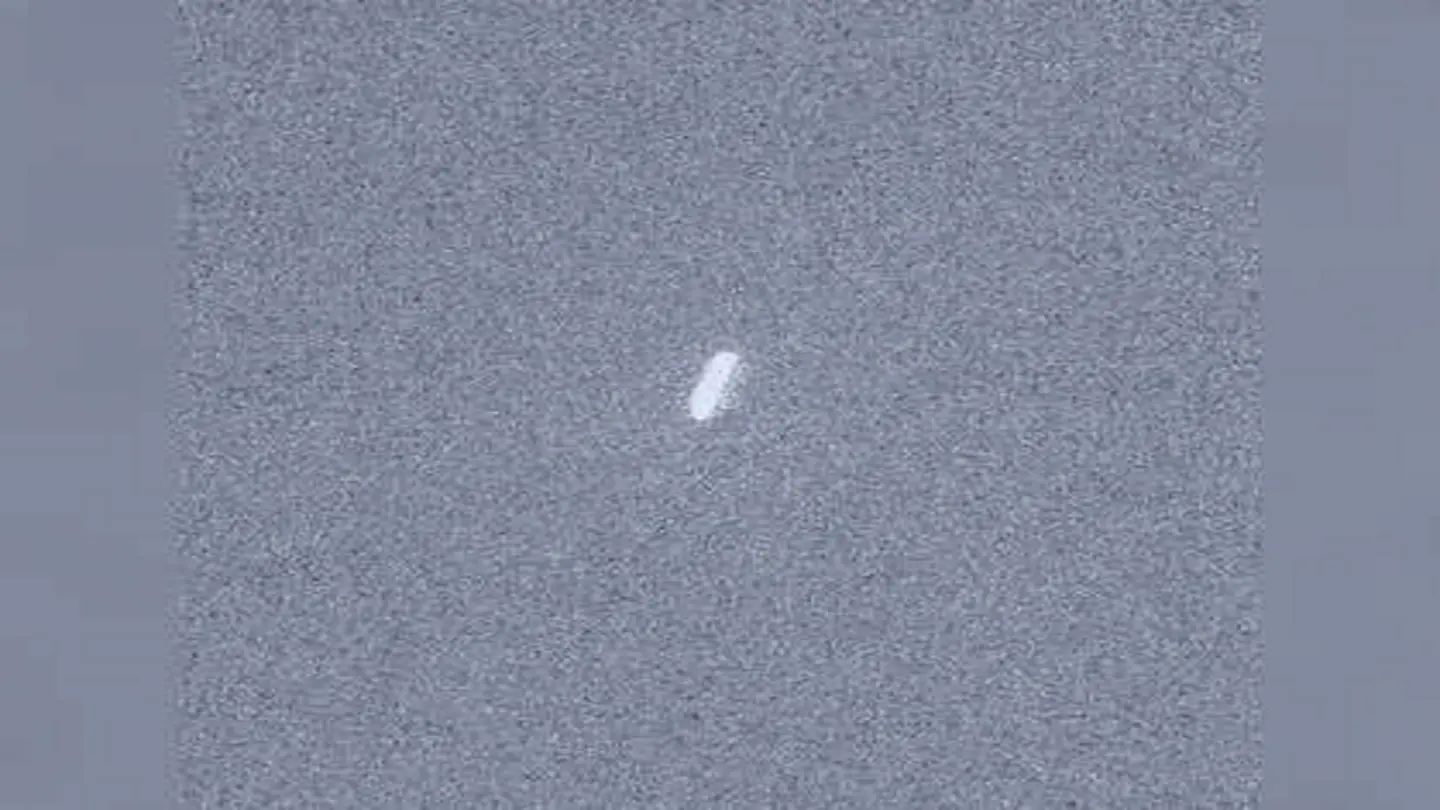
A recent study led by Avi Loeb has shed light on the intriguing large-scale structure of anti-tail and tail jets emanating from the interstellar object 3I/ATLAS. The research delves into the dynamics and composition of these jets, providing valuable insights into the nature of interstellar objects and their interaction with the solar system.
The study focuses on the unusual behavior of 3I/ATLAS, which exhibited both a tail, typical of comets, and an “anti-tail” pointing in the opposite direction. This phenomenon sparked considerable interest and prompted further investigation into the object’s properties and trajectory.
Understanding the Anti-Tail and Tail Jets
The research paper analyzes the morphology and spectral characteristics of the jets, concluding that the anti-tail is likely composed of larger dust particles that are less affected by solar radiation pressure. These particles maintain a more direct trajectory, appearing as an anti-tail from Earth’s perspective. The tail, on the other hand, consists of smaller particles that are readily pushed away by solar radiation, forming a more conventional cometary tail.
The team of researchers employed advanced computational models to simulate the behavior of dust particles of various sizes and compositions as they interact with the solar wind and radiation pressure. The simulations closely matched the observed characteristics of the anti-tail and tail jets, supporting the conclusion that the size distribution of dust particles plays a crucial role in their formation.
The findings also suggest that 3I/ATLAS may have originated from a protoplanetary disk around another star. The composition and size distribution of the dust particles are consistent with those found in such environments. Furthermore, the object’s trajectory indicates that it has been traveling through interstellar space for millions of years, providing valuable information about the composition and density of the interstellar medium.
This research represents a significant step forward in understanding the nature of interstellar objects and their interactions with our solar system. By analyzing the anti-tail and tail jets of 3I/ATLAS, scientists have gained valuable insights into the composition, origin, and trajectory of these enigmatic visitors from beyond our solar system. The study highlights the importance of continued research and observation of interstellar objects, as they hold the key to unlocking many secrets about the formation and evolution of planetary systems throughout the galaxy. Future observations with more powerful telescopes will undoubtedly provide even greater detail and contribute to a more comprehensive understanding of these fascinating celestial objects.
The full study is available on Medium, accessible through Avi Loeb’s profile, offering an in-depth exploration of the data and analysis supporting these conclusions.
Image Source: Google | Image Credit: Respective Owner