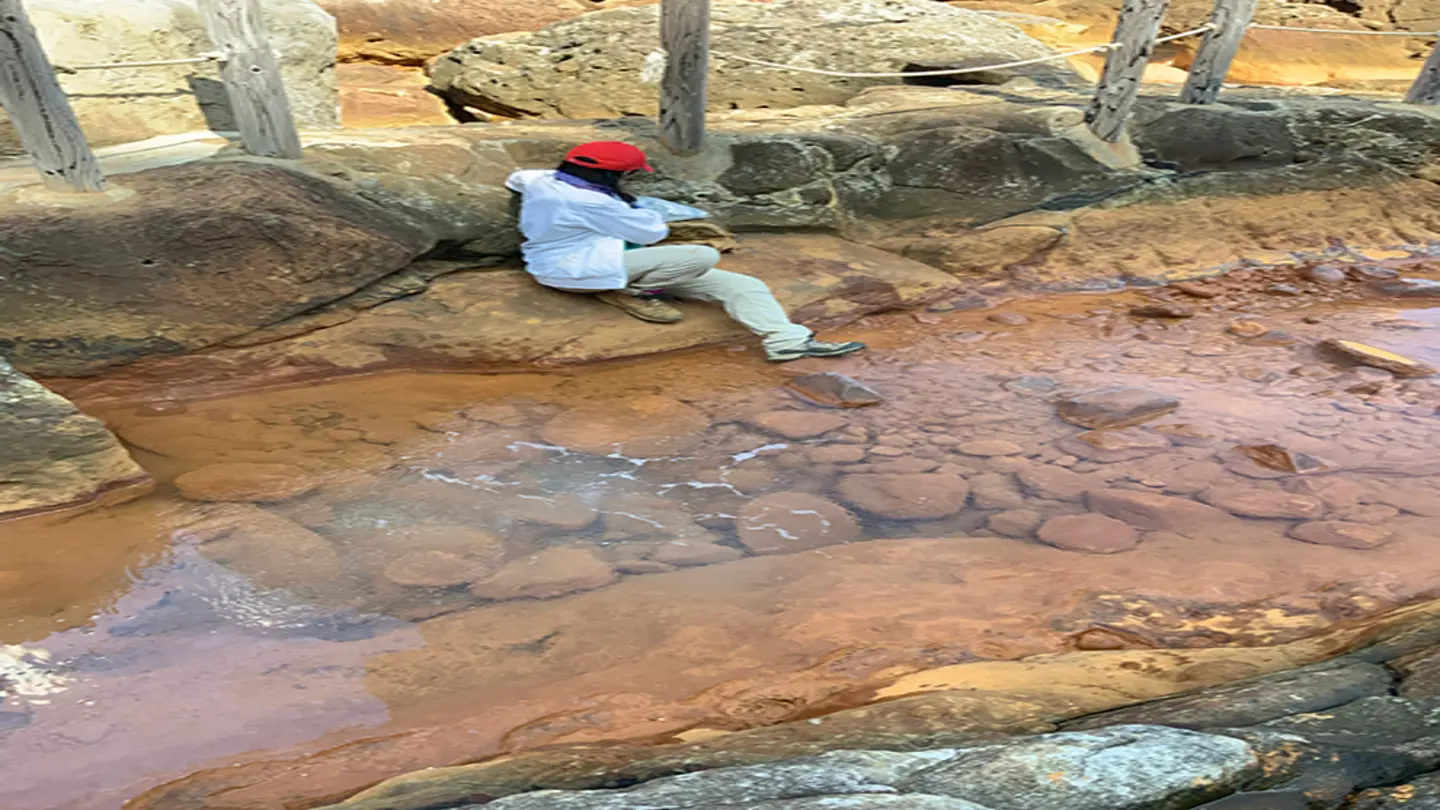
Geologists have made a remarkable discovery, unearthing what is believed to be the oldest water on Earth, estimated to be around two billion years old. The water was found deep within a mine in Timmins, Ontario, Canada, a site already known for a previous discovery of 1.5-billion-year-old water in 2013. This new finding pushes the boundaries of our understanding of ancient Earth and its hydrological systems.
The team of researchers, led by Professor Barbara Sherwood Lollar from the University of Toronto, extracted samples from a depth of approximately three kilometers. The water, trapped in microscopic fractures within the rock, exhibits unique chemical signatures that differentiate it from more recent groundwater sources. Analyses indicate that the water is rich in dissolved gases like hydrogen, methane, and various isotopes, providing valuable insights into the geochemical processes that occurred billions of years ago.
Sampling the Ancient Liquid
One of the more intriguing aspects of the discovery was the geologists’ decision to taste the water. According to reports, the water was noticeably salty and viscous. This high salinity is attributed to the long-term interaction between the water and the surrounding rocks, resulting in the accumulation of dissolved minerals over eons. While not potable, the sample offered a direct sensory connection to a time when Earth’s atmosphere and oceans were vastly different.
The discovery has significant implications for astrobiology. The presence of hydrogen and methane in the ancient water suggests that it could potentially support microbial life, even in the absence of sunlight. This raises the possibility that similar subsurface environments on other planets or moons might harbor life, expanding the search for extraterrestrial organisms beyond traditionally habitable zones. Understanding the conditions that sustained life in Earth’s ancient subsurface could provide clues about where else to look in the cosmos.
Further research will focus on analyzing the microbial content of the water, if any, to determine whether life existed in this ancient environment. The team also plans to investigate the geological context of the water reservoir to better understand its origin and evolution. This could provide insights into how water has been stored and transported within the Earth’s crust over geological timescales.
The finding underscores the importance of deep subsurface exploration for understanding Earth’s past and for informing the search for life beyond our planet. By pushing the boundaries of geological research, scientists continue to uncover hidden chapters of Earth’s history and expand our understanding of the potential for life in extreme environments.
The research highlights the interconnectedness of geology, chemistry, and biology in revealing the secrets of our planet and the universe. As technology advances, scientists can delve deeper into the Earth’s crust and explore previously inaccessible environments, potentially leading to even more groundbreaking discoveries in the future.
Image Source: Google | Image Credit: Respective Owner