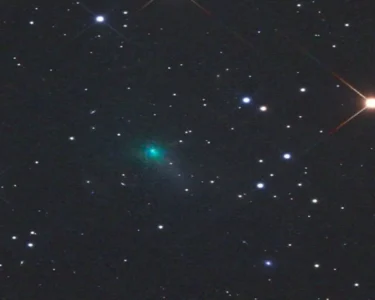
Scientists exploring a deep limestone cavity in Carlsbad Caverns region of New Mexico have uncovered a striking neon green wall that glows under ultraviolet illumination. The faintly luminous surface, described as a thin veneer of microbial mats mixed with mineral precipitates, stretches for several meters along a previously untouched chamber wall.
Neon Green Wall Discovery
Researchers say the vivid hue results from a unique combination of photosynthetic bacteria and rare earth elements that fluoresce when exposed to specific wavelengths of light. preliminary spectroscopic analysis suggests the community may consist of previously undocumented extremophile species adapted to low‑nutrient, high‑pressure environments.
Radiometric dating of calcite deposits that overlie the green film indicates the structure could be up to nine million years old, placing its formation in the late Miocene epoch. Such age estimates are based on the decay of uranium‑thorium isotopes measured in sediment layers that have remained undisturbed since the cave’s creation.
The discovery offers a rare glimpse into subterranean ecosystems that exist beyond the reach of sunlight, providing clues about life’s ability to thrive in isolated, chemically extreme habitats. Scientists believe the site may serve as a natural laboratory for studying biogeochemical cycles, carbon sequestration, and the Limits of life in environments analogous to extraterrestrial settings.
Experts who were not involved in the study applaud the find as a significant contribution to speleology and microbial ecology. They note that the fluorescence phenomenon could aid in mapping hidden cave passages and detecting subtle changes in environmental conditions over geological time scales.
Lead author Dr Emily Chen of the University of Arizona emphasized the importance of interdisciplinary collaboration, combining geology, microbiology, and remote sensing techniques. She highlighted that continued monitoring is essential to understand how the neon wall evolves and whether it is a stable feature or subject to gradual dissolution.
While the exact mechanisms behind the wall’s vivid coloration remain under investigation, the research team plans to expand their surveys to adjacent chambers and to develop non‑invasive imaging protocols. Their work may eventually inform broader strategies for detecting life on other planets, where similar luminous biosignatures could be observed in deep subsurface or icy moons.
Preliminary field experiments indicate that subtle variations in temperature and humidity can modulate the intensity of the green fluorescence, suggesting that the wall may act as a dynamic biosensor. Continuous monitoring over the next decade will be crucial to capture seasonal shifts, potential microbial succession, and any geochemical perturbations that could affect the long‑term preservation of this natural marvel.
Image Source: Google | Image Credit: Respective Owner