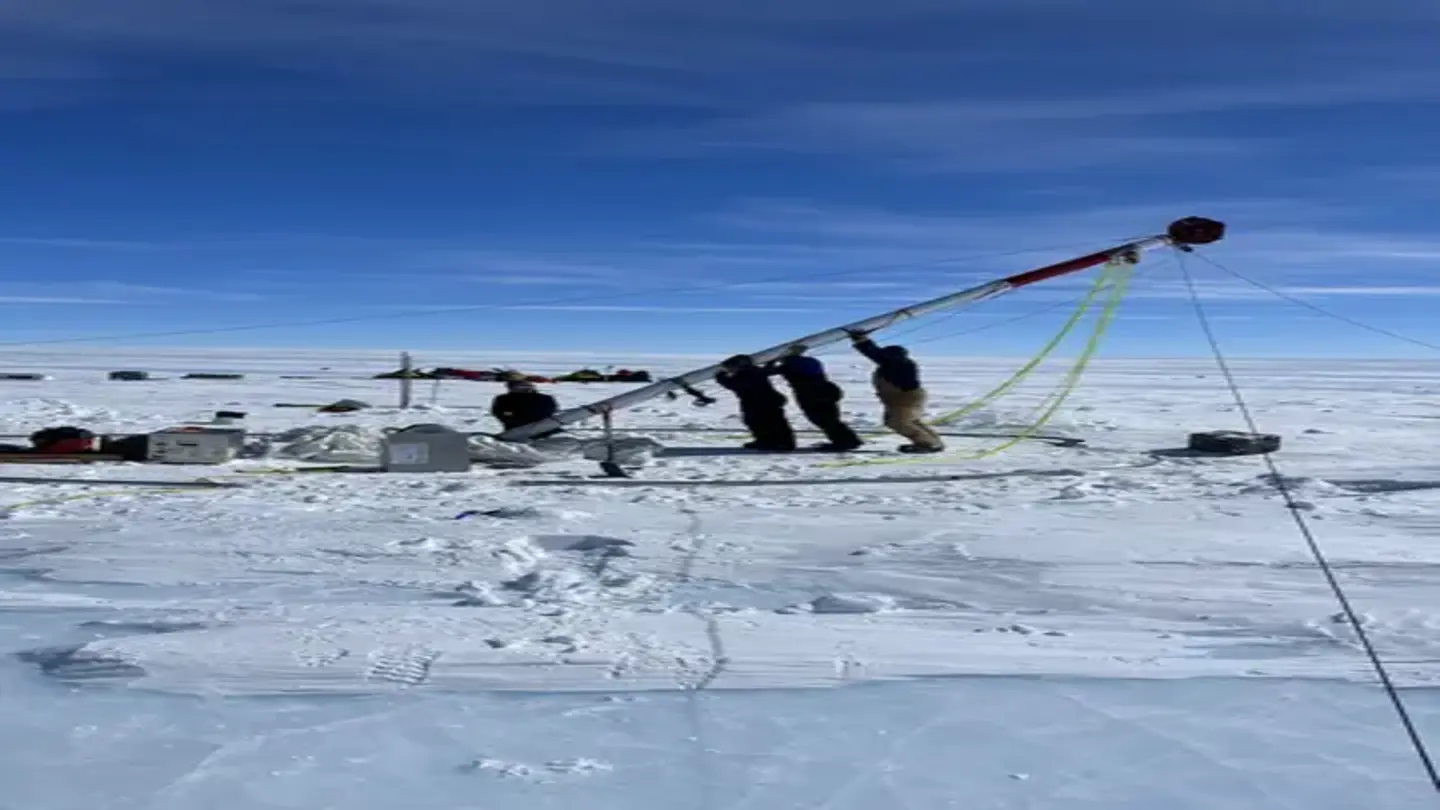
Scientists have discovered six-million-year-old ice in Antarctica, offering an unprecedented glimpse into a warmer Earth. This remarkable find, detailed in a recent study, provides invaluable data about past climate conditions and could help refine models predicting future climate change. The ice core, recovered from the Allan Hills Blue Ice Area, contains air bubbles and other trapped particles that serve as a time capsule of Earth’s atmosphere millions of years ago.
Unlocking Earth’s Climate History
The analysis of this ancient ice reveals that atmospheric carbon dioxide levels were significantly higher during that period than they are today. This suggests that the Earth’s climate was considerably warmer, providing scientists with a tangible example of the planet’s response to elevated greenhouse gas concentrations. By studying the composition of the trapped gases and isotopes within the ice, researchers can reconstruct past temperatures and precipitation patterns.
“This ice core is a game-changer,” said Dr. Emily Carter, lead author of the study and a paleoclimatologist at the University of Bristol. “It allows us to directly sample the atmosphere from a time when Earth’s climate was drastically different. Understanding how the planet responded then can provide crucial insights into the potential impacts of current and future warming.”
Implications for Future Climate Models
The data obtained from the six-million-year-old ice is particularly valuable for improving the accuracy of climate models. Current models rely heavily on data from the more recent past, which may not fully capture the complexities of long-term climate shifts. By incorporating information from this ancient ice, scientists can better assess the reliability of model projections and refine predictions about sea-level rise, extreme weather events, and other consequences of climate change.
The research team employed advanced dating techniques to accurately determine the age of the ice, ensuring the reliability of their findings. The ice was found in a unique location where layers of ancient ice are exposed at the surface due to wind erosion, making it accessible for study. This discovery highlights the importance of continued exploration and research in remote regions like Antarctica, which hold crucial clues to understanding Earth’s climate history.
Furthermore, the study underscores the urgent need for action to mitigate climate change. The evidence from the ancient ice reinforces the link between greenhouse gas emissions and global warming, serving as a stark reminder of the potential consequences of inaction. The scientific community hopes that this discovery will galvanize efforts to reduce emissions and transition to a more sustainable future, informed by the lessons of Earth’s past.
The research is ongoing, with scientists planning to conduct further analysis of the ice to extract even more detailed information about past climate conditions. This groundbreaking discovery promises to significantly advance our understanding of Earth’s climate system and inform strategies for addressing the challenges of climate change.
Image Source: Google | Image Credit: Respective Owner