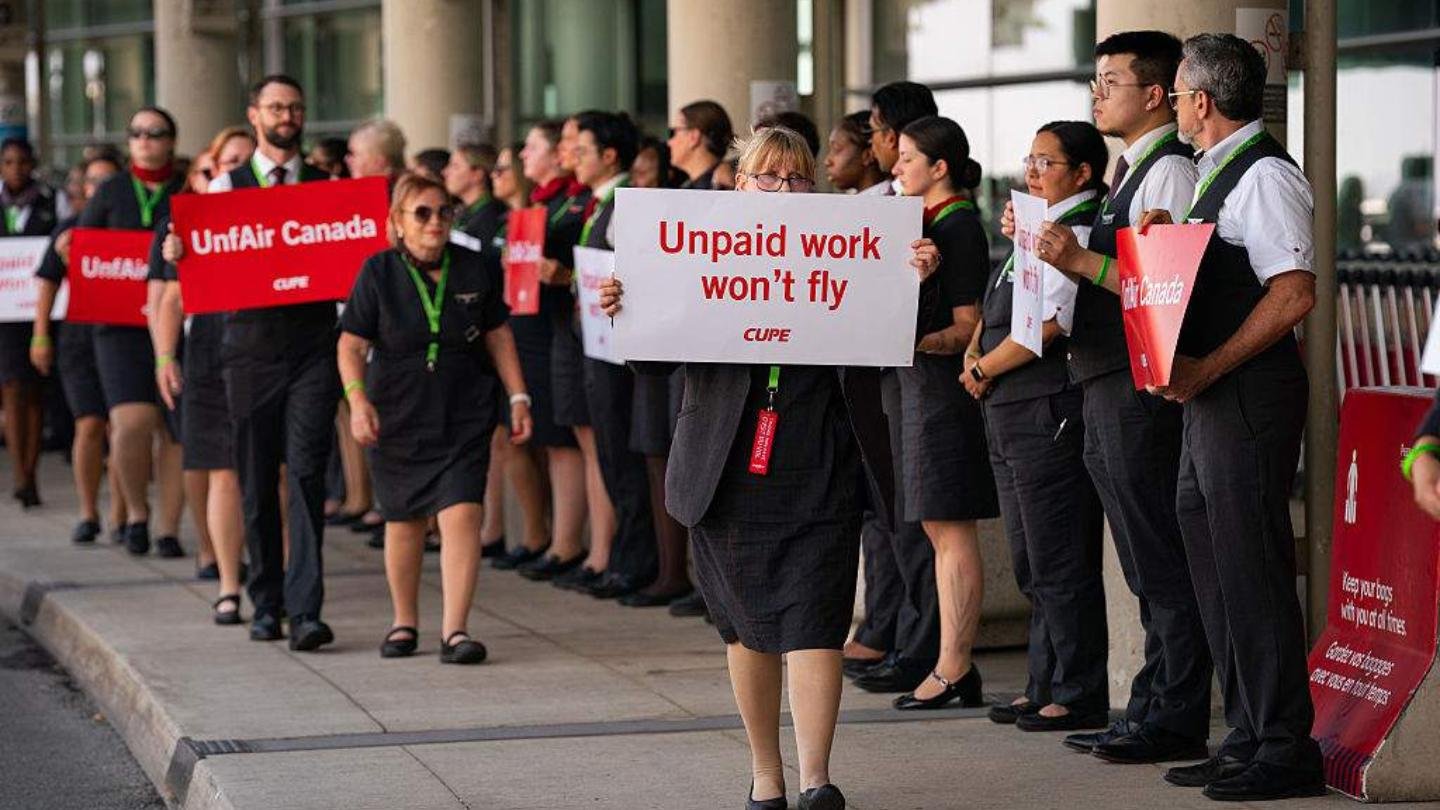
Air Canada has suspended its restart plan after thousands of flight attendants defied a government back-to-work order, prolonging a strike that has left more than 100,000 travellers stranded and disrupted operations at Canada’s largest airline.
The Canadian government ordered the 10,000 striking flight attendants to return to duty by Sunday afternoon, calling the walkout “unconstitutional” and citing the risk to the economy. But the Canadian Union of Public Employees (CUPE) refused to comply, insisting the order undermines collective bargaining rights.
Widespread Travel Disruptions
The strike began early Saturday, halting nearly 700 daily flights and affecting about 130,000 passengers per day. Aviation analytics firm Cirium reported 671 cancellations on Saturday alone, in addition to nearly 200 flights cancelled Friday. Another 96 Sunday flights were scrapped before the airline suspended its restart plans.
Air Canada said it will take at least a week to 10 days before schedules return to normal. Passengers are being offered full refunds or rebooking with other Canadian and international airlines “where possible,” though limited availability during the peak summer travel season has left many stranded.
Government Intervention
Federal Jobs Minister Patty Hajdu defended the back-to-work order, stressing that “now is not the time to take risks with the economy,” especially given new US tariffs on Canadian exports. The dispute has been referred to the Canada Industrial Relations Board, which extended the existing contract until arbitration delivers a new agreement.
The move mirrors government interventions in rail strikes last year, which unions also challenged in court as a blow to labour rights. Business groups, including the Canadian Chamber of Commerce and the Business Council of Canada, welcomed Ottawa’s decision.
Sticking Points in Negotiations
Air Canada and CUPE have been locked in negotiations for eight months, with pay emerging as the biggest hurdle. The airline said its latest offer included a 38% increase in overall compensation — covering salary, benefits, and pensions — over four years, claiming it would make its attendants the highest-paid in Canada.
The union, however, argues the proposed 8% raise in the first year does not keep up with inflation and fails to address unpaid duties performed by crew members outside of flight hours.
With both sides at an impasse, arbitration now appears to be the only path forward. Until then, Canada’s peak summer travel season faces prolonged disruption.
Image Source: Google | Image Credit: Respective Owner