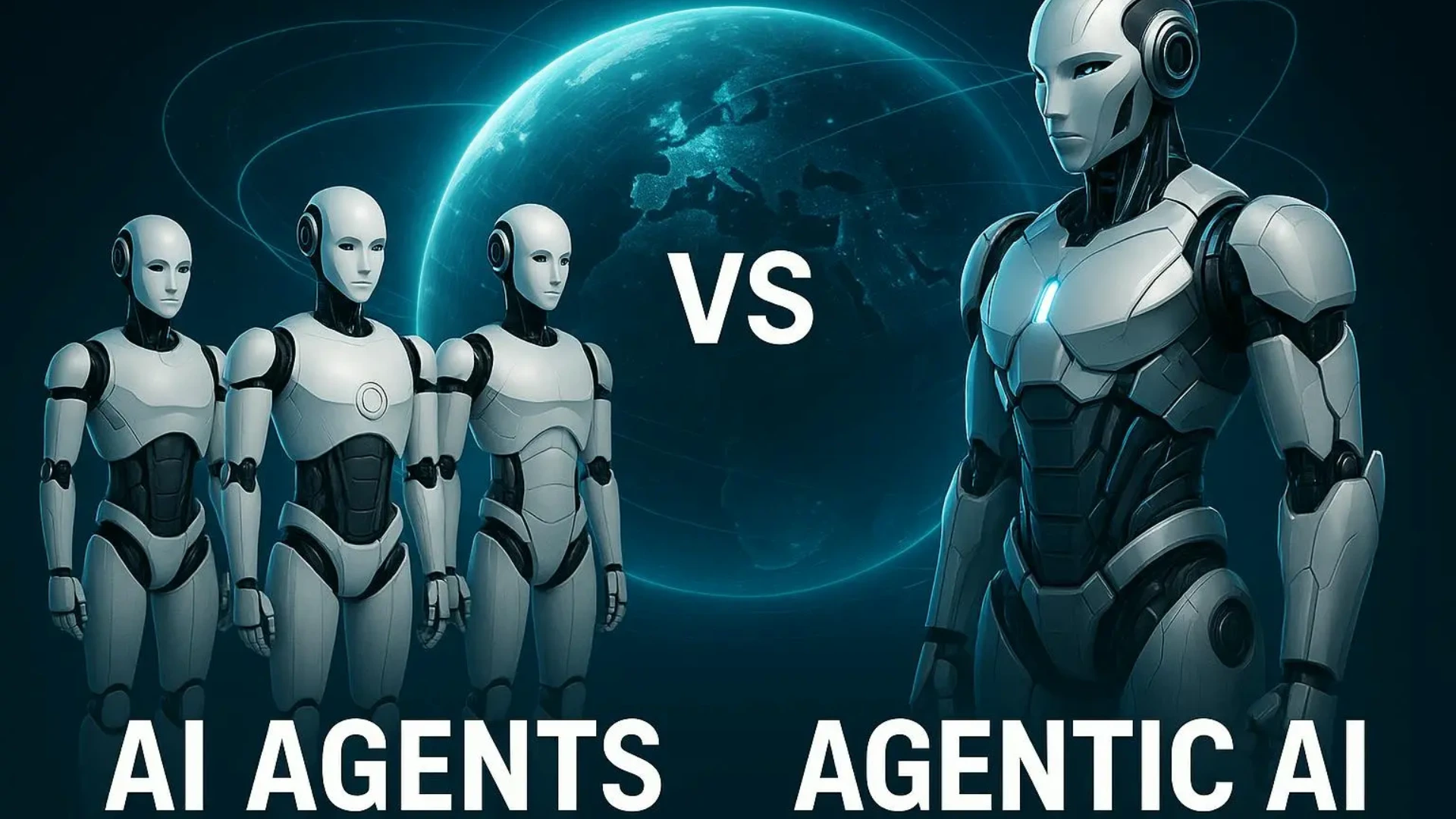
As artificial intelligence rapidly evolves, terms like “Agentic AI” and “AI agents” are often used interchangeably — but they are not the same. Understanding the distinction is key to setting the right expectations from AI-powered systems.
What Is Agentic AI?
Agentic AI is best understood as a methodology. It refers to AI systems that can operate autonomously — making decisions and completing tasks without direct human intervention. The focus is on agency, or the ability of an AI system to work independently to achieve a defined goal.
What Are AI Agents?
An AI agent, by contrast, is the implementation of agentic AI. It is a software program that interacts with its environment, collects data, and uses that information to complete tasks. Agents can range from simple task executors to complex multi-step problem solvers.
Key advantages of using AI agents include:
- Autonomous operation
- Faster execution with reduced errors
- Ability to schedule human intervention at checkpoints
- A higher layer of abstraction, making systems easier to manage
However, there are drawbacks:
- Agents often function like black boxes, with limited explainability
- Debugging inconsistencies can be difficult
- Same inputs may not always yield identical outputs
- Lack of subject matter expertise oversight in highly autonomous setups
LLM-Powered vs Non-LLM Agents
Today, many AI agents are powered by Large Language Models (LLMs), which serve as their “brains.” These LLM-based agents demonstrate stronger reasoning, adaptability, and natural language interaction, making them behave more like skilled assistants.
Non-LLM agents, on the other hand, rely on classical machine learning, have limited memory, and often need more programming. They are less autonomous and less adept at human-like interaction.
The Future: Multi-Agent Systems
The next phase of AI involves multiple agents working collaboratively. Each agent could specialise in a different area — from data processing to strategy generation — and coordinate with others to achieve a common goal.
Frameworks such as CrewAI, AutoGen, LangGraph, OpenAI Swarm, and MetaGPT already demonstrate how multi-agent systems can function in practice.
But as these systems grow more powerful, human oversight remains critical. Human-in-the-loop (HITL) review, subject matter expertise, and clear accountability are necessary to prevent misuse and ensure regulatory compliance.
Why Clarity in Terms Matters
The real takeaway:
- Agentic AI = methodology for autonomy
- AI agents = implementations of that methodology
By maintaining clarity, developers, regulators, and users can better define accountability and expectations. As multi-agent systems expand, ensuring transparency, ethical safeguards, and purposeful human guidance will be essential to unlocking AI’s full potential — responsibly.
Image Source: Google | Image Credit: Respective Owner