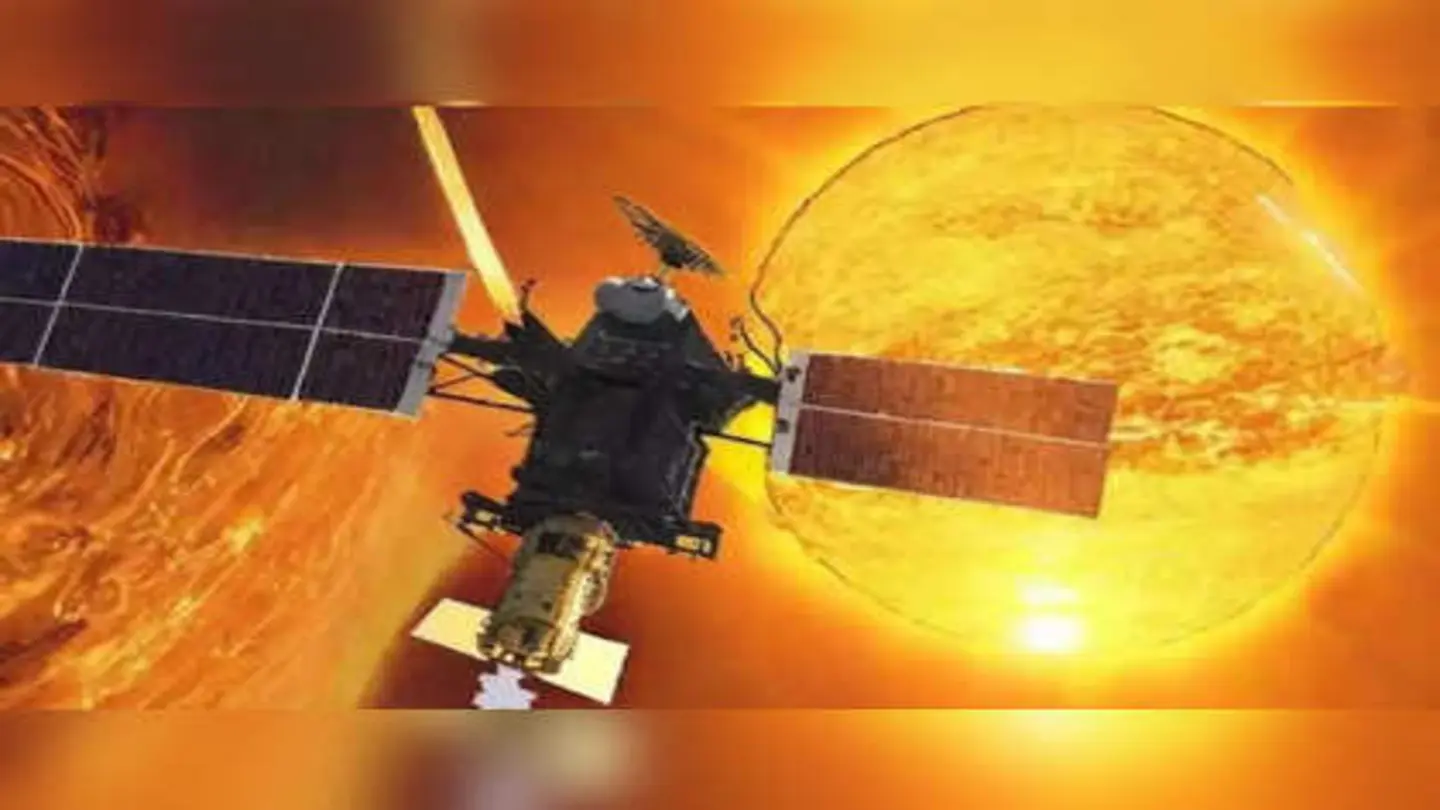
India’s space agency, ISRO, has released initial findings from its Aditya-L1 mission, detailing the effects of a recent powerful solar storm on Earth’s magnetosphere. The observations, made between May 23rd and 31st, 2024, provide valuable insights into how such events impact our planet’s protective magnetic shield and the space environment surrounding it.
Aditya-L1, positioned in a halo orbit around the Sun-Earth Lagrange point L1, is uniquely situated to continuously observe the Sun without the interference of Earth or the Moon. This vantage point allowed the spacecraft’s instruments to capture real-time data on the coronal mass ejection (CME) as it propagated towards Earth. The CME, originating from a series of solar flares, unleashed a significant burst of energy and charged particles into space.
Understanding the Magnetospheric Response
The data collected by Aditya-L1’s instruments, including the magnetometer, reveals a complex interaction between the CME and Earth’s magnetosphere. The initial impact caused a substantial compression of the magnetosphere on the dayside – the side facing the Sun. This compression was followed by a period of intense geomagnetic activity, characterized by fluctuations in the magnetic field and the generation of electric currents in the ionosphere.
ISRO scientists explain that the observed disturbances are a direct consequence of the CME’s magnetic field merging with Earth’s magnetic field. This merging process allows energy and particles from the Sun to enter the magnetosphere, potentially disrupting satellite operations, communication systems, and power grids on the ground. The preliminary analysis highlights specific details regarding the strength and orientation of the interplanetary magnetic field within the CME, which played a critical role in determining the scale of the geomagnetic storm.
The mission’s findings are particularly significant as they demonstrate Aditya-L1’s capability to provide advance warning of impending space weather events. By continuously monitoring the Sun and the solar wind, the spacecraft can detect CMEs early in their journey and predict their potential impact on Earth. This information is crucial for mitigating the risks associated with space weather, protecting critical infrastructure, and ensuring the safety of astronauts in orbit.
Further analysis of the data is underway, and ISRO plans to release more detailed reports in the coming weeks. These reports will delve deeper into the specific mechanisms driving the magnetospheric response and will help refine models used to forecast space weather. The Aditya-L1 mission represents a major step forward in India’s space weather research capabilities and its contribution to global efforts to understand and predict the Sun’s influence on our planet. The long-term goal is to develop a comprehensive space weather monitoring and prediction system that can provide timely and accurate alerts to stakeholders.
The current observations underscore the importance of continued investment in space-based assets dedicated to solar monitoring. As our reliance on space technology grows, so too does our vulnerability to the disruptive effects of solar storms. Aditya-L1’s success is a testament to the power of scientific collaboration and the pursuit of knowledge to safeguard our technological future.
Image Source: Google | Image Credit: Respective Owner