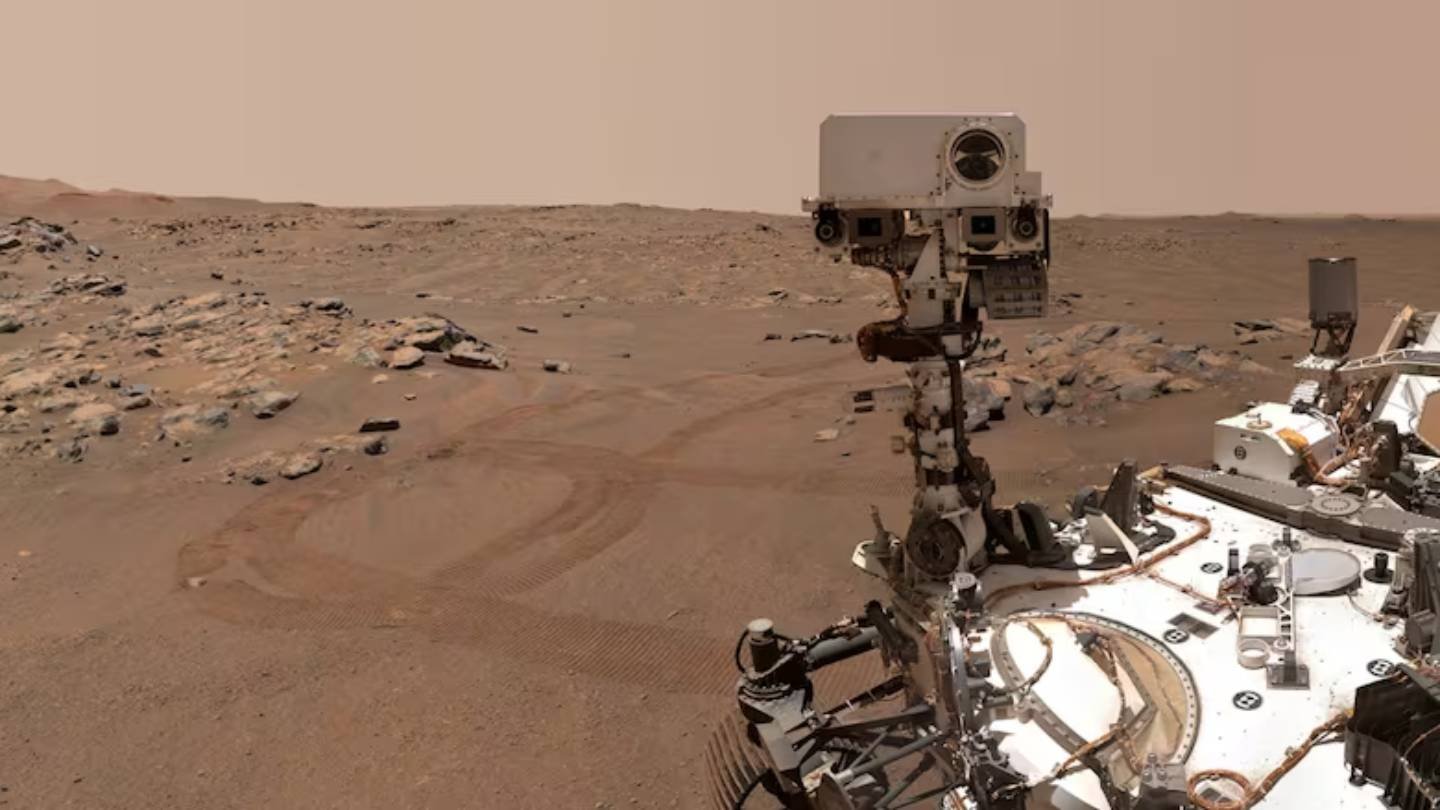
NASA’s Perseverance rover has made groundbreaking discoveries on Mars, providing the strongest evidence to date that the red planet may have once harbored life. The rover, exploring the Jezero Crater, a site believed to have been a lake billions of years ago, has identified organic molecules and other intriguing geological features suggesting past biological activity.
These new findings have ignited excitement within the scientific community, offering compelling insights into Mars’s potential habitability. Although not definitive proof, the data collected by Perseverance strongly implies that conditions conducive to life existed on Mars in its ancient past. Scientists are carefully analyzing the data to rule out any non-biological explanations.
Key Discoveries
The Perseverance rover has uncovered several key pieces of evidence that bolster the possibility of ancient Martian life. Firstly, the rover has detected a diverse array of organic molecules, the building blocks of life, in rock samples within the Jezero Crater. These molecules are more complex than those previously found on Mars, suggesting a richer chemical environment.
Secondly, the rover has identified unique rock formations that could have been formed by microbial activity. These formations, known as stromatolites, are similar to structures created by microorganisms on Earth. If confirmed to be biogenic, these formations would represent direct evidence of past life on Mars.
Additionally, the rover has discovered evidence of past water activity in the crater, further supporting the possibility of a habitable environment. Analysis of the rock samples indicates that the lake within Jezero Crater was once a freshwater environment with a neutral pH, conditions that are ideal for supporting life.
Future Exploration
The next phase of the mission involves collecting and storing rock samples for potential return to Earth. These samples will undergo further analysis in state-of-the-art laboratories, allowing scientists to conduct detailed studies that are not possible on Mars. The Mars Sample Return campaign, a joint effort between NASA and the European Space Agency, aims to bring these samples back to Earth by the early 2030s.
The Perseverance rover’s ongoing exploration of Jezero Crater is expected to yield even more exciting discoveries in the coming years. As the rover continues its search for signs of past life, it provides invaluable data that will help to shape our understanding of Mars and the potential for life beyond Earth. The mission highlights the importance of continued space exploration and the pursuit of answers to some of humanity’s most fundamental questions.
These groundbreaking findings represent a significant step forward in the search for extraterrestrial life, suggesting that Mars may have once been a habitable world. The ongoing exploration by Perseverance and future sample return missions hold the promise of unlocking even more secrets about the red planet’s past and its potential to harbor life.
Image Source: Google | Image Credit: Respective Owner