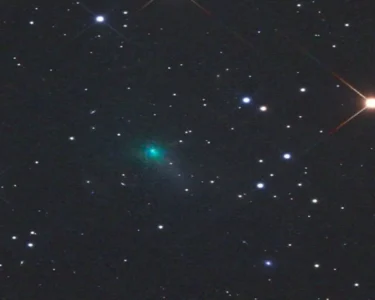
A debate has erupted within the scientific community following a Harvard astronomer’s suggestion that Comet 3I/Atlas could potentially be of artificial origin. This theory has been met with skepticism and outright rejection by a NASA scientist, highlighting the ongoing tension between unconventional hypotheses and established scientific understanding.
The Harvard Astronomer’s Hypothesis
The Harvard astronomer, known for his work on interstellar objects, has proposed that certain unusual characteristics of Comet 3I/Atlas warrant consideration of the possibility that it is not a naturally occurring phenomenon. His reasoning centers on the comet’s trajectory, its observed behavior as it approached the sun, and anomalies in its composition that, according to his analysis, defy conventional explanations. The astronomer has previously suggested that the interstellar object ‘Oumuamua, was potentially alien technology. This claim has been met with significant criticism from many scientists.
While acknowledging the speculative nature of his hypothesis, the astronomer argues that it is crucial to remain open to all possibilities, especially when dealing with celestial objects whose origins and properties remain largely mysterious. He emphasizes the importance of rigorous investigation and data analysis to either support or refute such claims, rather than dismissing them out of hand. This open-minded approach, he believes, is essential for advancing scientific knowledge and pushing the boundaries of our understanding of the universe.
NASA Scientist’s Rebuttal
In response to the Harvard astronomer’s claims, a NASA scientist has strongly refuted the suggestion that Comet 3I/Atlas is alien-made. The NASA scientist argues that there is no credible evidence to support such a claim. The comet’s behavior and composition, while exhibiting certain peculiarities, can be adequately explained through natural processes and established astrophysical models.
The scientist points out that comets are inherently complex objects, and their interactions with the solar wind and radiation from the sun can lead to a variety of observed phenomena that may initially appear unusual or unexpected. He contends that attributing these phenomena to artificial origins is a leap of logic that lacks empirical support. Furthermore, he argues that such claims can be detrimental to public understanding of science, as they can promote misinformation and undermine the credibility of scientific research.
The debate surrounding Comet 3I/Atlas underscores the challenges inherent in scientific inquiry, particularly when dealing with phenomena that are poorly understood or that lie at the fringes of our current knowledge. While it is essential to maintain an open mind and consider all possibilities, it is equally important to adhere to the principles of scientific rigor and evidence-based reasoning. The scientific community must carefully weigh the evidence and engage in robust debate to arrive at a consensus based on the best available data.
Ultimately, further research and observation will be necessary to fully understand the nature and origin of Comet 3I/Atlas. As technology advances and our ability to study celestial objects improves, scientists will undoubtedly gain new insights into the mysteries of the cosmos.
Image Source: Google | Image Credit: Respective Owner