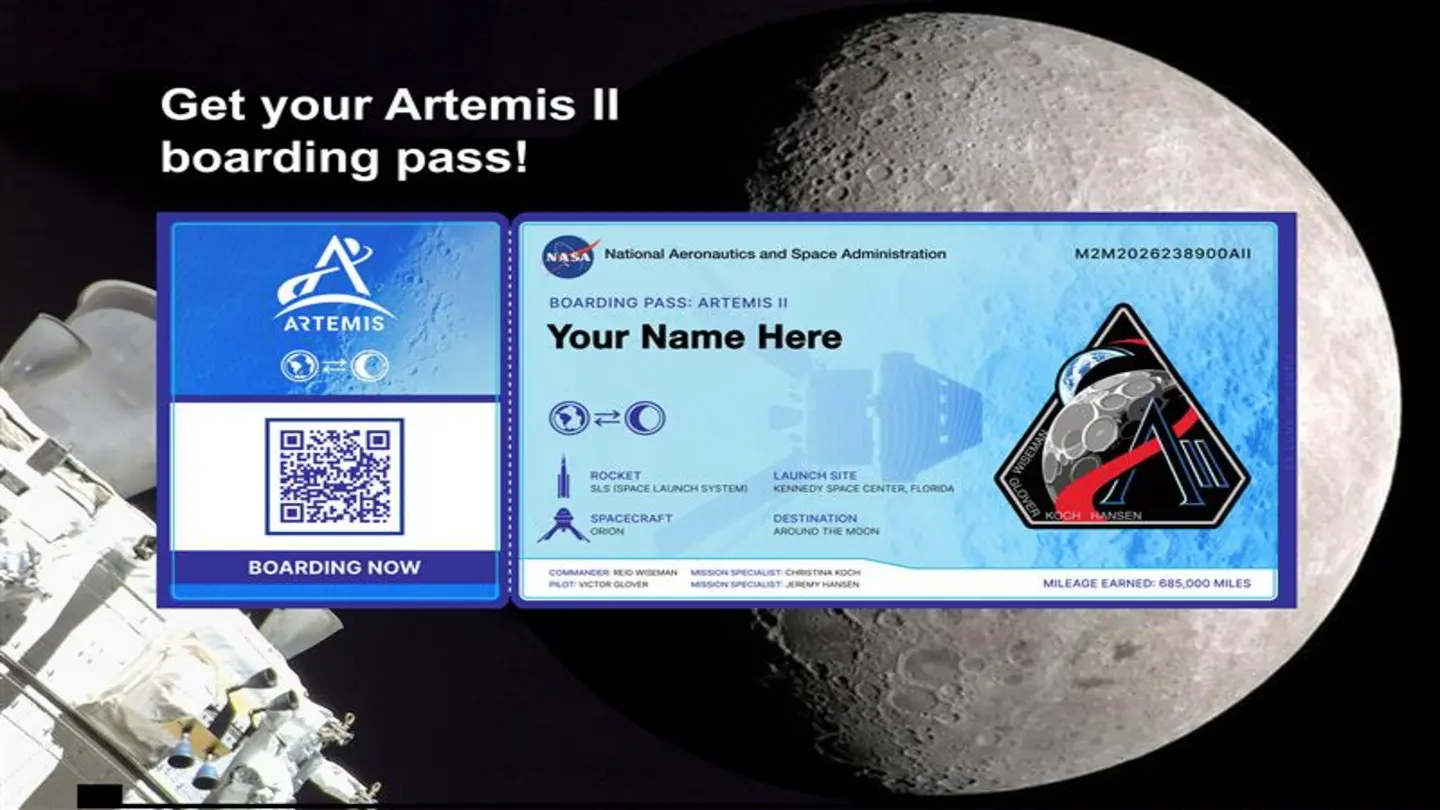
NASA’s Artemis II mission, slated for launch in 2026, is generating significant excitement as it prepares to send astronauts on a journey around the Moon. This ambitious undertaking marks a pivotal step in the agency’s broader Artemis program, which aims to establish a sustained human presence on the lunar surface and pave the way for future missions to Mars. The Artemis II mission will not only carry astronauts but also the names of individuals who signed up through NASA’s initiative.
The mission’s primary objective is to conduct a manned flight test, validating the Orion spacecraft and the Space Launch System (SLS) rocket’s capabilities in a deep space environment. This test will involve a crew of four astronauts who will embark on a multi-day mission, orbiting the Moon and returning to Earth. The data and experience gained from Artemis II will be crucial in refining technologies and procedures for subsequent lunar landings. The inclusion of names symbolizes a collective human endeavor, inviting global participation in this historic journey.
Mission Details
Artemis II will follow a trajectory that takes the Orion spacecraft approximately 4,600 miles beyond the far side of the Moon. This path will allow the crew to thoroughly assess the spacecraft’s performance in the harsh conditions of deep space. Throughout the mission, astronauts will conduct a series of tests, evaluating the spacecraft’s life support systems, communication capabilities, and navigation systems. These tests are essential to ensure the safety and success of future Artemis missions that will involve lunar surface operations.
Furthermore, Artemis II will enable scientists to gather valuable data about the lunar environment, including radiation levels and micrometeoroid impacts. This information will be critical for designing protective measures for astronauts during extended stays on the Moon. The mission also serves as a crucial training exercise for the ground control teams and mission support personnel who will play a vital role in guiding and assisting future lunar missions.
Global Significance
The Artemis program represents a renewed focus on international collaboration in space exploration. NASA is working with several international partners, including the European Space Agency (ESA), the Japan Aerospace Exploration Agency (JAXA), and the Canadian Space Agency (CSA), to achieve its lunar objectives. These partnerships involve contributions to the development of the Orion spacecraft, the lunar Gateway, and other essential components of the Artemis infrastructure.
By returning humans to the Moon, NASA aims to inspire a new generation of scientists, engineers, and explorers. The Artemis program seeks to unlock new scientific discoveries, develop innovative technologies, and expand human knowledge of the universe. The inclusion of public names on the Artemis II mission underscores the idea that space exploration is a shared human endeavor, fostering a sense of unity and inspiring individuals worldwide to pursue their dreams and contribute to the advancement of science and technology. This mission sets the stage for a future where humans can live and work sustainably on the Moon, driving innovation and pushing the boundaries of what is possible.
Image Source: Google | Image Credit: Respective Owner