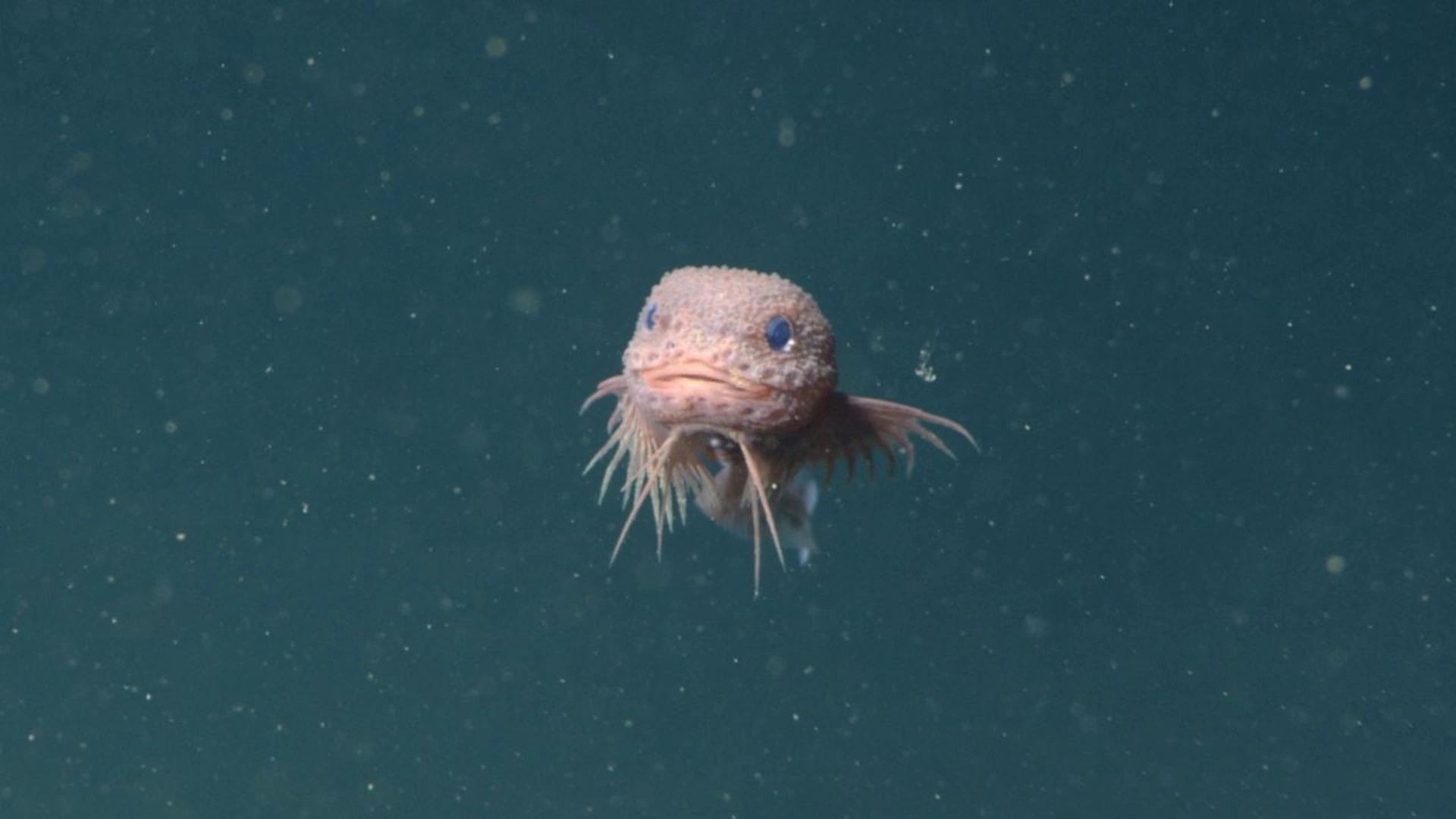
In a groundbreaking discovery, three new species of snailfish have been identified from the abyssal seafloor off the coast of California. With their large heads, jelly-like bodies, and loose skin, these unusual-looking creatures might seem easy to spot, but until now, they were completely unknown to science.
Thanks to advancements in underwater technology, researchers from institutions like the Monterey Bay Aquarium Research Institute (MBARI), the State University of New York at Geneseo, the University of Montana, and the University of Hawai’i at Mānoa have uncovered these elusive creatures, marking a significant addition to the biodiversity of the deep sea.
A Remarkable Discovery
The new species of snailfish were observed using state-of-the-art technology, including the research submersible Alvin and MBARI’s remotely operated vehicle Doc Ricketts. These creatures were discovered at depths reaching up to 13,513 feet, near Station M, a deep-sea research observatory off the California coast. The third species was found during an expedition to Monterey Canyon, about 100 kilometers offshore.
Snailfish belong to the Liparidae family, and are known for their distinctive appearance—large heads, jelly-like bodies, and a narrow tail. They thrive in various ocean habitats, from shallow tide pools to the deepest trenches. One species even holds the record as the deepest-dwelling fish known to man.
The Role of Technology in Deep-Sea Exploration
The research team used cutting-edge tools, including microscopy and micro-computed tomography scanning, to examine the physical traits of the three new snailfish species. Detailed measurements and genetic analysis confirmed that these creatures are indeed new to science.
Mackenzie Gerringer, a deep-sea physiology and ecology expert from SUNY Geneseo, shared her excitement about the discovery: “Our discovery of three new species is a reminder of how much we have yet to learn about life on Earth. It highlights the power of curiosity and exploration.”
The Importance of Taxonomy and Conservation
The discovery of these snailfish species is significant not only for its contribution to taxonomy but also for our understanding of biodiversity in the deep sea. The ocean’s abyssal depths, which cover 50% of Earth’s surface, remain largely unexplored and are home to a diverse array of life.
Brett Woodworth, a co-author of the study, emphasized the importance of both morphological and genetic identification when studying deep-sea creatures: “By combining both forms of identification, we were able to distinguish between the two species, shedding light on snailfish evolution.”
This discovery provides invaluable insights into the deep-sea ecosystem, helping scientists better understand these mysterious creatures that live far beneath the ocean’s surface.
Image Source: MBARI | Image Credit: Respective Owner