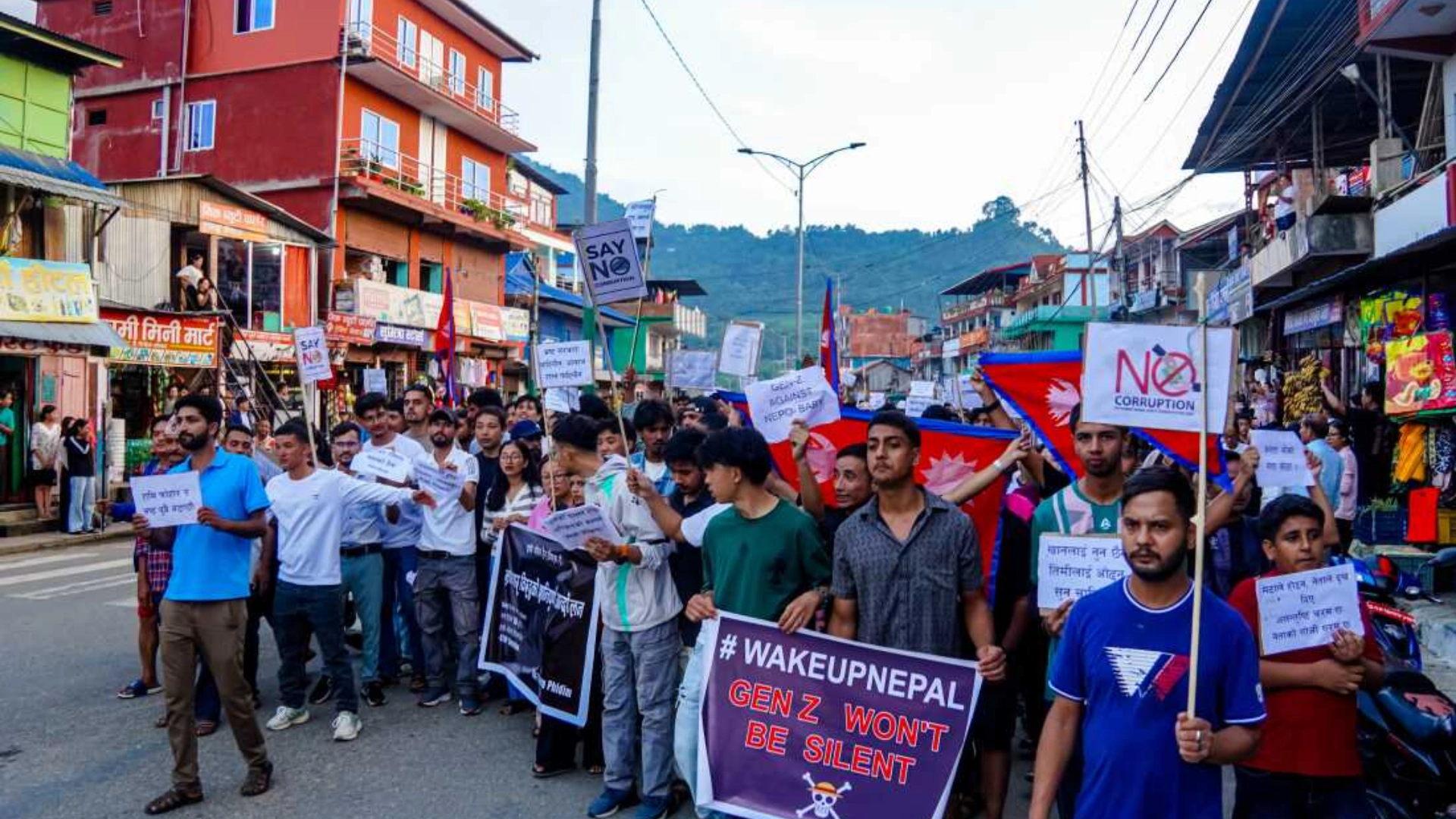
What started as a peaceful demand for justice has evolved into a political storm that Nepal has never seen before. On September 8, 2025, a peaceful rally led by Nepal’s Gen Z quickly spiraled into violence, resulting in the tragic loss of 19 young lives and more than 500 injuries. What began as a call for justice has ignited widespread protests, forcing political change but also sparking a much larger question: What’s next for Nepal?
The Aftermath of September 8: A Nation in Shock
The night of September 8 will forever be remembered as one of Nepal’s darkest. Youth, many still in school and college uniforms, were met with gunfire. The government’s violent response led to a tragic toll—19 young lives lost. The next day, defying curfews and restrictions, young people flooded the streets in even greater numbers, causing a political upheaval that forced the resignation of several ministers and eventually, Prime Minister K P Sharma Oli himself on September 9.
With the resignation of the Prime Minister, the Nepali Army has assumed control over the situation, taking charge of security and urging protesters to come forward for dialogue. While the Army holds significant influence, the President’s ceremonial role remains unchanged in this crisis.
Escalation: From Peaceful Protest to Vandalism
What started as a peaceful movement soon turned into chaos. Protesters attacked the residences of prominent politicians, including former Prime Minister Sher Bahadur Deuba and Foreign Minister Arzoo Rana Deuba, pulling sacks of money from their homes and throwing it in symbolic defiance. As tensions escalated, reports emerged of political leaders fleeing the country in fear of mob retaliation. This was never the plan for Gen Z, but the movement has escalated into a full-blown political crisis.
The Roots of the Discontent: Corruption and Inequality
The youth’s anger stems from decades of corruption, widespread inequality, and a lack of opportunities. Nepal’s Gen Z is not just protesting for the blocking of social media or the curfews—they are protesting a broken system. They are fighting against the entrenched political elite, which continues to concentrate power and wealth in the hands of a few, while many Nepalis struggle to make ends meet.
Repeated corruption scandals, such as land grabs and the Bhutanese refugee trafficking case, have fueled this anger. The appointment of Arzoo Rana Deuba to Parliament, despite doubts over her eligibility, is seen as a direct insult to Nepal’s constitutional spirit, which intended proportional representation for marginalized groups, not political elites.
The Government’s Response: More Suppression Than Dialogue
The government’s reaction was swift and brutal—curfews, social media bans, and open gunfire on its citizens. Social media has since been restored, but the damage to public trust is irreparable. The killing of 19 young protesters will forever stain Nepal’s history.
Despite the tragedy, Gen Z has managed to force the resignation of the Prime Minister and his Cabinet, but this victory will be empty if it doesn’t lead to lasting change. The question remains: Will Nepal’s political leaders heed the demands of a generation calling for systemic reform, or will the country continue down the path of kleptocracy?
The Way Forward: A Crossroads for Nepal
The next steps for Nepal are critical. It stands at a crossroads, where it must decide whether to continue as a nation where wealth and power are concentrated in the hands of a few, or to seize the moment for a full overhaul of its governance systems. Gen Z has ignited a fire, but it will be up to the rest of Nepal—its leaders, citizens, and institutions—to decide how to move forward.
A key part of the solution lies in creating avenues for Gen Z to have a voice in governance. Without inclusion and active participation, this frustration will continue to boil over into the streets.
Nepal’s Political Landscape: A History of Struggle
Nepal’s history is marked by struggles for representation, equality, and democracy. The country has made strides, especially in empowering women and marginalized groups. The appointment of women as mayors, deputies, and parliamentarians has brought significant changes to the power dynamics in Nepal. Yet, these advancements are undermined when political appointments serve only the interests of a few elites.
The country’s sensitive geopolitical position between India and China only complicates its internal politics. While the Gen Z movement is homegrown, the current instability could potentially be exploited by foreign powers seeking to advance their own interests.
The Urgency for Change
The question on everyone’s mind is: Can Nepal’s leaders listen to the demands of its youth? The destruction seen in recent days reflects the frustration of a generation that feels betrayed by a system that has failed them. Now, the country must decide whether it can channel this anger into building a just, inclusive, and corruption-free republic.
Gen Z has done their part—now it’s time for the rest of Nepal, and its leaders, to listen.
Image Source: PTI | Image Credit: Respective Owner