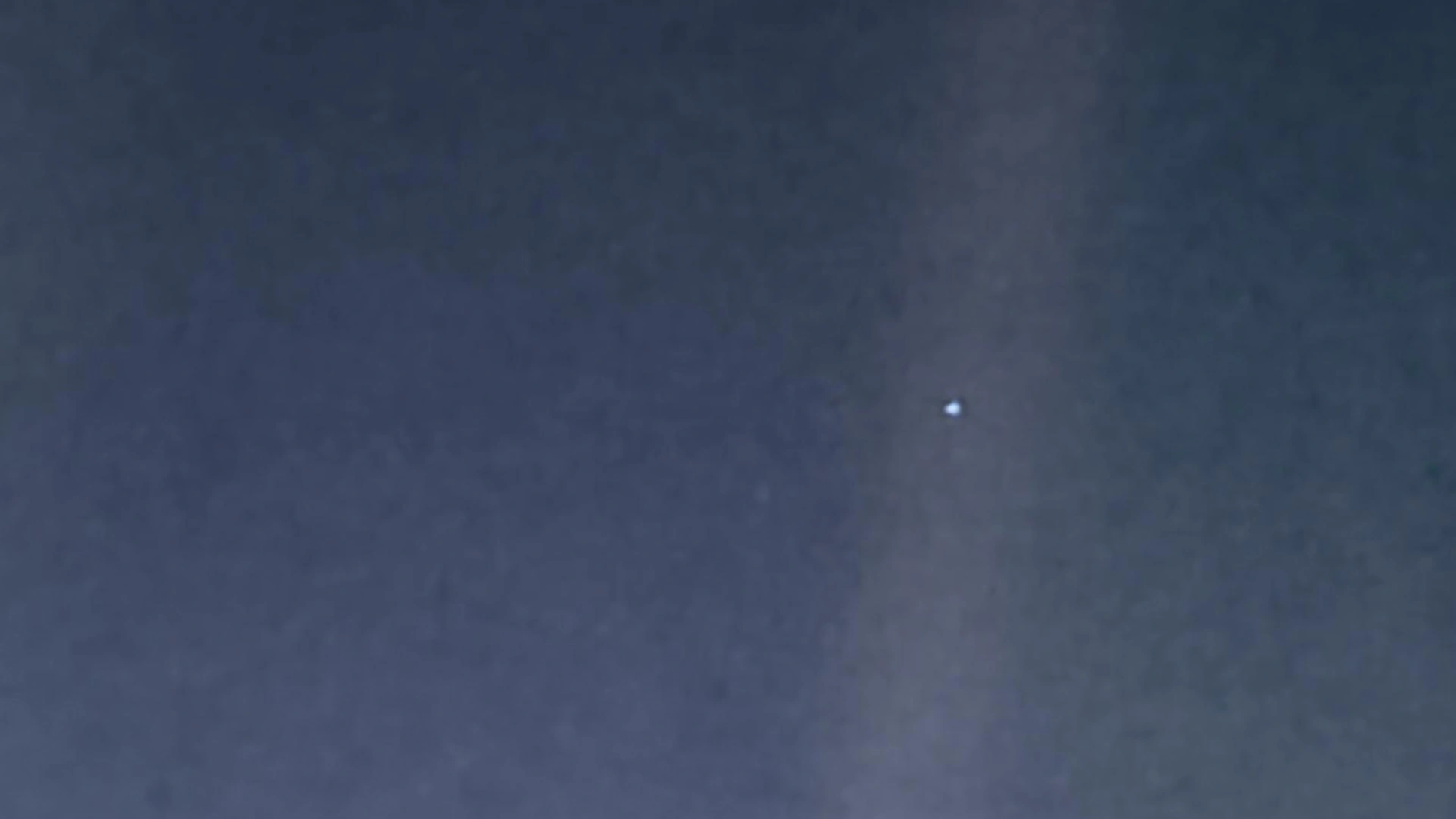
Thirty-five years ago, NASA’s Voyager 1 spacecraft captured one of the most iconic space images ever taken: the Pale Blue Dot. Snapped on February 14, 1990, from more than 6 billion kilometers (4 billion miles) away, the image shows Earth as a tiny speck suspended in a beam of scattered sunlight — a fragile “mote of dust” in the cosmic expanse.
Carl Sagan’s Vision
The photograph was taken at the suggestion of astronomer Carl Sagan, co-founder of The Planetary Society and member of Voyager’s imaging team. He knew Earth would barely be visible, but that was the point: to remind us of our planet’s smallness in the vast universe.
Sagan’s reflections on the image remain timeless:
“That’s here. That’s home. That’s us. On it everyone you love, everyone you know, everyone you ever heard of, every human being who ever was, lived out their lives… on a mote of dust suspended in a sunbeam.”
Later, he wrote: “There is perhaps no better demonstration of the folly of human conceits than this distant image of our tiny world… It underscores our responsibility to deal more kindly with one another, and to preserve and cherish the pale blue dot, the only home we’ve ever known.”
A Photo That Changes Perspective
For some, the Pale Blue Dot highlights humanity’s insignificance — a lonely world adrift in an endless void. Yet, it can also be seen as a powerful reminder of Earth’s uniqueness. Among billions of barren worlds, ours is alive, vibrant, and conscious of itself.
The image is not just humbling — it’s motivating. It reminds us to protect the planet we share and fuels the drive to explore beyond Earth. Billions of other worlds await discovery, and perhaps, among them, signs of life.
Why It Still Matters
Decades later, the Pale Blue Dot continues to inspire scientists, explorers, and everyday dreamers. It is both a lesson in humility and a call to action — to care for Earth and to keep searching the cosmos for answers about our place in it.
Image Source: NASA/JPL-Caltech | Image Credit: Respective Owner