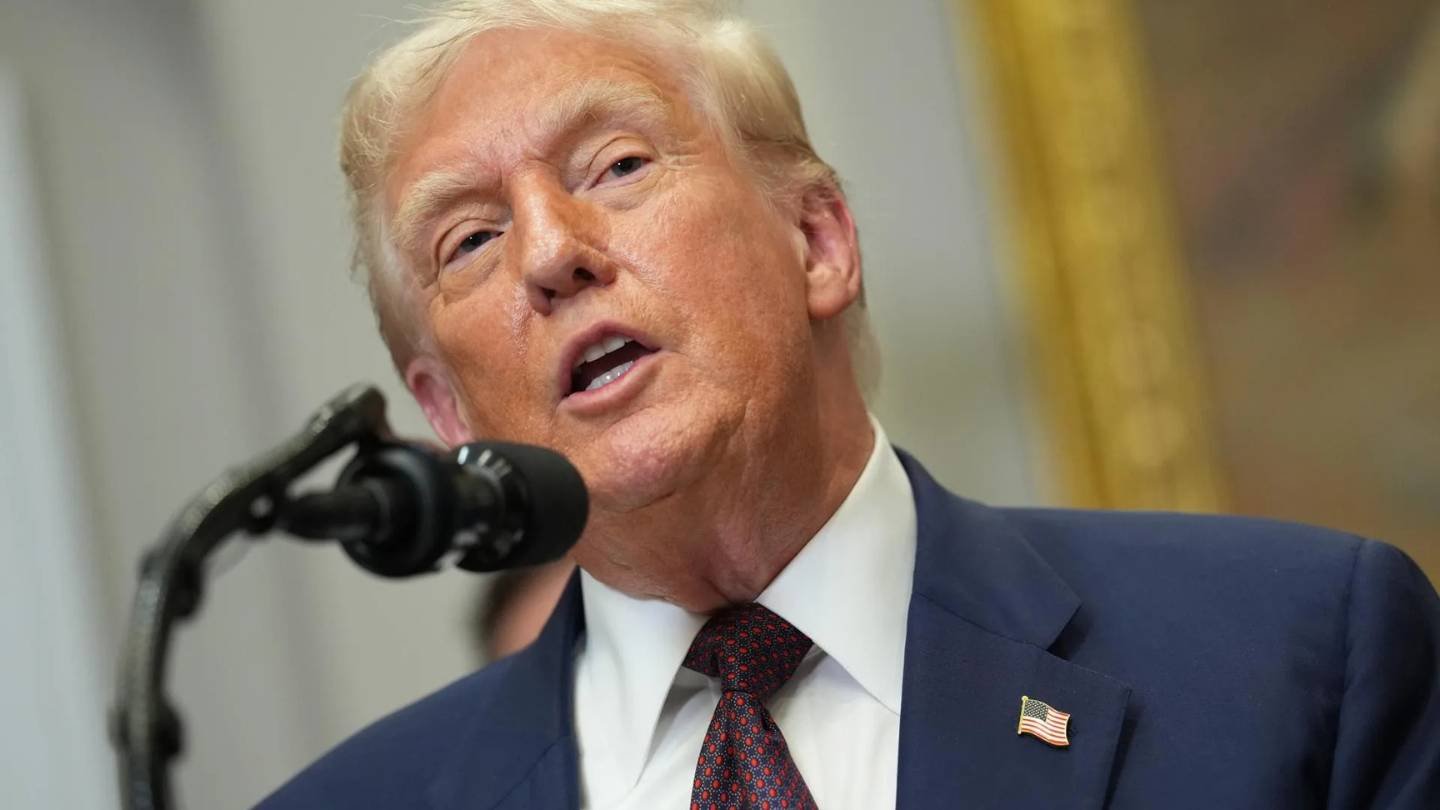
President Donald Trump strongly criticized the European Union’s $3.5 billion antitrust penalty against Google, calling the fine “very unfair” and warning of potential retaliatory measures if the bloc doesn’t reverse its decision.
Trump’s Strong Response
Trump took to Truth Social on Friday to express his anger over the European Commission’s ruling. “Europe today ‘hit’ another great American company, Google, with a $3.5 Billion Dollar fine, effectively taking money that would otherwise go to American Investments and Jobs,” he wrote.
The President framed the issue as targeting American taxpayers and innovation. “Very unfair, and the American taxpayer will not stand for it! As I have said before, my Administration will NOT allow these discriminatory actions to stand.”
Section 301 Threat
Trump escalated his rhetoric by threatening formal trade action against the EU. “We cannot let this happen to brilliant and unprecedented American Ingenuity and, if it does, I will be forced to start a Section 301 proceeding to nullify the unfair penalties being charged to these Taxpaying American Companies.”
Section 301 proceedings allow the US to impose retaliatory tariffs and other trade measures against countries deemed to be engaging in unfair practices.
Timing and Context
The outburst came just one day after Trump hosted Google CEO Sundar Pichai and co-founder Sergey Brin at the White House. During that meeting, Trump praised the executives following a US court decision that rejected the government’s attempt to force the sale of Google’s Chrome browser in a separate antitrust case.
This timing highlights the contrast between Trump’s supportive stance toward American tech companies and his opposition to foreign regulatory actions against them.
EU’s Antitrust Decision
The European Commission imposed the 2.95 billion euro fine after ruling that Google abused its dominant market position by favoring its own digital advertising services. The decision followed a three-year investigation that began in 2021.
Regulators also ordered Google to end “self-preferencing practices” and resolve “conflicts of interest” across the advertising technology supply chain. However, they stopped short of forcing a breakup of Google’s advertising business, which had been considered during the investigation.
Google’s Response
Google rejected the EU’s findings and announced plans to appeal the decision. Lee-Anne Mulholland, the company’s global head of regulatory affairs, criticized the ruling’s impact on European businesses.
“It imposes an unjustified fine and requires changes that will hurt thousands of European businesses by making it harder for them to make money,” Mulholland stated. She argued that providing services for advertisers and publishers isn’t anticompetitive and noted increased alternatives in the market.
Broader Regulatory Challenges
The EU fine represents part of broader global scrutiny facing Google’s business practices. In the United States, the Justice Department has pursued its own antitrust actions, seeking the divestment of Google’s AdX and DFP advertising platforms.
These parallel investigations on both sides of the Atlantic demonstrate coordinated efforts to address concerns about Google’s market dominance in digital advertising.
Transatlantic Trade Tensions
Trump’s response reflects ongoing tensions between the US and EU over technology regulation and taxation. American officials have consistently argued that European antitrust actions unfairly target US companies while protecting European competitors.
The threat of Section 301 proceedings adds another layer to already complex US-EU trade relationships, particularly in the technology sector where American companies dominate global markets.
Economic Implications
The dispute highlights fundamental disagreements about how to regulate large technology companies in the global economy. While the EU emphasizes protecting competition and consumer choice, Trump frames the issue as protecting American economic interests and innovation.
The outcome could influence how other countries approach similar regulatory decisions involving American technology giants, potentially affecting billions in revenue and investment flows.
Image Source: Google | Image Credit: Respective Owner