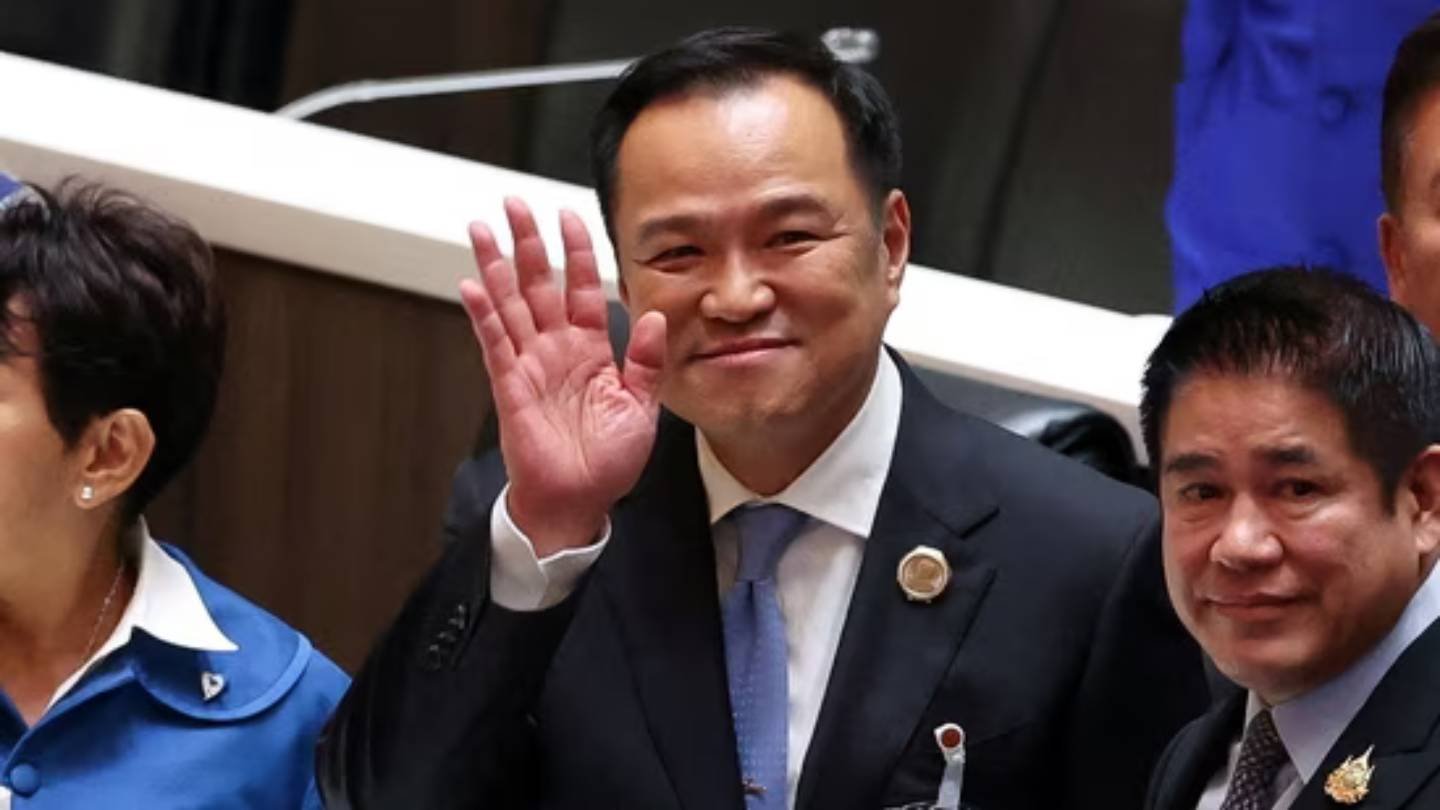
Thailand’s Parliament has chosen Anutin Charnvirakul, leader of the opposition Bhumjaithai Party, as the country’s new Prime Minister following a decisive parliamentary vote on Friday. His election comes after a court ruling last week removed Paetongtarn Shinawatra from office over ethics violations.
Parliamentary Victory
Anutin secured a clear majority with 311 votes from the 490 members present in the House of Representatives during Friday’s roll call vote. He defeated his only opponent, Chaikasem Nitisiri, who was nominated by the ruling Pheu Thai Party.
The vote exceeded the simple majority threshold required for approval. Second Deputy House Speaker Chalad Khamchuang announced the results after the one-hour voting process concluded.
Awaiting Royal Endorsement
The 58-year-old politician now awaits formal endorsement from Thailand’s King Maha Vajiralongkorn to officially become the country’s 32nd Prime Minister. This constitutional requirement represents the final step in Thailand’s prime ministerial selection process.
Royal approval is typically considered a formality once Parliament has made its choice.
Political Background
Anutin brings extensive political experience to the role. The former construction magnate became Bhumjaithai Party leader in 2012 and has served as Deputy Prime Minister in multiple administrations.
His ministerial experience includes leadership roles in the Interior and Public Health portfolios. This background provides him with knowledge of key government operations and policy areas.
Post-Election Commitments
Following his parliamentary victory, Anutin expressed gratitude to Thai citizens for their support conveyed through their elected representatives. He outlined his priorities for leading the nation forward.
“I look forward to working hand in hand with all parties for the benefit of the people, aiming to advance the country swiftly and mitigate past missed opportunities,” he told reporters after the session.
Anutin emphasized that his new government would maintain strict law enforcement and actively combat abuses of power. These commitments address ongoing concerns about governance and accountability in Thai politics.
Parliamentary Dissolution Attempt Fails
The path to Friday’s election cleared after the outgoing Pheu Thai-led government failed to dissolve Parliament earlier this week. Legal challenges prevented the dissolution on grounds that a caretaker government lacked authority for such actions.
This rejection enabled the prime ministerial election to proceed as scheduled, allowing Parliament to choose new leadership.
Opposition Support with Conditions
The main opposition People’s Party, which controls nearly one-third of lower house seats, announced support for Anutin on Wednesday. However, their backing came with specific requirements.
The party demanded that Parliament be dissolved for fresh elections within four months of the new government taking office. This condition reflects their desire for renewed democratic mandate through general elections.
Ongoing Political Tensions
Thailand’s political landscape continues to reflect deep-seated divisions between competing factions. Power struggles persist between supporters of former Prime Minister Thaksin Shinawatra and conservative parties aligned with military interests.
Thaksin is the father of recently ousted Prime Minister Paetongtarn Shinawatra, highlighting how family political dynasties remain central to Thai politics. These factional divisions have shaped the country’s political dynamics for years.
Government Formation Challenges
Anutin faces the complex task of forming a stable government amid Thailand’s fragmented political environment. Building coalition support across party lines will be essential for effective governance.
His success will depend on managing competing political interests while addressing the country’s economic and social challenges. The four-month timeline for potential elections adds urgency to his policy agenda.
The new Prime Minister must navigate Thailand’s constitutional monarchy system while working to restore political stability and public confidence in government institutions.
Image Source: Google | Image Credit: Respective Owner