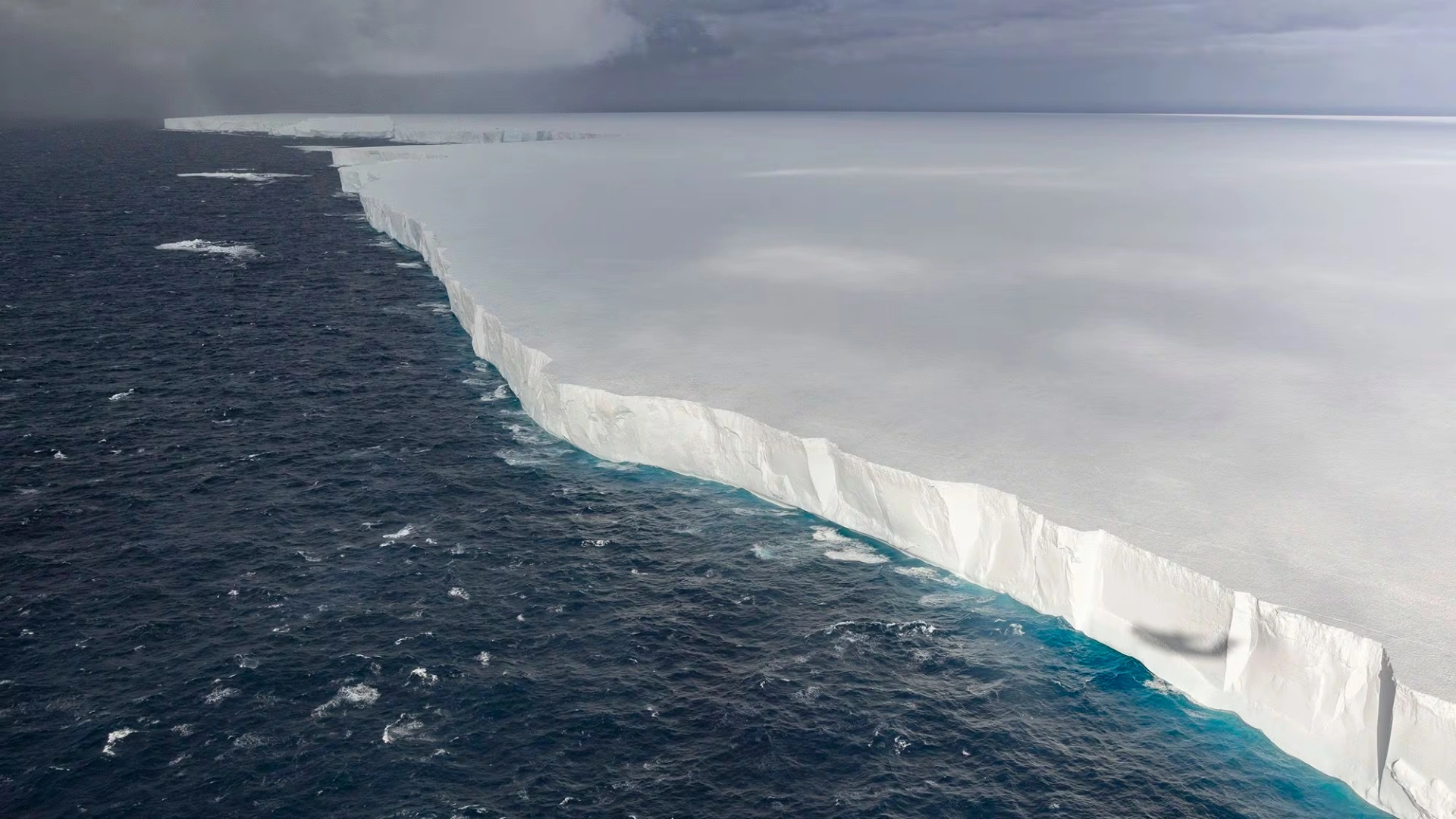
Almost four decades after breaking off from Antarctica, the massive iceberg A23a is now breaking apart in warmer waters, raising concerns about its environmental impact. This “megaberg,” which once weighed nearly a trillion tons earlier this year, is now less than half its original size, but it still spans 1,770 square kilometers and 60 kilometers at its widest point.
The Breakdown
Recently, huge chunks of the iceberg have broken off, some measuring up to 400 square kilometers. These smaller pieces, although broken down, are still large enough to pose a threat to ships navigating in the area. According to Andrew Meijers, a physical oceanographer from the British Antarctic Survey, A23a is “breaking up fairly dramatically” as it drifts further north into the warming waters of the South Atlantic Ocean.
A23a’s Journey
A23a first broke off from the Antarctic shelf in 1986, but it remained grounded in the Weddell Sea for over 30 years. It finally escaped in 2020 and was carried by the Antarctic Circumpolar Current into the South Atlantic Ocean. In March 2025, the iceberg ran aground near South Georgia Island, raising concerns about its potential impact on local wildlife, including penguins and seals.
Climate Change Impact
The iceberg has been steadily drifting northward, and it was dislodged from its grounding spot in late May. Since then, it has picked up speed, at times traveling as much as 20 km in a single day. Scientists are surprised by how long A23a has lasted; typically, most icebergs do not survive this long. Once they leave Antarctica’s freezing protection, they are vulnerable to melting due to warmer waters, exacerbated by human-induced climate change.
As A23a continues to break apart and drift away from Antarctica, it underscores the urgent issue of climate change and its effects on the planet’s ice structures.