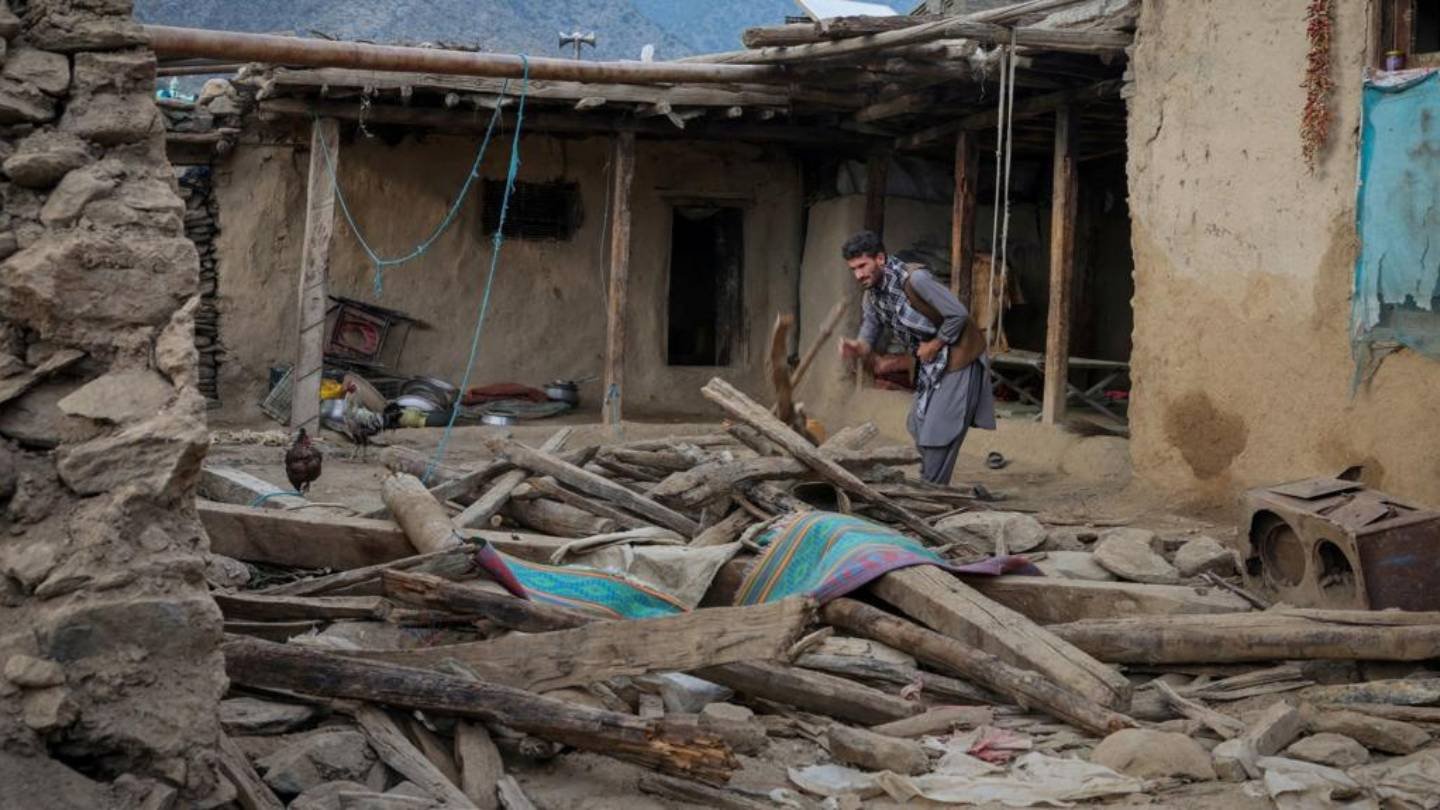
Rescue operations are underway in eastern Afghanistan after a powerful 6.0-magnitude earthquake killed more than 800 people late on Sunday. The disaster struck the mountainous Kunar province, where entire villages have been flattened and survivors remain trapped under rubble.
According to the UN’s humanitarian agency, at least 1,800 people have been injured, while officials warn the toll could rise sharply as access to remote areas remains blocked by landslides and rockfalls. Helicopters are being deployed to reach the hardest-hit villages.
Survivors in urgent need of aid
Local hospitals are overwhelmed. A doctor in Asadabad said his facility, with just 150 beds, had already treated more than 200 patients. “Thousands have lost their homes. We need tents, medicine, and international help,” he told the BBC.
The UN Office for the Coordination of Humanitarian Affairs (OCHA) said hot meals, high-energy biscuits, and blankets are being distributed, but warned that recent funding cuts have severely limited aid capacity. More than 80 health clinics in the region had closed even before the quake, leaving half a million people without reliable care.
Women face barriers to treatment
Rights groups have raised concerns that women and girls in Kunar may not receive timely treatment because of Taliban restrictions and cultural practices that require male guardians for travel. Humanitarian agencies stressed the urgent need for women aid workers to ensure relief reaches female survivors.
Global aid response
The Taliban has appealed for international assistance. Several nations have pledged support:
- UK: £1 million in emergency funding, split between the UN Population Fund and the International Red Cross.
- India: Delivered 1,000 tents to Kabul and is sending 15 tonnes of food supplies to Kunar.
- UN: Released $5 million from its global emergency response fund.
- China and Switzerland: Also announced contributions.
British officials underlined that funds would be channelled through aid agencies, not the Taliban administration.
Aftershocks of displacement
Local media reported that some of the families worst affected had only recently been deported from Pakistan, where authorities have accelerated efforts to expel undocumented Afghans. The sudden return left them vulnerable, and now the quake has compounded their suffering.
A nation in crisis
The shallow quake—just 8 km deep—was felt as far away as Kabul and Pakistan’s capital Islamabad. Its impact has been especially devastating because of Afghanistan’s fragile infrastructure, economic crisis, and the limited capacity of humanitarian groups operating under Taliban restrictions.
The UN has called on the global community to put aside political differences and act swiftly to help Afghans in desperate need.
Image Source: Google | Image Credit: Respective Owner