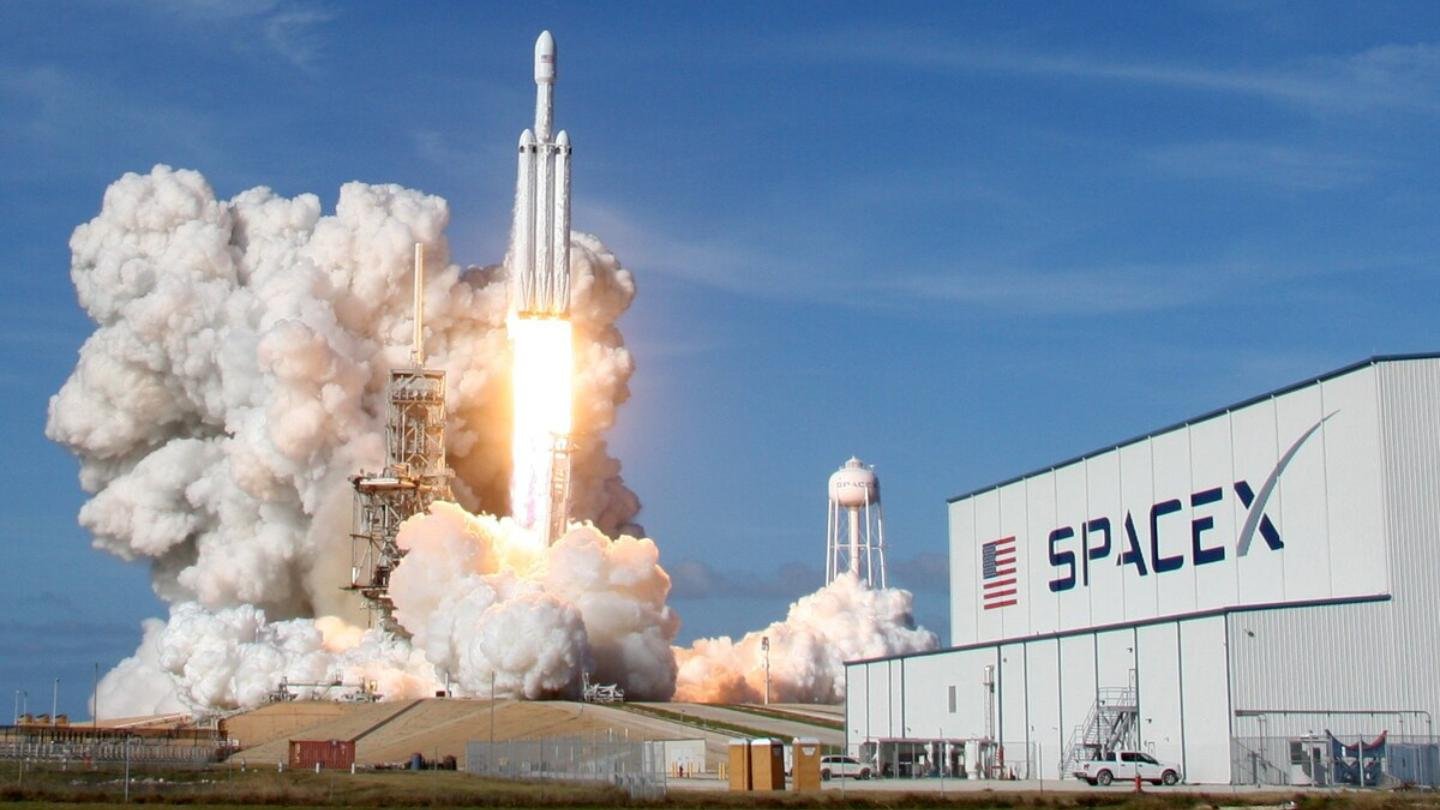
Elon Musk’s SpaceX made a significant contribution to US military space operations on Thursday night with the successful launch of the highly secretive X-37B space drone. The launch, carried out via a Falcon 9 rocket, occurred at 11:50 pm local time (0350 GMT on Friday) from NASA’s Kennedy Space Center in Florida. The rocket’s ascent lit up the night sky, marking a new chapter for the US Space Force’s ongoing space exploration and technological experiments.
The mission of the X-37B, a highly classified unmanned spaceplane, has sparked considerable interest, with the US Space Force revealing that it will focus on a broad range of objectives related to next-generation technologies. These include critical experiments involving laser communications and quantum sensors, which are designed to enhance the security and efficiency of US space-based communications systems.
Mission Objectives and Technologies
According to a statement from the US Space Force, this mission will contribute to “improving the resilience, efficiency, and security of U.S. space-based communications architectures.” Among the key technologies being tested on this mission are advanced laser communications systems and quantum inertial sensors that are touted as the highest-performing ever tested in space.
These advanced capabilities are expected to play a crucial role in strengthening the United States’ military and strategic positioning in space, particularly in terms of communication systems that are essential for modern warfare and satellite-based operations. The success of these technologies will also likely open the door for further innovations in space exploration, communication, and defense systems.
About the X-37B Space Drone
The X-37B space drone, which is approximately the size of a small bus, has been a key player in advancing space technology for the US Air Force and NASA. Resembling a miniature version of the now-retired space shuttles, the X-37B has been in operation since 2010. The craft is designed to be a reusable orbital test vehicle that can carry out complex experiments without the need for human intervention.
With a length of 30 feet (9 meters) and a wingspan of 15 feet, the X-37B is powered by solar panels, allowing it to stay in orbit for extended periods of time. Its primary role is to conduct classified military experiments, but it has also previously performed several experiments for NASA, demonstrating its versatility and importance in advancing both civilian and military space missions.
The X-37B has completed several successful missions since its launch, but its current mission, known as “Mission 8,” is one of the most high-profile to date due to its focus on cutting-edge technologies. The drone will remain in orbit for an undisclosed period, conducting its experiments before returning to Earth.
SpaceX’s Role in National Security and Space Operations
SpaceX, under the leadership of Elon Musk, has played an increasingly important role in US national security, with multiple launches of both military and commercial satellites. This launch of the X-37B further solidifies SpaceX’s position as a crucial player in the defense and aerospace sectors, where it has provided cost-effective and reliable space transportation solutions.
Musk’s company has revolutionized space transportation, lowering the cost of satellite launches and enabling access to space for both government and private organizations. This successful launch of the X-37B demonstrates SpaceX’s capability to deliver complex payloads into orbit, further enhancing the US military’s operational readiness in space.
Looking Ahead
As the X-37B embarks on its latest mission, the technological advancements being tested on this flight will likely contribute significantly to the future of military and space exploration. The drone’s ability to operate autonomously in space, combined with its advanced testing of new communication systems and sensors, positions it as a critical tool for maintaining the US’s edge in space-based technologies.
The success of this mission could lead to further expansions in the use of similar unmanned space vehicles for both military and scientific purposes, potentially changing the way space exploration and defense are conducted in the future.
Image Source: AFP