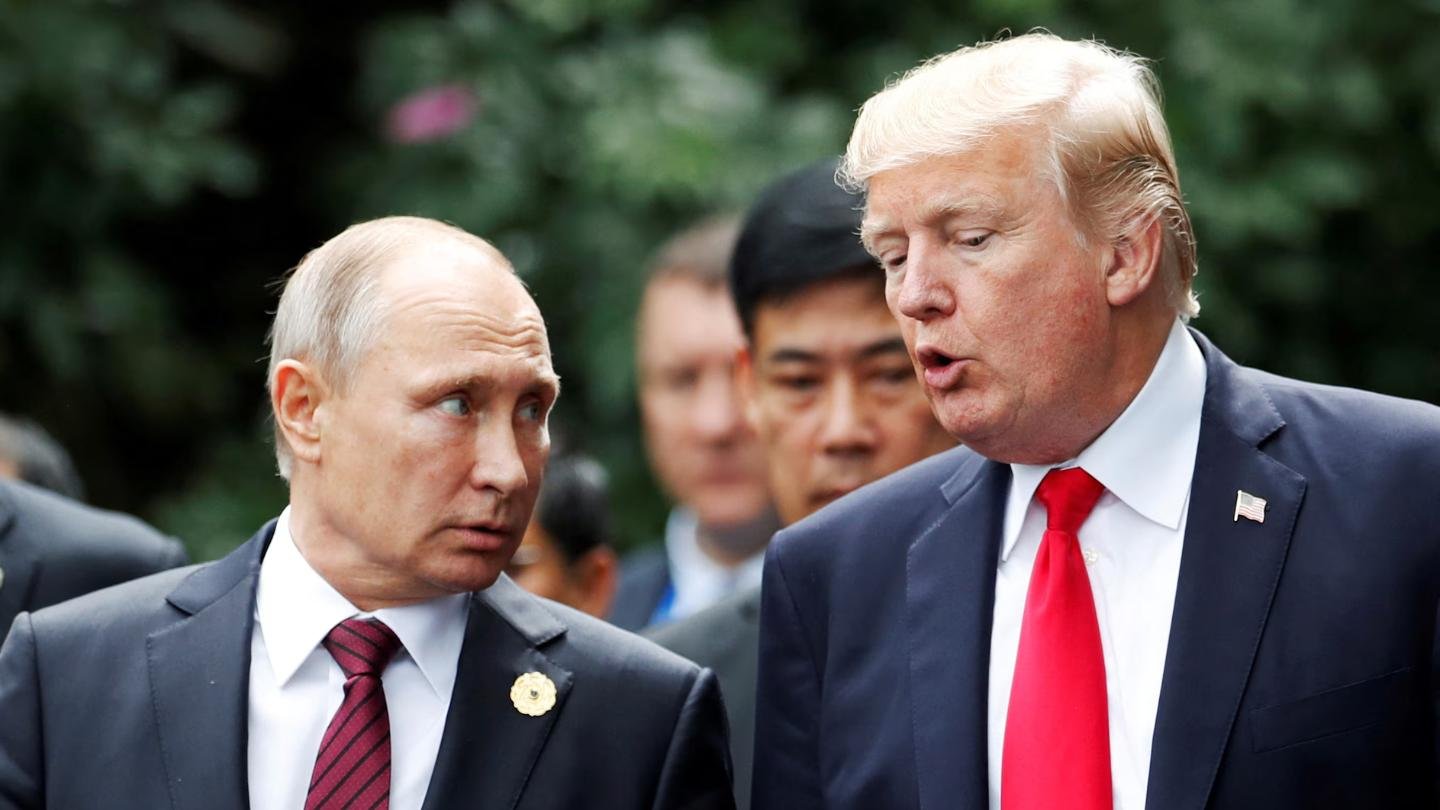
U.S. President Donald Trump has set a “two-week” deadline to decide whether to impose “massive sanctions” or “massive tariffs” in response to the ongoing Russia-Ukraine war. Speaking in the Oval Office on Friday, Trump stated, “In two weeks, we will know which way I’m going. I will go one way or the other—whether it’s massive sanctions or tariffs or both, or do we do nothing and say it’s your fight?”
Trump’s warning comes as diplomatic efforts for a Russia-Ukraine summit face significant challenges. Moscow has shown little interest in peace talks, with Russian Foreign Minister Sergei Lavrov confirming there would be “no meeting.” Ukrainian President Volodymyr Zelensky has accused Russia of avoiding talks, dragging out the war unnecessarily. Earlier this week, Trump had suggested that both Russian President Vladimir Putin and Zelensky were open to a face-to-face meeting, but now likens the two leaders to “oil and vinegar.”
In addition to the possibility of sanctions and tariffs, Trump’s administration is considering increased economic pressure on countries believed to be supporting Russia’s war efforts. Recently, Trump’s trade adviser, Peter Navarro, accused India of acting as a “laundromat for the Kremlin” by refining Russian oil and reselling it globally, which he claimed allowed Moscow to fund its military campaign. India rejected these claims, with External Affairs Minister S. Jaishankar calling the logic “perplexing” and defending India’s imports as crucial for its energy security.
Trump, wearing his signature red “Trump was right about everything” cap, also mentioned the possibility of inviting Putin to the 2026 FIFA World Cup in the U.S. if progress is made in resolving the conflict. However, the issue of security guarantees for Ukraine remains unresolved, with Trump stating that Russia had agreed to “some Western security guarantees” for Kyiv—though Lavrov dismissed this idea as “a road to nowhere.” Zelensky, meanwhile, argued that only foreign troops and firm guarantees would be able to prevent further Russian aggression.
The war, now in its fourth year, has killed tens of thousands and displaced millions. Russia’s opposition to any NATO role in Ukraine remains a central issue, citing it as a justification for its invasion. Ukraine, in contrast, points to Russia’s violation of the 1994 Budapest Memorandum, in which Moscow pledged to respect Ukraine’s sovereignty in exchange for Kyiv giving up nuclear weapons, as evidence of the need for strong security guarantees.
As Trump prepares to make his decision, the world watches closely, hoping for a breakthrough that could bring an end to the devastating war.
Image Source: TOI (Times of India)