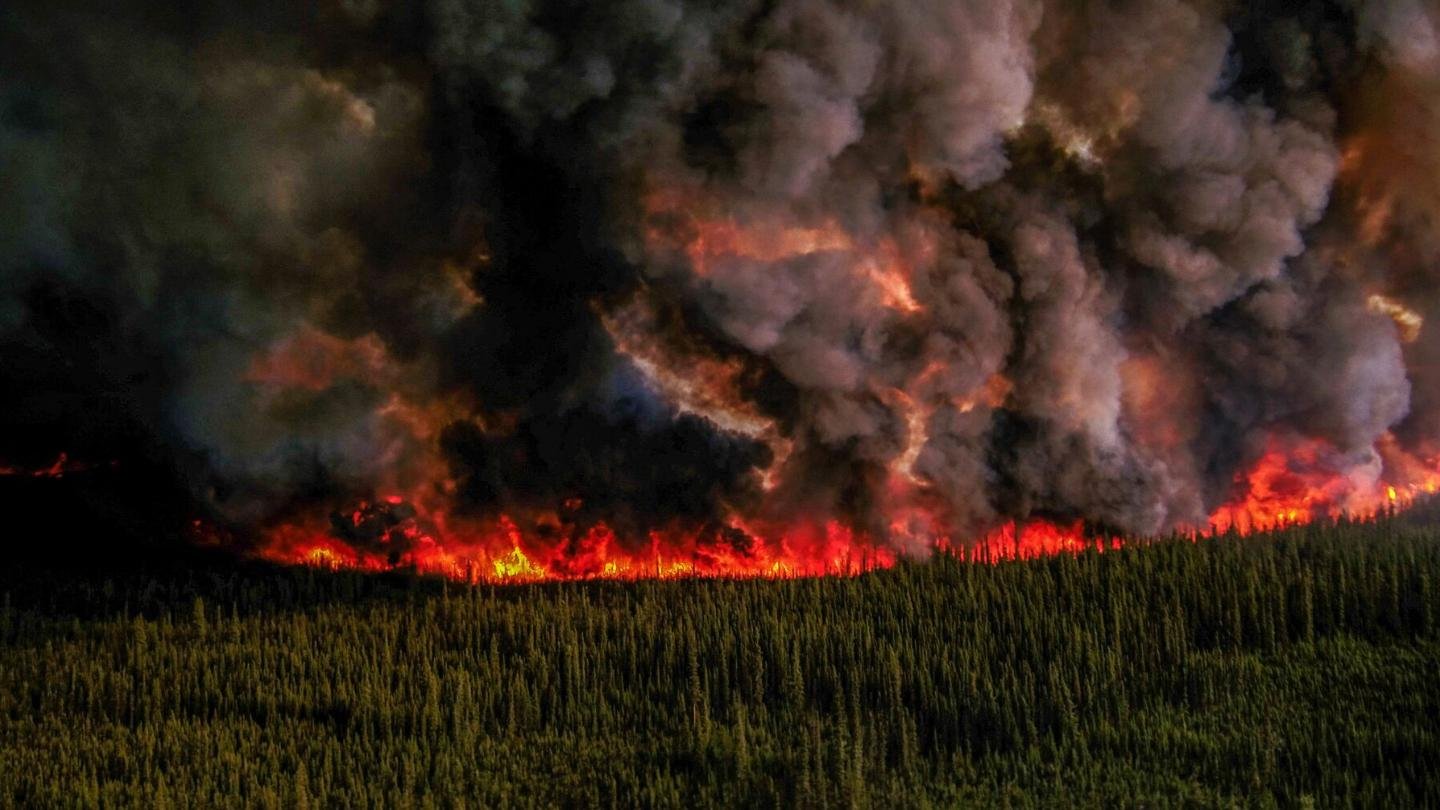
Canada is facing one of its worst wildfire seasons on record, with over 700 active fires still burning across the country. Thousands of residents have already been forced to evacuate, while many more remain on high alert as flames spread quickly in several provinces.
So far this year, 18.5 million acres of forest have burned, making 2025 the second-worst wildfire season in Canadian history, behind only 2023, when more than 42 million acres were destroyed. Officials warn the situation could worsen, as wildfire season often stretches into September and October.
Hot, Dry Conditions Fuel Fires
Experts attribute the intensity of this year’s fires to persistent heat, drought, and reduced winter snowpack, which left vegetation across Canada dry and highly flammable.
- Western provinces hit hardest: Saskatchewan and Manitoba have seen the most destructive wildfires this year. The Shoe Fire in Saskatchewan, burning since May 7, has already consumed 1.4 million acres, making it larger than Arizona’s Grand Canyon National Park.
- Temporary relief: Recent rains in the Prairies have slowed fire growth, but concerns remain as temperatures are expected to rise again in some regions.
Newfoundland and Labrador Under Emergency
The focus has now shifted eastward. Newfoundland and Labrador, a province where large wildfires are rare, is experiencing a severe outbreak, with multiple blazes currently classified as “out of control.”
Fires are burning dangerously close to communities in what experts call the “wildland-urban interface” — areas where towns border dense forests. A state of emergency has been declared, with mandatory evacuations in some regions.
Premier John Hogan announced a ban on outdoor burning and off-road vehicle use across forested land. “If you do violate this, we will find you and we will fine you,” Hogan said, stressing that the restrictions are out of an “extreme abundance of caution.”
British Columbia and Quebec Outlook
- British Columbia: Southern parts of the province, especially Vancouver Island, are facing extremely dry conditions, raising fears of a surge in new fires.
- Quebec: After suffering devastating wildfires in 2023, the province has so far been largely spared this year due to wet weather in May, June and July.
Looking Ahead
Scientists warn that climate change is contributing to longer, more intense fire seasons in Canada. With hot and dry conditions expected to persist into the fall, the threat of further devastation remains high.
Image Source: Google | Image Credit: Respective Owners