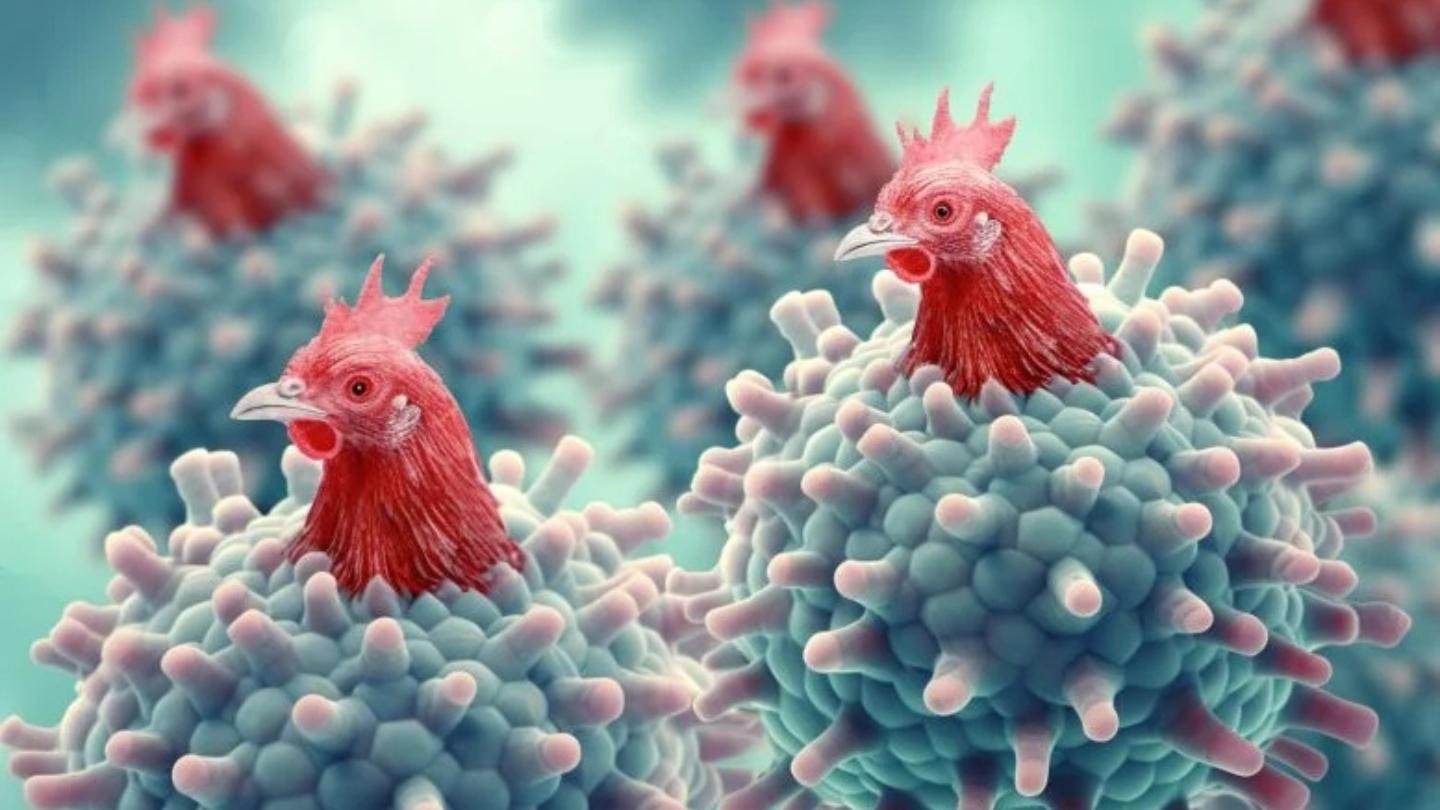
Bengaluru: A study by scientists at the Indian Institute of Science (IISc) has raised concerns over the increasing risk of human infection from a specific strain of the H5N1 bird flu virus. Nearly 30 years after the H5N1 virus was first identified in birds, researchers have highlighted a particular branch, the 2.3.4.4b clade, which appears to be evolving in ways that may make it more capable of infecting humans.
The IISc team, led by assistant professor Kesavardhana Sannula from the Department of Biochemistry, identified genetic mutations in the 2.3.4.4b clade that have enabled it to infect various mammalian species, suggesting a rising potential for adaptation to humans. This clade is causing widespread mortality in both birds and mammals and has been linked to sporadic human infections.
The primary focus of the study was on the virus’s surface proteins, H5 (haemagglutinin) and N1 (neuraminidase), which play critical roles in its infectivity. The team explored whether mutations in these proteins were making it easier for the virus to jump to humans and which animal hosts might be contributing to this shift.
Using advanced computational tools, the researchers analyzed nearly 43,000 protein sequences from birds, non-human mammals, and human influenza strains. They focused on detecting regions under “selection pressure” — parts of the virus that are rapidly changing, possibly due to evolution.
The team categorized the mutations into two types: adaptive mutations that help the virus infect humans, and barrier mutations that hinder cross-species transmission. They also identified potential animal hosts that could act as “stepping-stones” for the virus’s adaptation to humans. Surprisingly, strains adapted to foxes were deemed more dangerous than those adapted to cattle.
According to Ranjana Nataraj, the study’s first author, the findings suggest that the 2.3.4.4b clade is acquiring key mutations similar to those seen in human pandemic influenza strains, raising concerns about a potential increase in human infections. The researchers are calling for proactive and targeted surveillance, particularly focusing on mammals that could facilitate the virus’s adaptation to humans.
Image Source: Google
Image Credit: Respective Owner