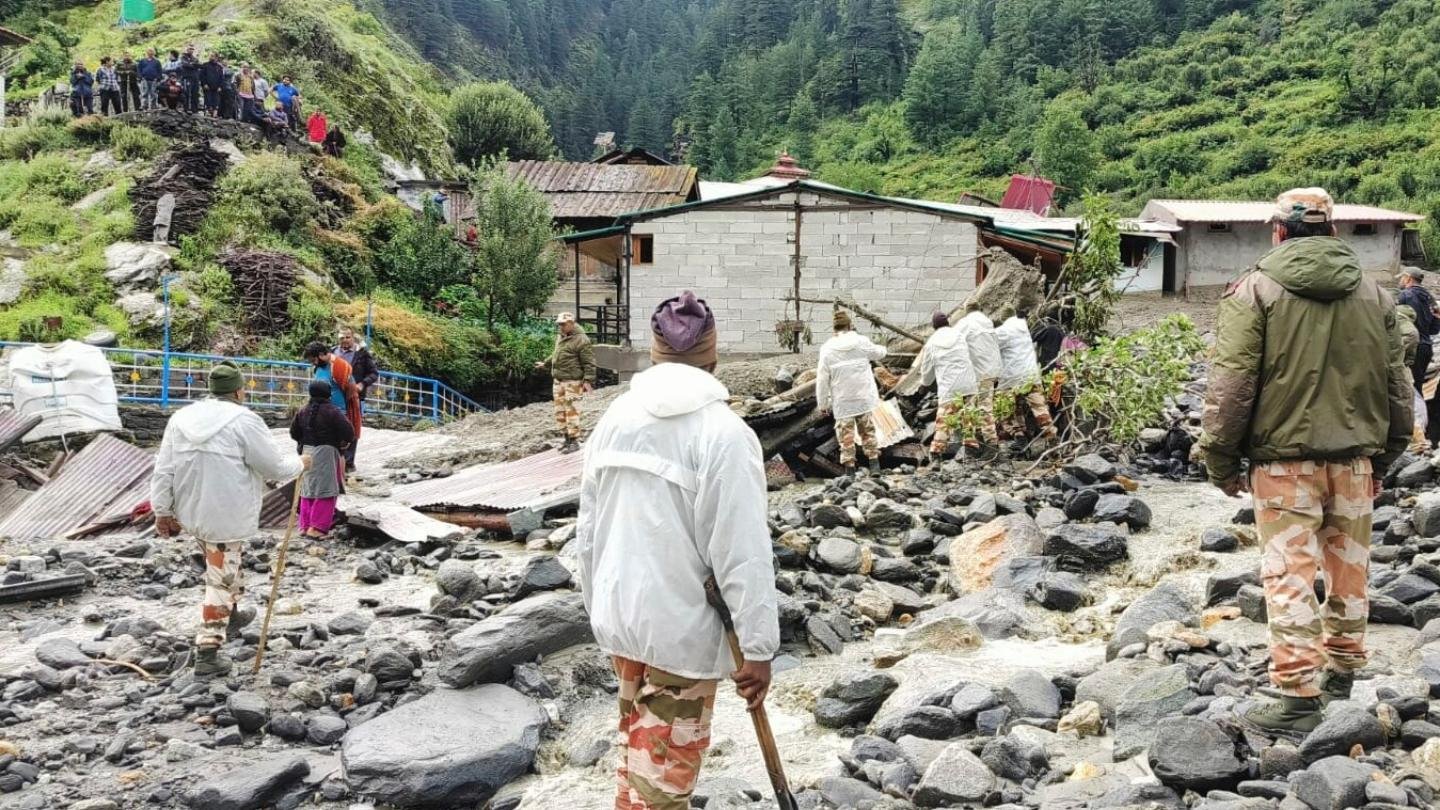
The devastating flash flood that swept away Dharali village this week is the latest in a series of extreme weather disasters plaguing Uttarakhand. Data from the past decade reveals a grim reality — 705 lives lost to flash floods and landslides, with nearly 3,500 total fatalities from natural disasters in the state.
According to official records, flash floods alone claimed 389 lives over the last 10 years, while 316 deaths were linked to landslides. These disasters, often triggered by intense rainfall, cloudbursts, or glacial activity, have become increasingly frequent as the region faces the consequences of a warming climate.
Scientific Studies Highlight Growing Danger
A July study in the Journal of the Geological Society of India identified Uttarakhand as a hotspot for extreme hydro-meteorological events. Analyzing nearly four decades of data, researchers found that such events have surged since 2010, particularly along the Main Central Thrust (MCT) — a major geological fault line running through the state.
Hotspots include Rudraprayag and Bageshwar, where steep terrain and fragile geology amplify risks.
Lead researcher YP Sundriyal noted that while the period from 1998–2009 saw low rainfall and rising temperatures, the years since 2010 have brought a sharp spike in cloudbursts and flash floods.
IPCC and IIT Studies Warn of Intensifying Hazards
The Intergovernmental Panel on Climate Change (IPCC) has warned that climate change is altering the frequency, intensity, and timing of extreme weather events worldwide.
A separate study from IIT Gandhinagar, published in Natural Hazards, found flash floods are now emerging in regions previously considered low-risk, with the western Himalayas particularly vulnerable due to cloudbursts, snowmelt, and short bursts of intense rainfall.
Urgent Call for Action
Experts are urging immediate measures, including:
- Climate-resilient infrastructure
- Revised dam design standards
- District-level early warning systems
- A ban on unchecked construction in hazard-prone areas
“The Himalayan hydrology is no longer behaving predictably,” said a senior geologist. “Climate change is rewriting flood recurrence intervals, and the time to adapt is now.”
Image Source: Google Images
Image Credit: Respective Owner