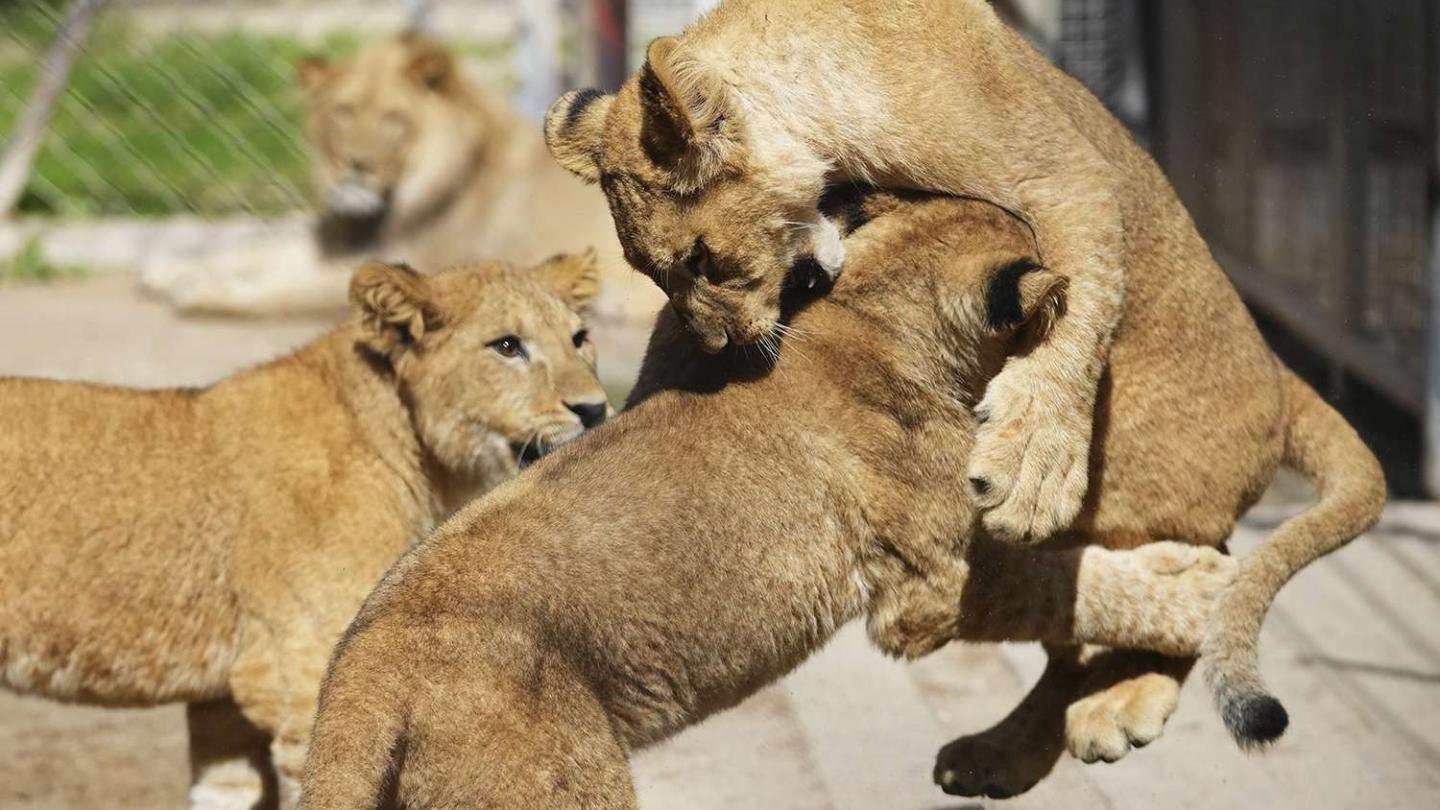
A zoo in the Czech Republic is making significant strides in preserving the Barbary lion, a subspecies once thought to be extinct in the wild. Dvůr Králové Safari Park recently introduced four adorable Barbary lion cubs, born in January 2025, marking a crucial milestone in efforts to eventually reintroduce the species to its native habitat.
The cubs, three females and one male, made their public debut in April 2025. New images released on August 6 show the playful cubs interacting with each other while being observed by their parents, Khalila and Bart. Experts at the zoo are hopeful that these cubs will not remain in captivity for their entire lives. As part of an international endangered species program, the cubs will eventually be transferred to other zoos and wildlife parks to help ensure their survival and continued breeding.
The Barbary lion once roamed the Atlas Mountains in northern Africa, but by the mid-1960s, the subspecies became extinct in the wild. Since then, only a small population of Barbary lions has survived in captivity. It is estimated that fewer than 200 remain worldwide today. Human activities, including overhunting during Roman times, played a major role in their decline, along with habitat loss.
The Dvůr Králové Safari Park has been actively working on breeding programs for the Barbary lion, with previous successful births, including two cubs in May 2019, three in July 2020, and two in July 2021. The goal of the park’s breeding program is to reintroduce Barbary lions to the wild, potentially in areas like Morocco’s Atlas Mountains. However, this ambitious reintroduction plan faces many challenges, including bureaucratic hurdles and the long absence of Barbary lions from their natural habitat. Discussions about the potential reintroduction are ongoing, with a conference scheduled for later this year or early 2026.
While the reintroduction plan may take years, Dvůr Králové’s Deputy Director, Jaroslav Hyjánek, remains optimistic about the future of the Barbary lion. “It’s important to have such a vision for any animal. Without it, the existence of zoos wouldn’t make sense,” he said.
This successful breeding initiative is not only a step toward the preservation of this majestic species but also provides hope that the Barbary lion may one day roam freely again in its natural habitat.
Image Source: AP Photo/Petr David Josek
Image Credit: Respective Owner