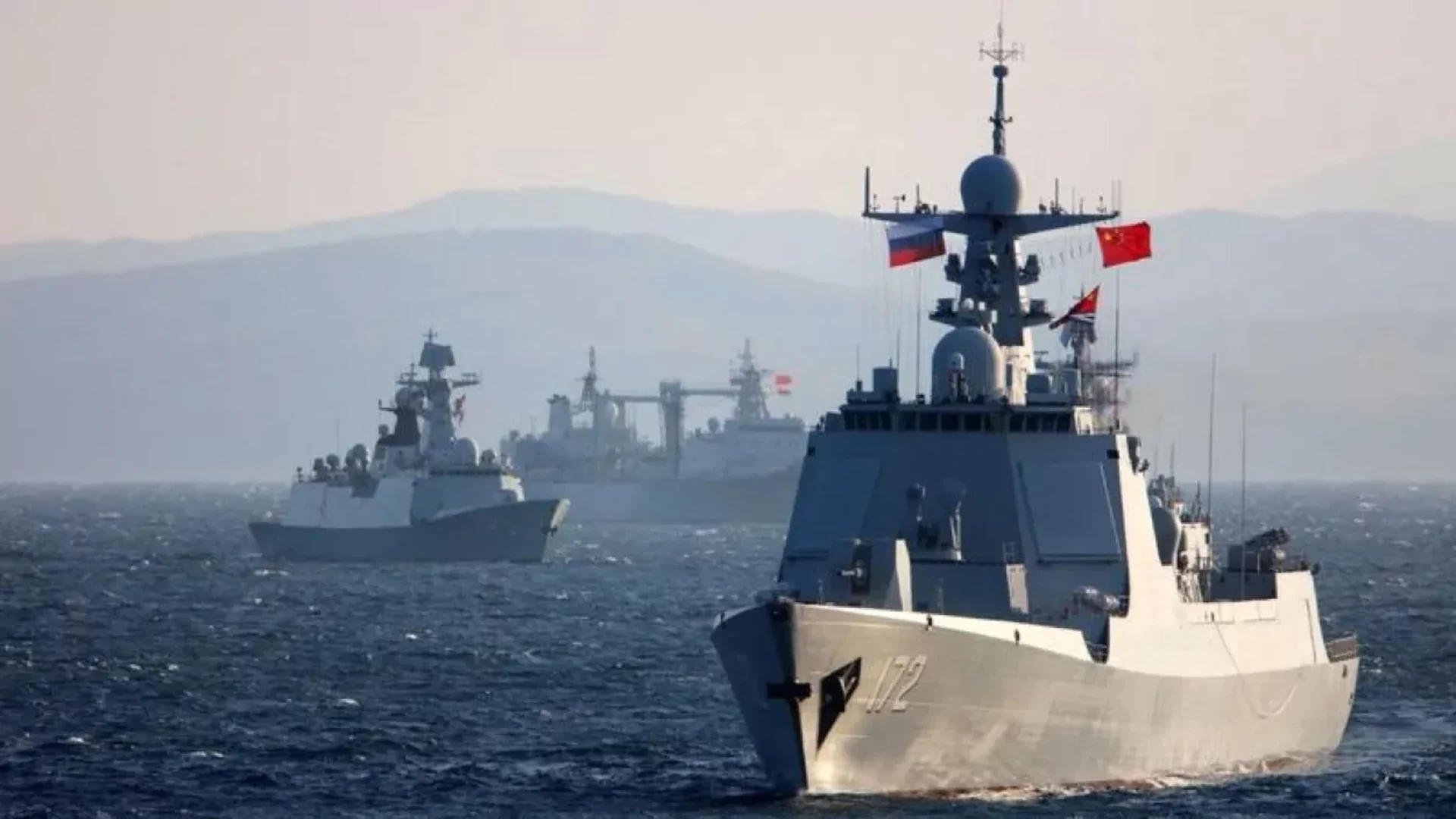
China and Russia kicked off joint naval exercises in the Sea of Japan on Sunday, August 3, as part of a growing military partnership aimed at countering Western influence in global affairs. The drills mark the latest chapter in their ongoing defense cooperation.
Three-Day Drills Near Vladivostok
According to China’s Ministry of Defense, the “Joint Sea-2025” drills began in waters near Vladivostok, Russia’s eastern port city. Scheduled to last three days, the exercises involve a range of operations, including submarine rescue, anti-submarine warfare, air defense, anti-missile operations, and maritime combat.
Four Chinese naval vessels, including the guided-missile destroyers Shaoxing and Urumqi, are participating alongside several Russian warships.
A Strategic Alliance in the Making
China and Russia have held joint naval exercises annually since 2012 under the “Joint Sea” banner. While previous drills were mostly symbolic, recent editions reflect a more strategic alignment between the two nations, particularly following Russia’s invasion of Ukraine in 2022.
This year’s drills are not just limited to training exercises. Following the maneuvers, the two navies will conduct joint patrols in areas of the Pacific, signaling a broader regional intent.
Political and Military Implications
The Chinese Defense Ministry described the exercises as a step toward “further deepening the comprehensive strategic partnership” between Beijing and Moscow. The timing also reflects their shared opposition to what both governments view as a U.S.-dominated global order.
China has avoided directly criticizing Russia’s actions in Ukraine. Instead, it has positioned itself as a neutral party, calling for peace while simultaneously accusing Western nations of escalating the war by supplying weapons to Kyiv. The West, however, believes Beijing has quietly supported Moscow’s efforts, particularly through non-lethal aid and expanded economic ties.
Background and Context
Last year’s drills took place near China’s southern coast. The shift to the Sea of Japan this year is notable given the region’s strategic importance and proximity to both U.S. military bases and disputed territories.
The joint exercises come amid heightened tensions in the Indo-Pacific, where the U.S. and its allies continue to increase their military presence. For both Russia and China, these drills serve as a display of force and solidarity in a rapidly shifting geopolitical landscape.
Image Source: Google
Image Credit: Respective Owner