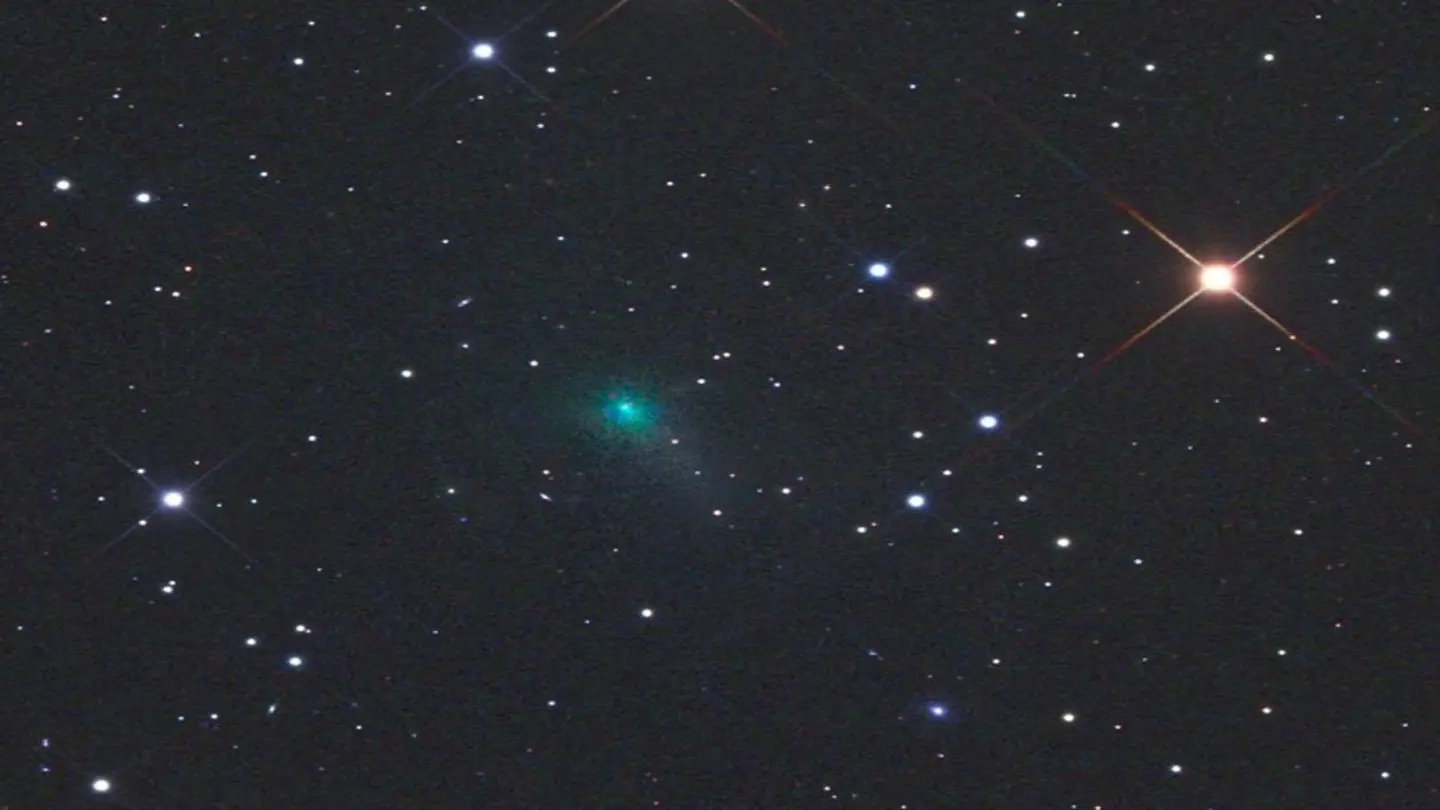
A newly discovered comet, C/2026 A1 (MAPS), is generating considerable excitement among astronomers and skywatchers worldwide. Designated as a ‘sungrazer’ due to its predicted close approach to the Sun, the comet’s visibility from India is a topic of keen interest. While its appearance isn’t guaranteed, recent calculations suggest a potential window for Indian observers to witness this celestial spectacle.
What is Comet C/2026 A1 (MAPS)?
Comet C/2026 A1 was discovered in early 2024 by astronomers using the Pan-STARRS survey telescope in Hawaii. The ‘C’ designation indicates it’s a non-periodic comet, meaning its orbit is highly elliptical and it’s unlikely to return to our solar system anytime soon. The ‘2026 A1’ part refers to the year of discovery and its position within that year. ‘MAPS’ is the unofficial name derived from the Minor Planet Center, which catalogs astronomical objects.
Sungrazers are comets whose orbits bring them extremely close to the Sun, often within a solar radius. This proximity subjects them to intense heat and gravitational forces, which can cause dramatic changes in their appearance and behavior. Some sungrazers disintegrate entirely as they approach the Sun, while others survive, albeit often altered.
Visibility from India: A Calculated Possibility
The comet’s perihelion, its closest approach to the Sun, is expected to occur on April 1, 2026. Crucially, projections indicate that C/2026 A1 might become bright enough to be visible to the naked eye or with binoculars from certain locations on Earth. However, the exact brightness and visibility depend on several factors, including the comet’s activity, its distance from Earth, and the presence of light pollution.
Early estimates suggest that the comet could reach a magnitude of around 5 or 6, which is within the range of visibility for experienced observers in dark sky locations. However, the comet’s path will be relatively close to the Sun, making it challenging to observe. It will likely be best viewed during twilight hours, either before sunrise or after sunset, when the sky is still relatively dark.
Astronomers are closely monitoring the comet’s activity and refining their predictions. As it gets closer to the Sun, its brightness and visibility will become more certain. Indian astronomy enthusiasts are advised to follow updates from reputable astronomical organizations and observatories for the latest information and viewing tips. The possibility of witnessing a bright sungrazer is a rare and exciting opportunity, and with careful planning and a bit of luck, Indian skywatchers may be able to catch a glimpse of this cosmic visitor.
Image Source: Google | Image Credit: Respective Owner