New Method Promises Precise Pulsar Distance Calculations
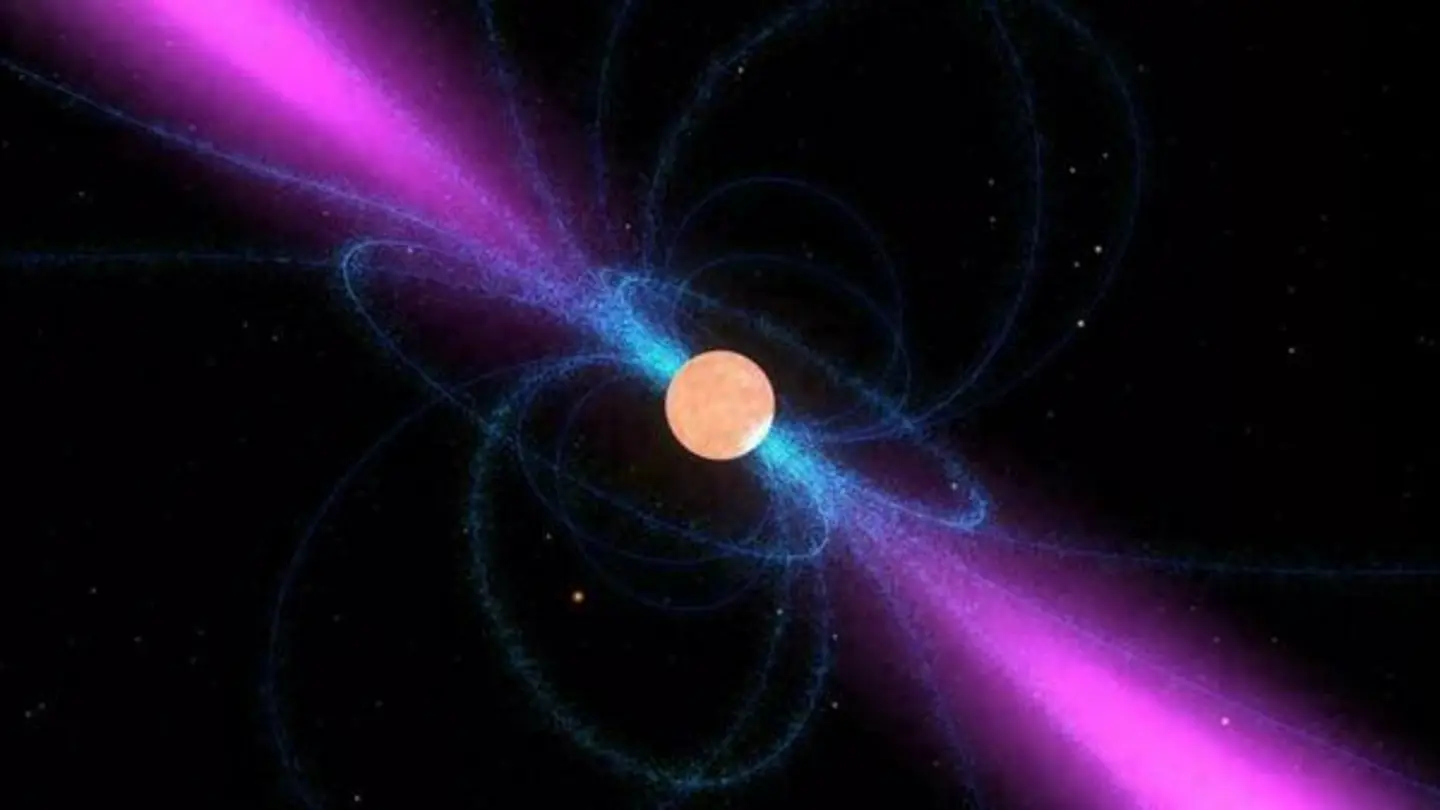
Scientists at the Indian Institute of Technology (IIT-K), Ahmedabad, in collaboration with the National Centre for Radio Astronomy (NCRA) Pune, have developed a novel method for measuring the distances to pulsars, rapidly rotating neutron stars. This breakthrough promises significantly more precise distance calculations compared to existing techniques, impacting our understanding of the universe’s age and evolution.
Pulsars emit beams of radio waves that sweep across the sky like a lighthouse. By precisely timing these pulses and measuring their arrival times, astronomers can determine the distances to these cosmic beacons. However, traditional methods rely on complex calculations involving the dispersion of radio waves due to the Earth’s atmosphere, introducing uncertainties.
The new method leverages a sophisticated technique called ‘precision timing’ and advanced data analysis. It utilizes highly accurate atomic clocks and develops algorithms to effectively account for the dispersive effects. This approach mitigates the errors previously limiting the accuracy of pulsar distance measurements. The improvements are particularly crucial for studying the evolution of the universe in its early stages.
The research, published in the journal ‘Nature Astronomy,’ details the development of this new methodology and demonstrates its superiority over existing techniques. The team utilized data from the Parkes Radio Telescope in Australia, showcasing the method’s practical application. The findings will allow researchers to probe the distribution of matter in the universe with greater precision, challenging established cosmological models.
The ability to determine pulsar distances with improved accuracy has significant implications. It allows scientists to better understand the expansion rate of the Universe, the distribution of dark matter, and the history of the cosmos. With more precise distance measurements, researchers can refine their models of the early universe and study the formation of galaxies and other cosmic structures. This research pushes the boundaries of precision astronomy and opens new avenues for cosmological exploration.
The collaborative effort between IIT-K and NCRA Pune highlights the power of interdisciplinary research in advancing scientific knowledge. The development of this new method is a testament to the dedication and expertise of the researchers involved. Further research using this new technique is expected to yield even more detailed insights into the universe’s hidden secrets.
Image Source: Google | Image Credit: Respective Owner